On Tuesday, October 27, the US Senate voted to pass the Cybersecurity Information Sharing Act.

This bill allows companies to share evidence of cyber-attacks to the US government even if it violates a person’s privacy. Supporters say this act will make it easier for the government to monitor threats and responses across companies. Others like Apple and other top tech companies argued that this bill could give government more liberty to spy on US citizens.

US Chamber of Commerce President and CEO Thomas Donohue said this legislation is a “positive step toward enhancing our nation’s cybersecurity.”

21 Senators voted against the act. Among them was Minnesota Democrat Al Franken who believes there is a need for “effective legislation that balances security and privacy” and “the CISA does not do that.”

Just last year, the CISA was first introduced and passed by the House but it did not go through the Senate. High profile cyberattacks on companies like Sony Pictures, United Airlines, and Ashley Madison may have prompted the Senate to approve it this time around.

The issue at hand is that personal identifiers such as text messages and e-mails may slip through when sending information to law enforcement and intelligence agencies, even though companies are supposed to delete that information.

US Department of Homeland Security acknowledged that the bill does raise “privacy and civil liberty concerns.”

CISA is now going to a Congressional Conference whose members must match the passed Senate and House bills before sending it to President Obama.

Article via CNET Security News , October 27, 2015

Photo: Washington DC – Capitol Hill: United States Capitol via Wally Gobetz [Creative Commons Attribution-NonCommercial-NoDerivs]

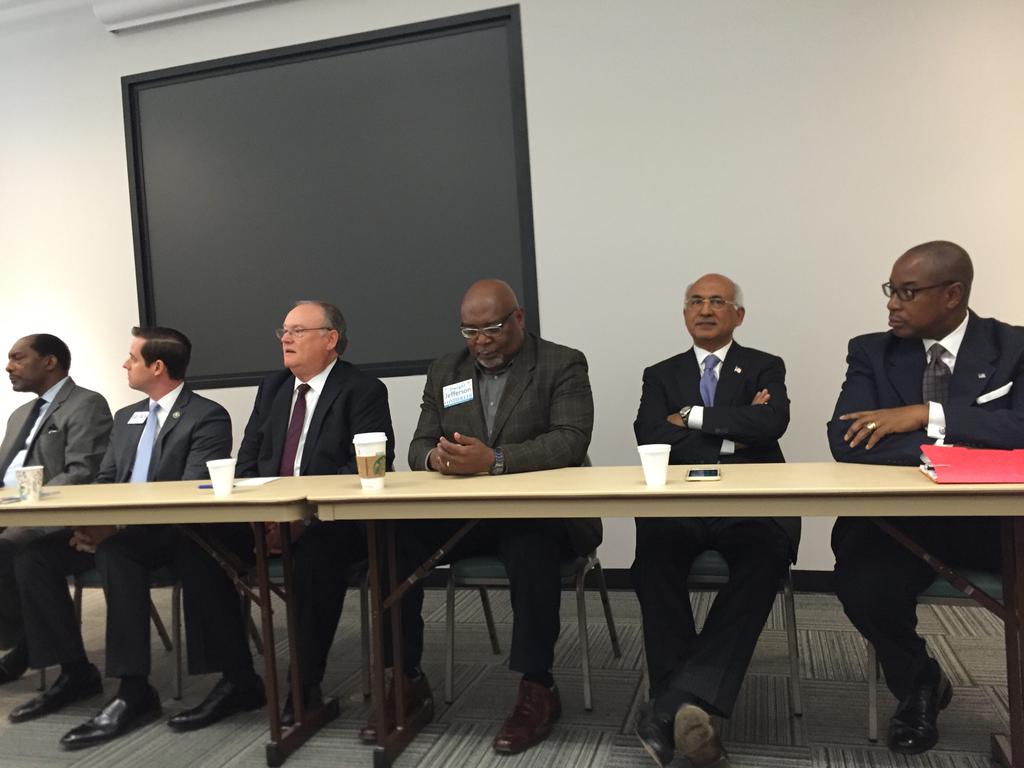
The Houston Controller Debate on Technology took place early this October at the Houston Technology Center, which was hosted by The League of Women Voters.  The topic of discussion was how technology could be used to bring the city’s controller office out of the 90’s and make spending transparent for the citizens of Houston. The city controller is similar to a chief financial officer for city government. The current city controller, Ronald Green, is not seeking re-election due to term limitations. There are currently 6 candidates running to take his place.

The room is filled with an array of people and there is a clear mix of older professionals and younger technologists. The candidates are all seated along a long table, facing outwards to the audience. This group is all male and appear to be ranging in age and experience. From left to right they start to answer questions posed from the moderator.

The first to respond is Jew Don Boney. He has a history of working on the Houston City Council and seems clear on how to integrate new technology into the system. Boney also served as mayor pro-tem under Mayor Lee Brown and represented District D, a predominantly African-American district. Currently he is an administrator at Texas Southern University.

The next candidate is Chris Brown. He is currently Deputy City Controller for Houston. Brown, the son of former City Councilman and mayoral candidate Peter Brown, has stated that his experience in the private sector working for an investment bank and his 11 years of service at the City of Houston make him the right person for the job.

Next to speak is Bill Frazer. He is a past President of the Houston CPA Society and has served on the Board of Directors of the Texas Society of CPAs for the past 20 years. Frazer is concerned with making sure that the controller’s actions are transparent and easy for the public to understand. He is interested in cleaning up the budget and making sure that the controller’s office is orderly and functioning as any accountant would.

Seated next to Frazer is MJ Khan. As a councilman, Khan proposed “Zero-Based Budgeting” for All city departments. He focused on unfunded liabilities in Houston’s Pension Systems and Retirees’ Health Benefits. Khan is also focusing on fighting for more efficiency in city government.

The next candidate to speak is Dwight Jefferson. Mr. Jefferson left his position at METRO to run for city council. He is a former district court judge with a long history of working in city government and with Metro.

The last on the panel to speak is Carroll Robinson. Mr. Robinson is an associate professor at Texas Southern University. Mr. Robinson, like many others on the panel has a long history working on the Houston City Council.

Although many issues are brought up, it always comes back to the current financial problems the city is facing, and how this can be avoided in the future. The city has a big deficit, and this has caused problems with making pension payments and beneficial spending. Several of the candidates bring up ways that the city’s website can be improved to make spending more transparent. According to the panel of candidates, the public needs an easy way to see the current status of the budget. Should the website updates an online check to allow the public to keep track of spending? Maybe the site should use a dynamic spreadsheet? Several solutions are posed by the candidates, but none are detailed enough to truly envision implementing.

This begs the question, how can the public get more involved? Houston is the not first major city that has needed to find innovative ways to bring in more technology to their processes. New York City created a new position of CTO (chief technology officer) who runs the Mayor’s Office of Technology and Innovation. The sole purpose of this office is citywide collaboration on technology issues. The city of Chicago has a Department of Innovation and Technology who looks for ways to bring in innovation to their government system. Even the White House is embracing innovation through technology. They made headlines when the nation’s first Chief Data Scientist was announced.

Jayson White from Harvard’s Kennedy School says that the focus of innovation positions in government started with education reform and sustainability. But, once the recession hit, that focus shifted to budgets, economic development, and job creation. The true benefit of having Chief Technology Officers and Chief Innovation Officers is the data driven management that they employ. One example is Louisville-Jefferson County, Kentucky. By incorporating innovation and information officers into the city government, problem solving starts with rounding up data. In turn, they have come up with interesting solutions, such as cutting down on 911 emergency trips by having nurses in the dispatch room to help determine if there is really a medical emergency or if the caller may need to go to the drug store. Now the city is accessing the data on non-emergency calls to determine if there is a market for private-sector transportation service to drive people who call 911 for non emergency transportation.

Starting with the Houston Hackathon, technology innovation is beginning to become a reality. The opportunity to bring innovation to city government structures gives the public a chance to get involved directly with the local government. The City of Houston has created an open hackathon to get citizens involved in creating solutions to government problems. Groups like Open Houston have been putting on hackathons to bring out developers, designers, marketers and others to get unique solutions to some of our city’s problems. Houston’s Mayor, Annise Parker, has made data more open to the public to encourage citizen innovation.

During the Q&A, the audience seemed interested in bridging the gap between citizens and government. Although all the candidates have amazing depth of experience and knowledge of local government, none are experienced technologists. This election is an opportunity for Houston voters to make technology an important issue. So far, a clear plan has not been established for the city to incorporate new technologies that will solve finance and transparency problems. This leaves a huge opportunity for citizens to come up with their own solution. Make sure that you vote for Houston Controller on Tuesday, November 3rd.

Photo via Justin Conception

A recent study released by the organization Freedom House found that Internet freedom is declining globally due to a variety of reasons, among them surveillance and online censorship. Of the 65 countries surveyed, 29 percent are deemed “not free,” while 27 percent are considered “free.” This is the first year that more countries are considered to have restricted Internet than free Internet. Last year, 15 countries were “not free” and 19 countries were “free.”

After the terrorist attacks on Charlie Hebdo’s newspaper staff, France’s digital free speech rights were restricted and government surveillance was increased. This led to a dramatic drop in the country’s Internet freedom score—four points—which Freedom House considers “problematic.”

Cuba, in contrast, saw an increase of eight points as a result of recovering relations with the United Sates and a recent decision by state telecom operators to half the price of Internet in the country.

Europe and the United States have recently experienced controversies with encrypted Internet traffic, leading to decreases in digital freedom scores. Freedom House uses several factors to calculate scores, including quantity of Internet access within the country, how much Web content is restricted, and whether or not Internet users can be punished.

Article via The Washington Post, 28 October 2015

Photo: Internet Yami-Ichi via Ars Electronica [Creative Commons Attribution-NonCommercial-NoDerivs]

The elections for Mayor and City Controller are underway. Candidates have been working hard campaigning and talking to voters. At a technology forum held on October 8 located at the Houston Technology Center, candidates for City Controller voiced their opinions on the growing use of technology in the city and how they would utilize it. All 6 of the candidates came from reputable backgrounds. Using that to each of their advantage, candidates spoke about how technology can transform the City of Houston.

Jew Don Boney, Jr is a former city council member and worked as a Texas Staff Legislature for many years. He was appointed as Associate Director for the Mickey Leland Center of Peace at Texas Southern University. When asked about integrating the city’s IT infrastructure with the current staff and IT infrastructure, Boney disagreed with combining the two. “When I served on city council, I was so unimpressed with the city’s infrastructure and IT but I brought in own people so we built and maintained our own for the entire 6 years that I served as a member of city council.” As a result, he claimed to have had the most advanced IT infrastructure in the city.

Chris Brown is currently Deputy City Controller and has managed money in the private sector as well as city hall. When asked what plans he has to put the checkbook online, he answered “I feel like that was our first trick question because I feel like all of our candidates know and agree that our checkbook is online and I know for certain because I put it online. In 2011, I led the project team to put all of our payments and checks online.” Continuing on with making the checkbook viewing by date, vendor, and amount he said “I think in my 12 years of experience I can say this whole-heartedly. We don’t have money to do these projects right now. We’re facing huge financial challenges in the city… technology is going to be the vehicle that we create efficiencies to go forward but we have to take the cost of that into effect.”

Bill Frazer has been a CPA since 1975 and worked as an auditor for Ernst and Young for 5 years. He served as controller for several companies. When questioned about how he would educate the public on the collection and analysis of data, he answered “I’m a CPA and I was the past president of the Houston CPA Society and during my tenure I also chaired the technology committee which was responsible for continuing education to over 15,000 CPAs in the area, 1,000s of hours of continuing education including technology at the user level. Not Excel, not Word, just simple applications that can be used by all to serve the clients.”  

Dwight Jefferson became a judge in 1995. From 2010 until 2015 he was appointed to the METRO board by Mayor Parker. When asked about transparency, he brought up a solution he came up with at METRO. “One thing that we did at Metro that was very helpful, both from the standpoint of transparency and getting input from the public in our processes was placing all of our board meetings online [in a] live stream.” He plans to implement this because the public would be able to go back to it later and see if they find things that are not properly addressed.

MJ Khan has an MBA from Rice University and served on the city council in the past. When asked about making the finances more transparent, he spoke from experience about how one aspect was not being reported. “When I was in the council, one of the things I noticed was that we have this huge unfunded liability that retirees have in 3.5 million dollars. And we were not even reporting that. So I asked why is that not part of the report? Luckily, I was able to convince my colleagues and it became part of it. So I think information sharing on a real time basis is crucial for citizens can see what is going on in our financial area.”

Carroll Robinson is an Associate Professor at the Barbara Jordan-Mickey Leland School of Public Affairs at Texas Southern University. He has served as the Houston Community College trustee and served on city council. He also voiced his opinion on increasing transparency. “Well one of the things I did with the available data is I ran a 10 year revenue forecast out on my Facebook, but I think the controller should do it not on an annual basis but on a monthly basis so we would avoid these situations …when you approve spending in one year and the compounding effect generates deficit problems. The careful controller ought to be for a different purpose than just releasing it at the end of the year.”

All the candidates used each of their previous experiences to their advantage. Early voting started on October 19, 2015 and will continue until the Mayoral election on November 3, 2015.

Photo: Houston Sunrise via telwink [Creative Commons Attribution-NonCommercial-NoDerivs]

As Internet and smartphone usage continues to expand, a population of Americans still refuses new technologies. The Internet is a vital educational and career tool, and thus the technological gap prevents Internet non-users from succeeding in multiple spheres of society.

Up to 10 million U.S. households without Internet say that they would seek Internet if offered a government subsidy, as indicated by Federal Communications Commission estimates. This population overlaps with the 19% of Internet non-users that cite high prices as the greatest barrier to Internet usage, according to Pew Research Center.

However, 34% of the 51 million people lacking Internet say that the Internet isn’t relevant to their lives, and the 32% that believe the Internet is too difficult to use. Roughly two-thirds of households, therefore, won’t be convinced to get broadband at any price.

Administrators are trying to close the technology gap through a series of initiatives. The FCC stated in August that it would give $9 billion to Internet providers like AT&T, Frontier and Windstream in the next six years to establish broadband infrastructure in rural regions. Another FCC program, named Lifeline, intends to subsidize high-speed Internet for low-income Americans in the coming years, and the White House has established a $1 billion annual budget devoted to connecting schools and libraries to the Web.

However, initiatives can only help those who are willing to use the Internet if given more resources. It’s a much more difficult and intangible task to convince low-income Americans that they should seek out community centers and libraries to research things or apply for federal benefits online. It requires a niche initiative to encourage seniors to use the Internet to keep in touch with family members and friends.

As technology progresses, technology gaps will widen, and inequalities in other sectors will follow. It will take a targeted approach by Washington, state governments, and communities to prevent greater damage in the future.

Article via The Washington Post, 22 October 2015

Photo: Old Barn in Vermont via Geoffrey Coelho [Creative Commons Attribution-NonCommercial-NoDerivs]
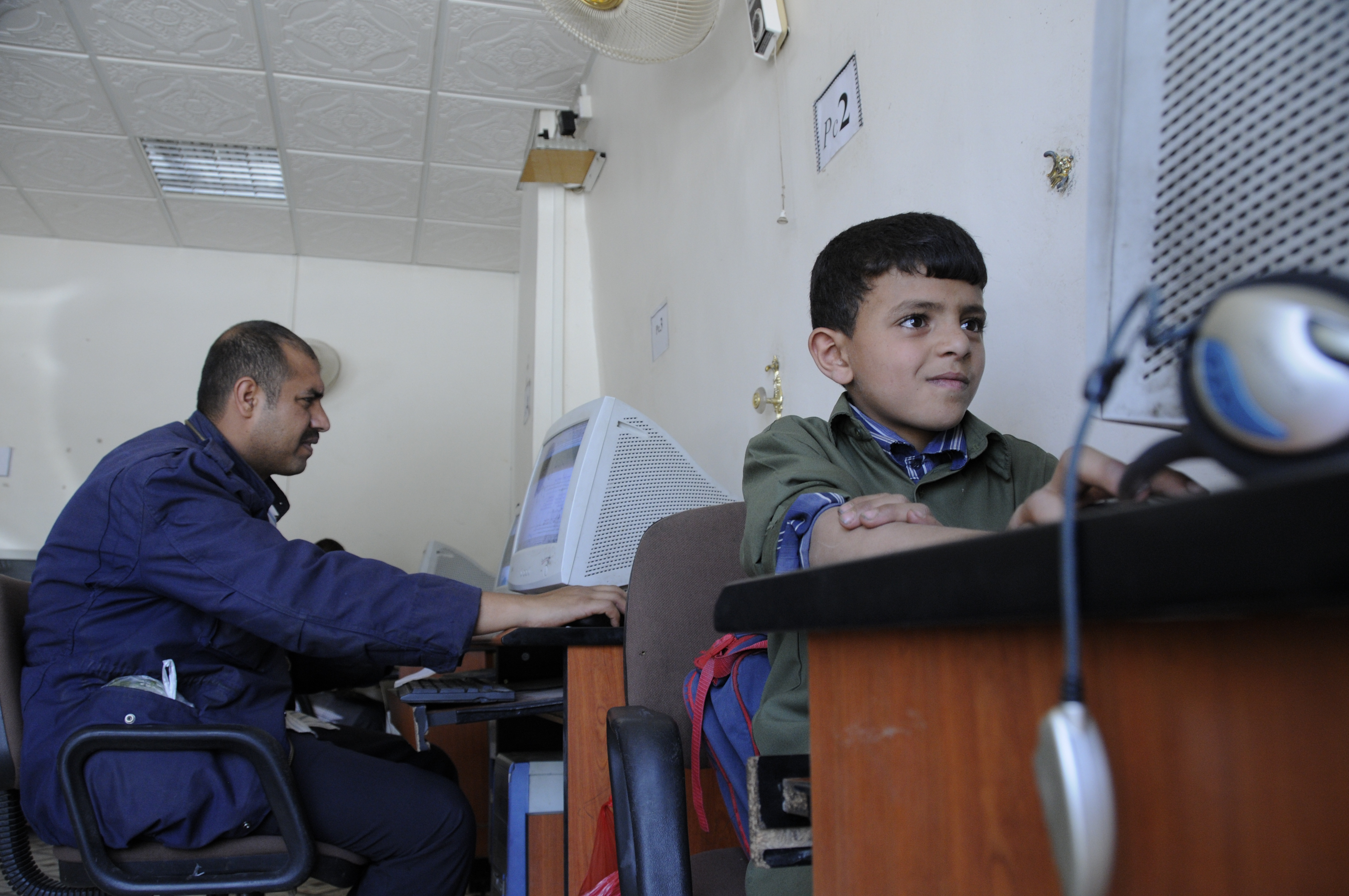
A Citizen Lab report released Thursday revealed that 33 countries are likely using FinFisher, a prominent spyware program. Many of these countries—including Ethiopia, Bangladesh, and Egypt—have suspect human rights standards.

FinFisher enables an organization or government to capture the keystrokes of a computer, as well as use the device’s microphone and camera to surreptitiously eavesdrop on a target. This type of surveillance tool was once only used by advanced governments, but is now available to anyone willing to invest in the service. In the U.S., journalists and dissidents are especially targeted.

Hackings in the past two years have informed researchers about the mechanics of spyware companies. FinFisher was hacked last year, revealing confidential company logistics, and its competitor Hacking Team was hacked this past year, exposing vital emails and files. Errors in spyware servers help Citizen Lab researchers figure out which governments are using the services of companies like FinFisher or Hacking Team.

Spyware servers used by governments often infect and control target computers with malware disguised behind proxies. Researchers found that 135 servers matched the “technical fingerprint” of shady spyware after scanning the Internet, yet they were always directed to a decoy page after typing the server’s Internet address into a Web browser. The decoy pages were most often www.google.com or www.yahoo.com.

However, the decoy sites showed local search results of the server’s origin, and not of the location that the researchers were in when they used the site. One proxy server seemed to be from the United States, then returned an IP address from Indonesia, indicating that the country’s government may be using FinFisher’s services.

Article via The Washington Post, 16 October 2015

Photo: Patrons use computers in an internet cafe via World Bank Photo Collection [Creative Commons Attribution-NonCommercial-NoDerivs]