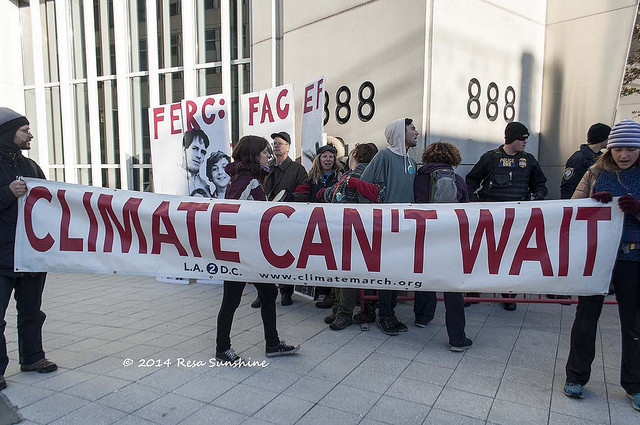
On December 10th the U.S. Bureau of Land Management plans to hold an auction for parcels of land in Michigan and Arkansas. The purpose? Leasing by the federal government of publicly owned lands to private companies, often resulting in drilling for oil and gas.

According to the National Wildlife Federation, the American public collectively owns nearly 650 million acres of public land and the fossil fuels beneath it. It also owns more than 1.7 billion acres of Outer Continental Shelf lands that also contain oil and gas resources.  The government holds these auctions regularly, but the upcoming auction on December 10th conspicuously coincides with the final days of the U.N. Climate Summit in Paris.  As a result, the Keep it in the Ground movement is trying to pressure President Obama to cancel this auction.

Keep it in the Ground is a movement of environmental organizations that are aiming to slow climate change by keeping remaining fossil fuels in the ground, instead of available for burning and drilling. The participating organizations include large groups such as 350.org, CREDO, the Indigenous Environmental Network and Greenpeace USA. The movement has been successful in getting the support of seven Democratic senators, including Democratic presidential candidate Bernie Sanders. These senators have introduced the Keep It in the Ground Act which came after organizations associated with the movement sent signed a letter addressed to President Obama urging him to stop new federal leasing of fossil fuels.

Jason Kowalski, U.S. policy director at 350.org, has criticized the president for allowing federal leasing auctions to continue while rallying other nations to fight against climate change. “Here we are, negotiating a climate treaty in Paris, and the core point of this treaty is keeping fossil fuels in the ground,” Kowalski told Mashable. “In the midst of that, we’re holding an auction, and the government itself is selling fossil fuels to the highest bidder?”

Obama has cited the need to keep some fossil fuels unburned, and on Nov. 6, he rejected the Keystone XL oil pipeline, a landmark decision seen as a major victory for environmentalists. “They’ve been bragging about it in Paris,” Kowalski said. “…but it’s really hypocritical to be bragging about the Keystone decision in Paris and at the same time be selling fossil fuels to the highest bidder in Washington, D.C., during the final days of negotiations.”

If Obama does not cancel the Dec. 10 auction, groups associated with the Keep it in the Ground movement are planning to hold a rally and press conference outside of the auction site on that date.


Article via Mashable, 3 December 2015

Photo: FERC Protest via A Jones [Creative Commons Attribution-NonCommercial-NoDerivs]
The National Security Agency has been collecting metadata, which is information such as phone numbers and duration of calls, since shortly after the attacks of September 11. The collection of this metadata has ceased as of November 28th. So what changed?

There is a new law in place, known as the USA Freedom Act of 2015. This law is being seen as a victory for privacy activists and tech companies looking to protect their user data. The USA Freedom Act of 2015 came about as a response to the revelations of Edward Snowden, a former NSA contractor that revealed the deep surveillance of the NSA on the American people. This new law prohibits the bulk collection of phone data previously done by the NSA. Although the agency won’t keep the bulk data, investigators will still have access to these types of records when they are investigating a particular person, or targeting specific groups. The existing metadata that has been captured during the last 5 years will be kept until next February 29th in order to ensure a smooth transition.

National Security Council spokesperson Ned Price stated that this new law, “struck a reasonable compromise which allows us to protect the country while implementing various reforms”.

Some have concerns, since the new law is going into effect so soon after the terrorist attacks in Paris. At a time when America is scaling back its surveillance, countries like England and France are considering new bills to enhance surveillance. Since American companies like Verizon would be involved, it may mean the creation of new treaties between Great Britain and the United States.  It is likely that this type of confounding circumstance will present itself more in the future due to the international nature of terrorism.

Article via ABAJournal, 30 November 2015

Photo: National Security Agency Seal via Donkey Hotey [Creative Commons Attribution-NonCommercial-NoDerivs]

Five years ago, companies like Ancestry.com and 23andMe provided the option of genealogy tracing and medical diagnostic tests for customers who submitted DNA samples. At the time, privacy advocates warned of the potential risks of letting businesses collect genetic databases.

Privacy advocate Jeremy Gruber summed it up in 2010 when he said that genetic material “has serious information about you and your family.” This information, if used beyond the purposes of genealogy tracing, has big implications in law enforcement and government tracking. Wired magazine cautioned, “Your relative’s DNA could turn you into a suspect.”

Currently, the FBI keeps a national genetic database of the DNA of convicts and arrestees. Both companies’ privacy policies state that upon court order, DNA information will be given to law enforcement. Yet, as Wired implicated, people have been wrongly accused of crimes for DNA near-matches in the past.

23andMe recently launched a transparency report, similar to other major tech companies that receive government requests for consumer information, within the next month.

“In the event we are required by law to make a disclosure, we will notify the affected customer through the contact information provided to us, unless doing so would violate the law or a court order,” said the company’s first privacy officer Kate Black.

Ancestry.com will not state explicitly how many government data requests the company has recieved.

“On occasion when required by law to do so… we have cooperated with law enforcement and the courts to provide only the specific information requested,” said a spokesperson.

Article via Fusion, October 16, 2015

Photo: DNA isolation 5 via Patrick Alexander [Creative Commons Attribution-NonCommercial-NoDerivs]
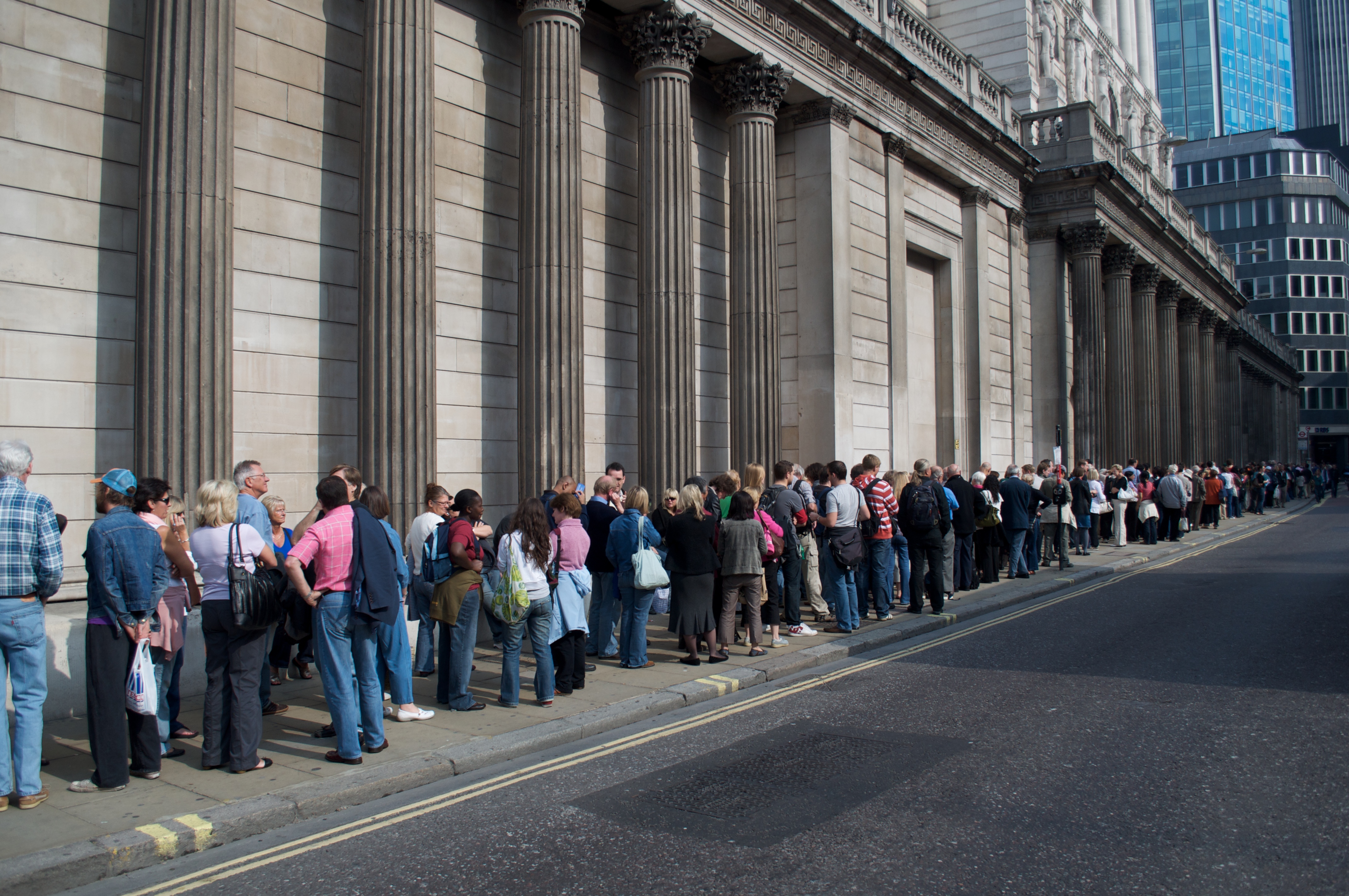
This past Thursday, the Social Security Administration announced that citizens would be able to apply for replacement Social Security card documents online. Although the program only applies to basic card replacements, it will expedite the process for many Americans who had to physically wait in line at a government building in order to fill out the paperwork for renewal. The program will first be introduced to Wisconsin and Washington state before extending to the rest of the nation.

Nancy Berryhill, the deputy commissioner for operations at the Social Security Administration, said, “It’s not only convenient for the public, but also for our field employees. It’s something we’ve been thinking about for a long time.”

The development of the program was lengthy due to the issues of authenticating and securing individuals’ identities. Those who apply for replacement cards online will have to sign up for a “my Social Security” account and answer personal questions from their credit history, provided by the Equifax credit-card rating bureau. The account will also ask for a driver’s license or state ID card numbers, to be compared to the records of individual states. Lastly, a fraud protection review will scan the submitted information for a authenticity.

Rob Klopp, the deputy commissioner of systems and the agency’s chief information officer, said that the agency is still researching methods to recognize fraud. “We’re going to learn how others try to game us,” he said.

Article via The Washington Post, November 19, 2015

Photo: The Bank of Queue via tubb [Creative Commons Attribution-NonCommercial-NoDerivs]

Government requests for data about Facebook users increased 18 percent to 17,577 compared to the latter half of 2014, according to Facebook’s most recent transparency report. Beyond requests for information, governments insisted that the company restrict content that violated local laws. The amount of restricted content grew 112 percent to 20,568 pieces; a little over 15,000 of these were restricted by India. No other country limited over 1,000 pieces of data.

Facebook reported that it restricted content in India that was considered by the nation’s government to be “anti-religious and hate speech that could cause unrest and disharmony within India.”

Facebook publishes global government data request reports biannually, including the percentage of requests the company agrees to. Eighty percent of U.S. government data requests are granted.

Chris Sonderby, Facebook’s deputy general, introduced the report with a blog post: “As we have emphasized before, Facebook does not provide any government ‘back doors’ or direct access to people’s data. If a request appears to be deficient or overly broad, we push back hard and will fight in court, if necessary.”

Data on intelligence agency requests is released with less specificity, only in ranges of 1,000. According to the most recent report, the number of intelligence agency requests numbered somewhere between 0 and 999 for the first half of 2015.

Article via CNET, November 10, 2015

Photo: Mark Zuckerberg Keynote – SXSW 2008 via kris krüg

[Creative Commons Attribution-NonCommercial-NoDerivs]
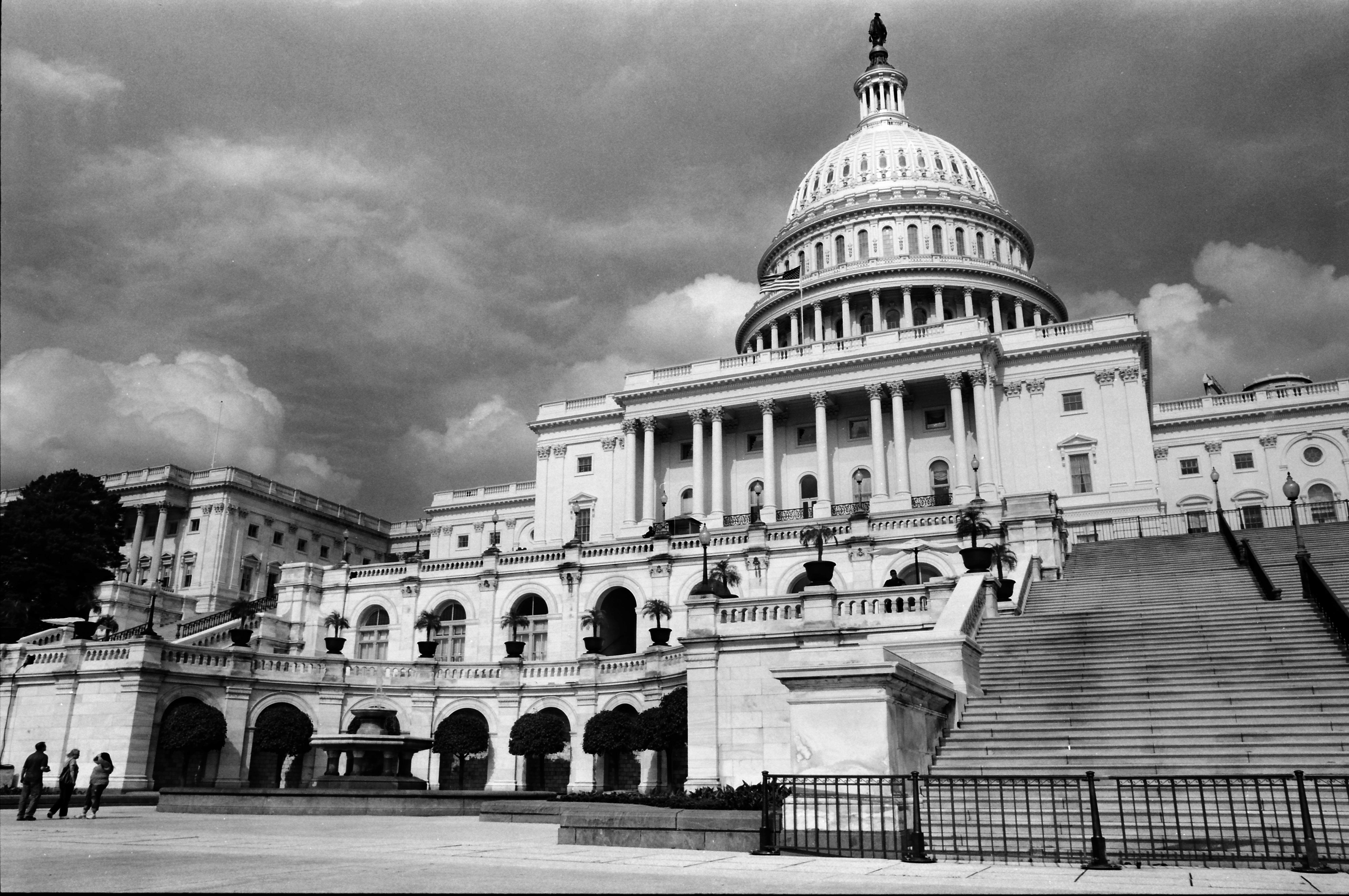
The US Senate voted this past Tuesday to pass the Cybersecurity Information Sharing Act (CISA), which allows companies to share evidence of cyberattacks with the US government, even if that data includes the personal information of individuals.

Those in favor of the bill argue that CISA will help the government protect companies. Most big tech companies comprise the opposition, and say that the new act is another loophole that allows the US government to snoop on citizens. President Obama supports CISA.

Al Franken, a senator from Minnesota and one of 21 who voted against the bill, said in a statement following CISA’s passing, “There is a pressing need for meaningful, effective cybersecurity legislation that balances privacy and security. This bill doesn’t do that.”

Companies are supposed to remove personal information about customers—such as emails and text messages—before sending data to the government. Currently, however, no accountability system exists to ensure that personal identifiers are in fact deleted before reaching government databases.

CISA was most likely passed in response to recent high-profile hackings, such as those committed against Sony Pictures, Ashley Madison, and United Airlines.

“With security breaches like T-Mobile, Target, and [the US government’s Office of Personnel Management] becoming the norm, Congress knows it needs to do something about cybersecurity,” said Mark Jaycox, Legislative Analyst of the Electronic Frontier Foundation. “It chose to do the wrong thing.”

Article via CNET, October 27, 2015

Photo: The Capitol, in Washington, D.C. US Senate and The House of Representatives via DeusXFlorida [Creative Commons Attribution-NonCommercial-NoDerivs]