
Tunisia’s National Dialogue Quartet has been awarded the Nobel Peace Prize for their efforts in helping the country transition to democracy. The Nobel Committee said the quartet helped establish a political process when the country “was on the brink of civil war.” While countries like Syria, Libya, Egypt, and Yemen went back to authoritarian rule or descended into war, Tunisia managed a successful conversion.

The quartet is made up of mediators from four Tunisian organizations. These are the Tunisian General Labour Union, the Tunisian Confederation of Industry, Trade and Handicrafts, the Tunisian Human Rights League, and the Tunisian Order of Lawyers. It was created two years ago when the assassination of two important politicians and clashes between Islamists and secular parts of society threatened the country’s security.

Houcine Abassi, head of Tunisia’s General Labor Union, said the award was a “tribute to martyrs of a democratic Tunisia. This effort by our youth has allowed the country to turn the page on dictatorship.”  Abdessattar Ben Moussa of the Human Right League said the award “fills us with joy” at a time when Tunisia “is going through a period marked by political tensions and terrorist threats.” Tunisia’s president Beji Caid Esebbsi said the award recognized the country’s decision to choose the “path of consensus”.

The quartet was established to calm the tension between the Islam and secular side. There was a rise of political Islam in the country that disagreed with the traditional secular politics the country had been accustomed to for decades. Tunisia is still facing border problems, but many are celebrating the win today.

Article via BBC Click October 9, 2015

Photo: Night Tunis via Angelfire & me [Creative Commons Attribution-NonCommercial-NoDerivs]

In a recent ruling, the European Court of Justice struck down Safe Harbor, which dictated the rules for transatlantic data flow between the United States and the European Union. The invalidation of Safe Harbor carries significant consequence for American e-commerce firms who operate in Europe. Companies like Google and Facebook—as well as the U.S. administration—now must make high-profile decisions in response to the ruling.

Europe has broad legislation protecting the personal information of E.U. citizens from being exploited by businesses. The U.S., in contrast, only codifies privacy against government institutions and for certain high-sensitivity data (e.g. health records, etc.) Safe Harbor’s “principles” are more flexible extensions of the E.U.’s privacy laws; violations of Safe Harbor could result in sanctions from a self-regulatory organization or the Federal trade Commission.

When Europe’s highest court invalidated the agreement, it was under the premise that European citizens were being manipulated by U.S. tech companies as well as by the U.S. government. The ruling was a reflection of a recent decision made by an Irish court on Safe Harbor’s illegality. Any new agreement drafted will have to contain more stringent privacy rules, and will therefore create more limitations for U.S. firms.

Facebook and Google’s immediate options include continuing business practices in a time of legal uncertainty, shutting down their European operations (resulting in major loss), or changing the business model to include more data collection centers in Europe. The last alternative would require companies to keep European and American data completely separate, with the consequence of economic inefficiency.

Article via The Washington Post, 6 October 2015

Photo: Bandiera dell’Unione (EU Flag) via Giampaolo Squarcina [Creative Commons Attribution-NonCommercial-NoDerivs]

Edward Snowden fled the US in 2013 after leaking classified documents to reporters. These documents revealed domestic surveillance by the NSA on United States citizens and ignited outrage and debate about security and surveillance. To escape arrest, Snowden left the country and resides in Russia, where he has been since 2013. Now he wants to come back home.

In an interview that aired Monday with the BBC, Snowden says that he has offered to go to jail in exchange for coming home, but has not received a response from the government. He stated, “I’ve volunteered to go to prison with the government many times”. He continues saying that “what I won’t do is I won’t serve as a deterrent to people trying to do the right thing in difficult situations.” This echoes a sentiment that he expressed in a Wired interview in 2014 where he said that he wouldn’t mind going to jail as long as his sentence “serves the right purpose.”

Snowden has been charged with 3 felonies in accordance to the Espionage act that  carry a sentence of over 30 years. His lawyers have objected to Snowden returning to the US because they believe that a trial with charges under the espionage act would not be fair. “The Espionage Act finds anyone guilty who provides any information to the public, regardless of whether it is right or wrong,” Snowden told the BBC. “You aren’t even allowed to explain to a jury what your motivations were for revealing this information. It is simply a question of, ‘Did you reveal information?’ If yes, you go to prison for the rest of your life.”

There continues to be ongoing debate as to whether Snowden is a patriot or a traitor. Those who see his actions as an act of patriotism have called for President Obama to grant Snowden a full pardon. But, when Secretary of State John Kerry visited Moscow in 2013 he called Snowden a traitor and a coward. Former Attorney General Eric Holder has indicated that a plea deal could be possible that can met the request of both the government and Snowden.

In the meantime, Snowden continues to use his status to speak out about issues of security and surveillance.

Article via TechCrunch, 6 October 2015

Photo: snowden via duluoz cats[Creative Commons Attribution-NonCommercial-NoDerivs]

Google plans to equip 400 train station across India with high-speed Internet, as announced by the company’s CEO Sundar Pichai last Sunday. This announcement occurred at the same time that India’s Prime Minister Narendra Modi visited Google’s headquarters in Mountain View, California. Bringing high-speed WiFi to rural areas of India by 2019 is one of Modi’s goals as part of his Digital India Initiative.

Google is collaborating with Indian Railways and RailTel, an Internet service provider along railway lines. By the end of next year, 100 railway stations will have Internet. This will grant access for the 10 million people who use the stations every day.

India’s huge market will benefit Google greatly, as the company profits off advertising. However, India’s limited infrastructure will still prove an obstacle. Both Google and its competitor Facebook have experimented with drones and balloons to offer service to rural areas. Kevin Krewell, principal analyst at Tirias Research, commented on the difficulties of building in developing areas: “Power can be a problem. Running new wires is difficult — and keeping those wires from being stolen even more so.”

Article via TechNewsWorld, 29 September 2015

Photo: Train at Mahim Junction, Mumbai via Adam Cohn [Creative Commons Attribution-NonCommercial-NoDerivs]

Twitter

After keeping a relatively low profile since his exile to Moscow in 2013, Edward Snowden has made himself public on Twitter. His first post on Tuesday, “Can you hear me now?”, was a nod to his past whistleblowing as well as a subtle reference to a Verizon television commercial. Within two hours, Snowden had 300,000 followers.

Ben Wizner, one of Snowden’s lawyers, has confirmed that the account is authentic. The fugitive’s first tweet was welcomed by a response tweet—“Yes! Welcome to Twitter.”—from Twitter’s co-founder Jack Dorsey. Astrophysicist and cosmologist Neil deGrasse Tyson also acknowledged Snowden, and ended a Twitter back-and-forth with: “Ed @Snowden, after discussing everything from Chemistry to the Constitute on #StarTalk, you’re a patriot to me. Stay safe.”

Snowden follows only one account, belonging to the NSA.

Article via CNET, 29 September 2015

Photo: Edward Snowden Wired via Mike Motzart [Creative Commons Attribution-NonCommercial-NoDerivs]
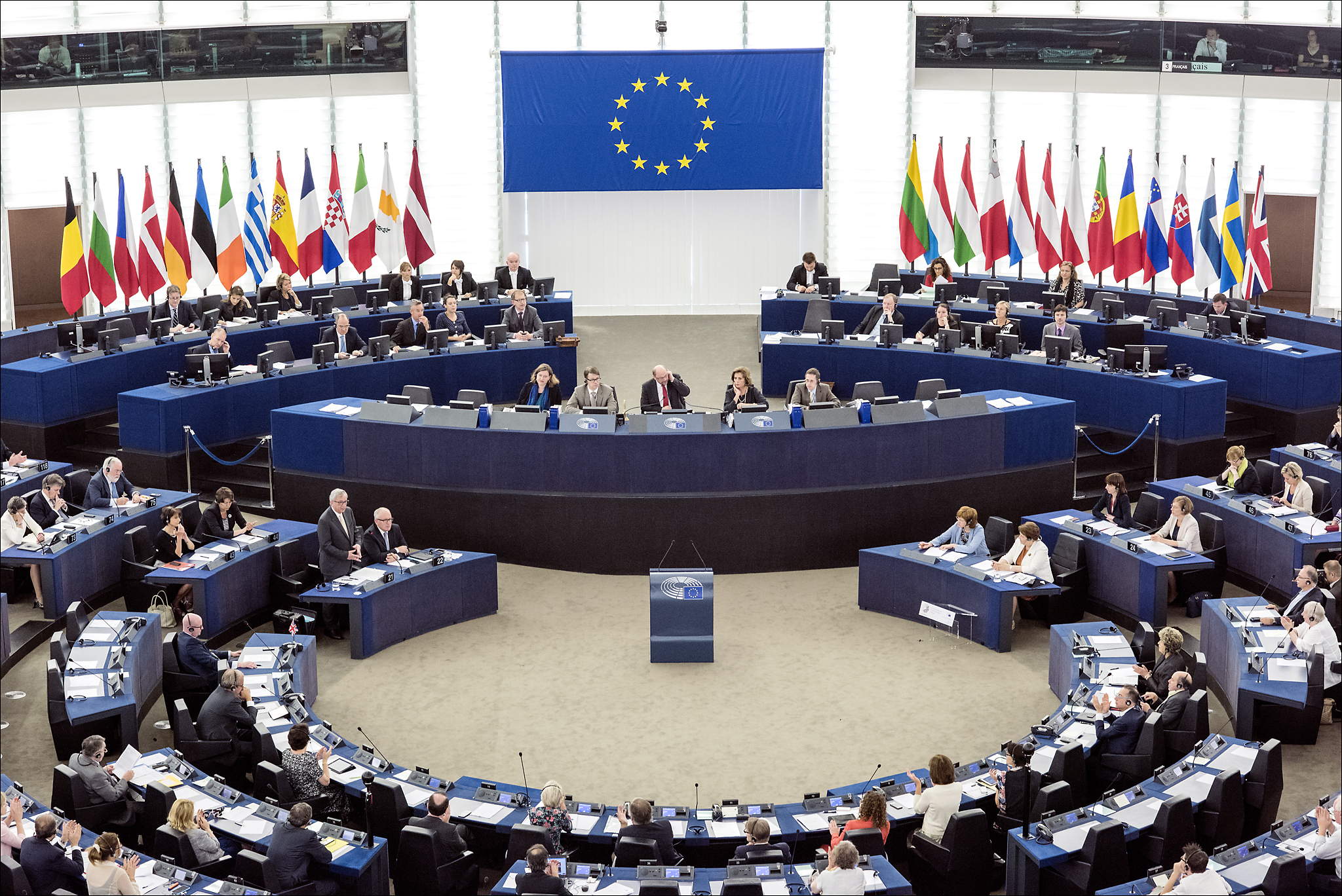
Google appealed EU’s “right to be forgotten” law that allows citizens to apply for the removal of false or damaging information indexed by search engines. Although the company is willing to comply by the law for European domains, like Google.fr, France’s data regulation authority (CNIL) ordered Google to comply by the law for its international domain, Google.com.

If Google refuses, the company may suffer significant fines or sanctions. Google officials argue that applying the EU’s “right to be forgotten” rule to its international server is both time and resource consuming, and may result in widespread censorship. Google does not have the right to appeal again until it has been fined for violating the CNIL order. After that, however, the company will be given the chance to refute the fines in France’s Supreme Court. The EU’s recent regulatory fine structure could charge Google for up to 5 percent of the company’s international operation cost, which would amount to roughly € 3 billion.

Google’s global privacy officer Peter Fleischer released a statement: “We believe that no country should have the authority to control what content someone in a second country can access.”

Article via Legaltech NewsSeptember 22, 2015

Photo: Review of the Latvian Presidency via European Parliament [Creative Commons Attribution-NonCommercial-NoDerivs]