
Access to technology provides people with power. This is the idea behind the peacebuilding organization PeaceGeeks. PeaceGeeks focuses on connecting peacemakers to the technology necessary to communicate their ideas to the rest of the world. By providing small, grassroots organizations with not only technology but also management and communication skills, PeaceGeeks helps make small, grassroots peacebuilding organizations have a larger impact.

PeaceGeeks was established in 2010, and since then has grown to over 700 tech-savvy volunteers. Even though it is relatively young, PeaceGeeks has already partnered with 26 non-profit organizations to share their stories. PeaceGeeks operates through two different programs—Public Engagement and Tech Capacities Projects. Tech Capacities works with the peacebuilding organizations PeaceGeeks supports to provide training, design branding, and help structure a plan for integrating technological solutions into the organization. The Tech Capacities program also works to identify and solve technological problems even after the process has been completed. On the other side, the Public Engagement program, while also sponsoring and creating events to raise awareness about peacebuilding, regularly hosts PeaceTalks. PeaceTalks allow experts in the area of peacebuilding and human rights to educate others, facilitate discussion, and help bring awareness to peacebuilding projects around the world. In addition to their programs, PeaceGeeks has developed open source software that allows the organizations they partner with to set up a website with relative ease. PeaceGeeks has also developed a web app called Service Advisor specifically for Syrian refugees to find information about services for refugees more easily.

If you are interested in learning more about PeaceGeeks, check out their website.

Source: PeaceGeeks

Photo: Peace via Steve Rotman [Creative Commons Attribution-NonCommercial-NoDerivs]

The Alliance for Peacebuilding, a global peacebuilding organization, boasts a membership of over 100 peacebuilding organizations and 15,000 individuals, allowing for stronger connections among peace organizations and opportunities to collaborate on projects that would be too large for any one organization to tackle alone. The organization’s main goals are to develop new peacebuilding practices, influence policymakers in Congress, the military, and other US departments, and build relationships between peacebuilders and other leaders to encourage the sharing of knowledge and new ideas.

With this in mind, the Alliance for Peacebuilding hosts events such as workshops on topics including advocacy and the power of dialogue. The organization also brings people together by supporting affinity groups focusing on topics like Education and Training or Women and Peacebuilding. Affinity groups meet at least once a year during the Alliance for Peacebuilding Conference, which is held annually. Next year’s conference will focus on the newest innovations in peacebuilding and look ahead to potential solutions that are still in development. The event also allows many individuals involved with peace and security to meet and collaborate. To learn more about the Alliance for Peacebuilding and their work, check out their website.

Sources: Selected Definitions of Peacebuilding, August 12, 2013; Alliance for Peacebuilding

Photo: Peace via Steve Rotman [Creative Commons Attribution-NonCommercial-NoDerivs]

A recent study released by the organization Freedom House found that Internet freedom is declining globally due to a variety of reasons, among them surveillance and online censorship. Of the 65 countries surveyed, 29 percent are deemed “not free,” while 27 percent are considered “free.” This is the first year that more countries are considered to have restricted Internet than free Internet. Last year, 15 countries were “not free” and 19 countries were “free.”

After the terrorist attacks on Charlie Hebdo’s newspaper staff, France’s digital free speech rights were restricted and government surveillance was increased. This led to a dramatic drop in the country’s Internet freedom score—four points—which Freedom House considers “problematic.”

Cuba, in contrast, saw an increase of eight points as a result of recovering relations with the United Sates and a recent decision by state telecom operators to half the price of Internet in the country.

Europe and the United States have recently experienced controversies with encrypted Internet traffic, leading to decreases in digital freedom scores. Freedom House uses several factors to calculate scores, including quantity of Internet access within the country, how much Web content is restricted, and whether or not Internet users can be punished.

Article via The Washington Post, 28 October 2015

Photo: Internet Yami-Ichi via Ars Electronica [Creative Commons Attribution-NonCommercial-NoDerivs]

Tech giant Apple is under scrutiny for factory conditions overseas. Despite the company’s efforts to regulate its manufacturers, a recent report by China Labor Watch indicated that many improvements are still to be made.

The report, released this Thursday, detailed criticisms of an iPhone factory in Shanghai. The organization urged Apple to raise staff wages, which currently amount to $1.85 an hour. Employees work shifts of 9 hours a day, in addition to a minimum of 20 hours overtime each week during the busy September season—when Apple prepares to release the iPhone 6S and iPhone 6S Plus—in order to cover living expenses. Including overtime, workers generally earn $753 a month. China Labor Watch also noted cramped living dorms and a lack of adequate safety training.

Apple does make an effort to monitor its manufacturers, however. The company audits the companies in its supply chain on a regular basis and releases the reports independently. Apple also sets the guideline of a 60-hour maximum workweek, which 92 percent of factory staff were compliant with for the majority of 2014. That number fell to 75 percent September of last year, when Apple primed to release the iPhone 6. In the Shanghai factory featured in the recent report, only 42 percent of employees worked 60 hours or less a week.

Apple also is advocating clean energy usage by its manufacturers, and announced new solar power and energy efficiency projects in China this Thursday. Apple’s CEO Tim Cook commented, “Our culture is to leave the world better than we found it.”

Article via CNET, 22 October 2015

Photo: RT @ BGR via Humans Developer [Creative Commons Attribution-NonCommercial-NoDerivs]
Globally, off-grid villages have few reliable energy sources. People throughout the world rely on solar products donated from non-profit organizations—which are not guaranteed indefinitely—or resort to purchasing expensive and unclean energy like kerosene, due to a lack of investment capital for cleaner energy. Angaza, a San Francisco startup, seeks to facilitate the purchase of clean energy by off-grid communities at affordable rates.

Angaza has a Pay-As-You-Go (PAYG) system in which a person can make a small down payment of under $5 to take a pico-solar device home. The solar device has a meter that measures energy usage against the original payment, and shuts off automatically when the paid amount of energy has been used up. At that point, the user can make a mobile payment to reactivate their device, or sign up for a weekly payment of roughly $1-$2 until they pay it off (in usually under a year).

Angaza’s initial target region is West Africa, where a majority of adults own mobile devices. USAID is funding Angaza’s field research on the PAYG system in rural Tanzania. Angaza will also be partnering with SunnyMoney, the top distributor of pico-solar products in Africa. Angaza collects a percentage of transaction fees as well as licensing fees from manufacturing companies that use its embedded technology.

CEO Lesley Marincola completed her B.S. and M.S. at in Product Design and Mechanical Engineering at Stanford University, then went on to work on Amazon Kindle’s design team.

Article via TechCrunch and USAID, 23 October 2015

Photo: Solar Energy via itstonyhaha [Creative Commons Attribution-NonCommercial-NoDerivs]

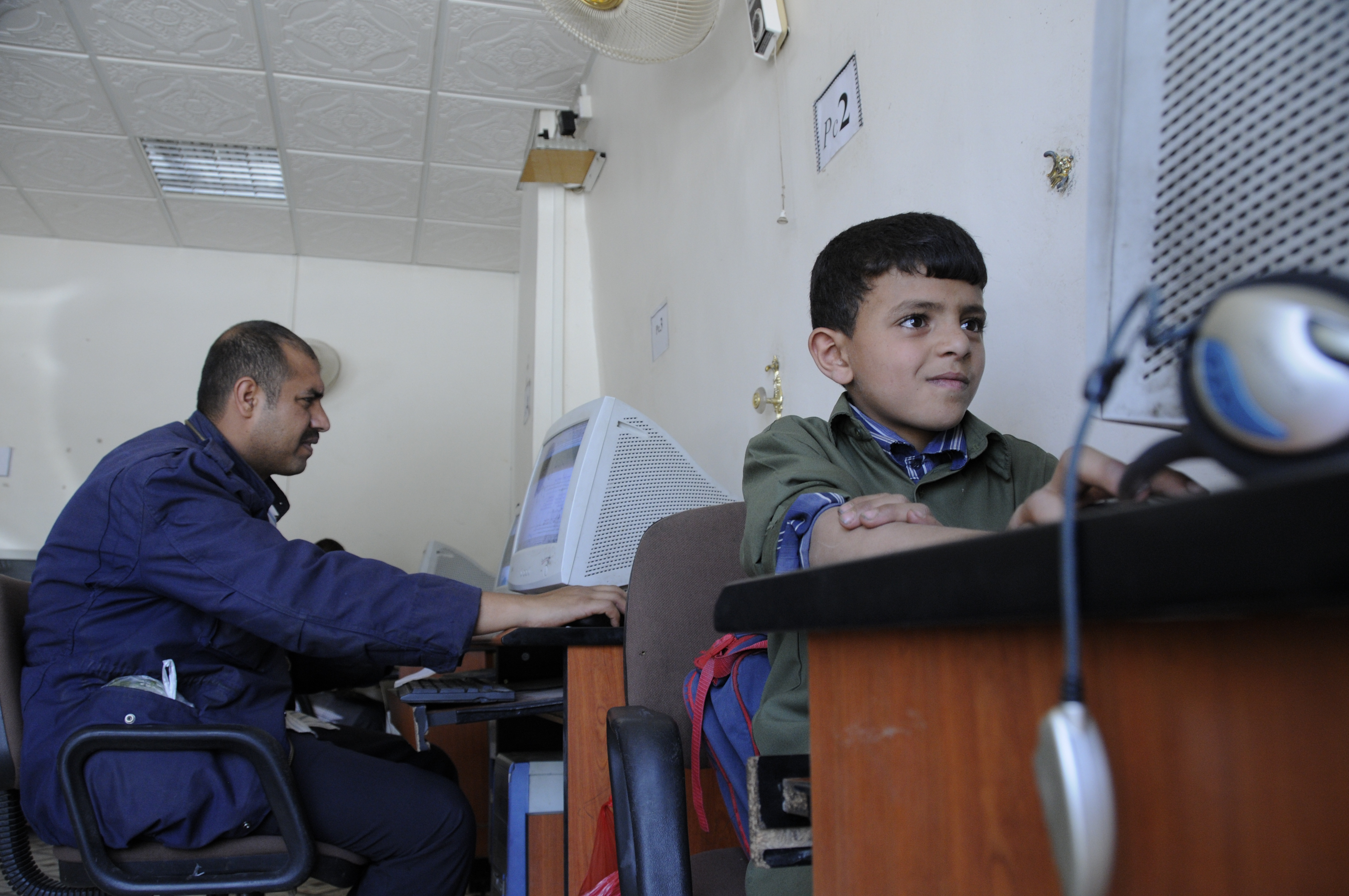
A Citizen Lab report released Thursday revealed that 33 countries are likely using FinFisher, a prominent spyware program. Many of these countries—including Ethiopia, Bangladesh, and Egypt—have suspect human rights standards.

FinFisher enables an organization or government to capture the keystrokes of a computer, as well as use the device’s microphone and camera to surreptitiously eavesdrop on a target. This type of surveillance tool was once only used by advanced governments, but is now available to anyone willing to invest in the service. In the U.S., journalists and dissidents are especially targeted.

Hackings in the past two years have informed researchers about the mechanics of spyware companies. FinFisher was hacked last year, revealing confidential company logistics, and its competitor Hacking Team was hacked this past year, exposing vital emails and files. Errors in spyware servers help Citizen Lab researchers figure out which governments are using the services of companies like FinFisher or Hacking Team.

Spyware servers used by governments often infect and control target computers with malware disguised behind proxies. Researchers found that 135 servers matched the “technical fingerprint” of shady spyware after scanning the Internet, yet they were always directed to a decoy page after typing the server’s Internet address into a Web browser. The decoy pages were most often www.google.com or www.yahoo.com.

However, the decoy sites showed local search results of the server’s origin, and not of the location that the researchers were in when they used the site. One proxy server seemed to be from the United States, then returned an IP address from Indonesia, indicating that the country’s government may be using FinFisher’s services.

Article via The Washington Post, 16 October 2015

Photo: Patrons use computers in an internet cafe via World Bank Photo Collection [Creative Commons Attribution-NonCommercial-NoDerivs]