
UNICEF has teamed up with Target to offer fitness bands for children, in an effort to tackle American childhood obesity and global malnutrition. The partnership is part of the UNICEF Kid Power program, an expansion of a successful pilot program in Boston, Dallas, and New York earlier this year. During the pilot in March of 2015, 12,000 students from the three cities walked 500,000 miles, inciting UNICEF to donate nearly 200,000 therapeutic food packets to children in developing countries.

The fitness bands connect to a mobile app that presents fitness challenge goals and provides information on other cultures. Points given for completing challenges are redeemed for life-saving therapeutic food packets that UNICEF delivers to families with malnourished children globally.

Target now sells the wristbands online for $39.99. Each wristband sold before Dec. 31 of next year donates $10 to the U.S. Fund for UNICEF. The wristbands will be sold in select stores in 2016.

The program was originally inspired by alarming parallel statistics: 1 in 4 children in the U.S. are underactive, and more dramatically, 1 in 4 children in the world are malnourished. Carl Stern, president and CEO of the U.S. Fund for UNICEF, says, “first and foremost, I’m a mom. I cannot imagine the heartbreak of being a mom who can’t feed her children … In the year 2015, we should be able to make sure that all children get a meal.”

Article via Mashable, 13 October 2015

Photo: Omloop Grolloo 2010 via Martin Borgman [Creative Commons Attribution-NonCommercial-NoDerivs]

Natural disasters call for efficient and comprehensive aid. Oftentimes, however, a disconnect exists between different organizations and the people they help. Disaster Tech Lab seeks to eradicate that issue by creating networks for people to communicate in affected areas.

Founded in 2010 by Evert Bopp, the team currently consists of 200 volunteers. Members of Disaster Tech Lab’s “IT mercenaries” travel to areas struck by natural disaster and establish Internet and telecom networks, analyze the safety of infrastructure, and build semi-permanent communication networks. The organization has expanded to help areas affected by issues other than natural catastrophes, in many cases humanitarian crises.

Recently, the Disaster Tech Lab has focused its efforts on the refugee crises in Europe. The Lab’s first response is to create WiFi networks so that first aid workers and responders can communicate, and so that those who need help—in this case, refugees from Syria, Afghanistan, and Eastern Africa—can contact family members and aid organizations.

The team of volunteers generally tries to re-visit a site two to three times in the year following the event. These follow up “deployments” are for the purpose of teaching locals how to use and maintain the technological tools on their own.

Bopp describes this philosophy of creating lasting aid. “We have a strong focus on connecting affected communities,” he says. “Large NGOs might only be there temporarily. We want to help local communities in the short-term and the long-term.”

Article via Mashable, 9 October 2015

Photo: Thousands Displaced Due to Flooding in Cap-Haïtien, Haiti via United Nations Photo [Creative Commons Attribution-NonCommercial-NoDerivs]

Tunisia’s National Dialogue Quartet has been awarded the Nobel Peace Prize for their efforts in helping the country transition to democracy. The Nobel Committee said the quartet helped establish a political process when the country “was on the brink of civil war.” While countries like Syria, Libya, Egypt, and Yemen went back to authoritarian rule or descended into war, Tunisia managed a successful conversion.

The quartet is made up of mediators from four Tunisian organizations. These are the Tunisian General Labour Union, the Tunisian Confederation of Industry, Trade and Handicrafts, the Tunisian Human Rights League, and the Tunisian Order of Lawyers. It was created two years ago when the assassination of two important politicians and clashes between Islamists and secular parts of society threatened the country’s security.

Houcine Abassi, head of Tunisia’s General Labor Union, said the award was a “tribute to martyrs of a democratic Tunisia. This effort by our youth has allowed the country to turn the page on dictatorship.”  Abdessattar Ben Moussa of the Human Right League said the award “fills us with joy” at a time when Tunisia “is going through a period marked by political tensions and terrorist threats.” Tunisia’s president Beji Caid Esebbsi said the award recognized the country’s decision to choose the “path of consensus”.

The quartet was established to calm the tension between the Islam and secular side. There was a rise of political Islam in the country that disagreed with the traditional secular politics the country had been accustomed to for decades. Tunisia is still facing border problems, but many are celebrating the win today.

Article via BBC Click October 9, 2015

Photo: Night Tunis via Angelfire & me [Creative Commons Attribution-NonCommercial-NoDerivs]
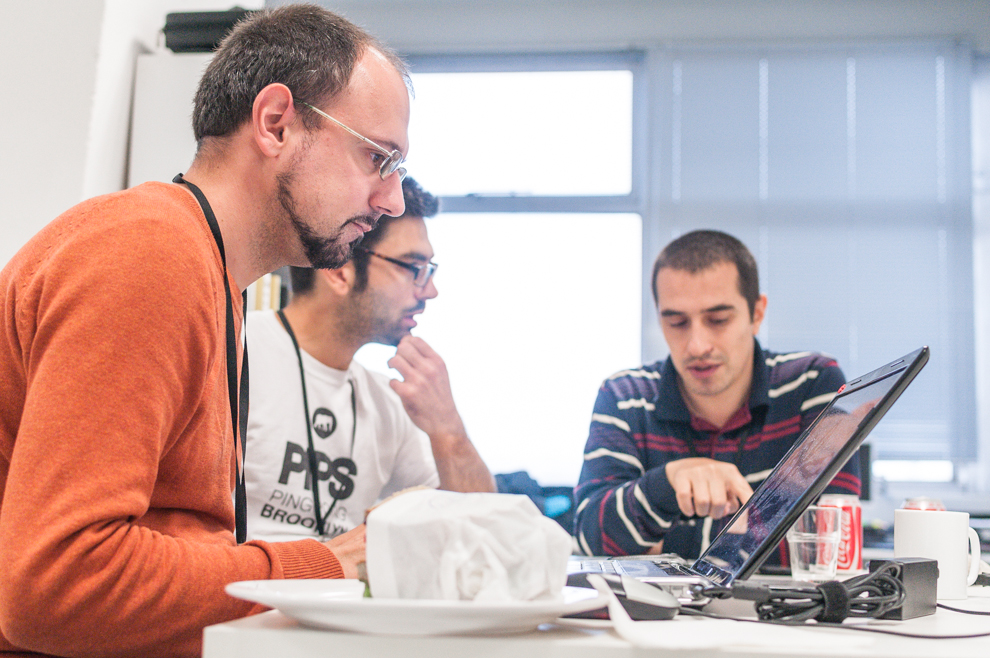
The United Nations has created 17 Sustainable Development Goals, an action plan to solve the globe’s most important issues by 2030. Nonprofit founders, entrepreneurs, and social innovators are advocating around the world to execute the UN’s #globalgoals. One of these activists is Hera Hussain, a facilitator of workshops for MakeSense, a worldwide consortium of social entrepreneurs, and founder of the advocacy group Chayn. Hera Hussain is one of many activist and technologists considered to be “Local Globalists” as they seek solutions for the UN’s specified global problems.

Chayn’s mission is to use technology to empower women against violence and oppression. In the past, Chayn has organized hackathons to create solutions to end sexual violence in conflict zones and offered online toolkits to domestic abuse survivors so that they may be able to prepare their own legal cases. On September 25, the organization hosted a hackathon in Beirut called #PeaceHackBEY, in which technologists and activists invented solutions to social problems in Lebanon today. The hackathon occurred at a pivotal time, as anti-government protests have consumed Beirut in the past few weeks due to deficiencies in public services and resources to support the million-plus Syrian refugees currently in Lebanon.

“Tech and society are always further ahead than governments and governments are playing catch up, but we’re slowly starting to see this change,” Hussain says. “By using tech to fill gaps in access to information and justice, we can either complement efforts that governments and NGOs are already doing, or point out where they are failing.”

Article via GOOD, 22 September 2015

Photo: Brighton Digital Festival Hackathon Sponsored by iCrossing UK via iCrossing [Creative Commons Attribution-NonCommercial-NoDerivs]

 

For parts of northwest Mohave County, Arizona, accessibility to court services used to be a problem. Surrounded by the Grand Canyon, the Colorado River, and the Virgin River Gorge, the closest court building is more than an hour away. This presents a problem for many of the locals. Mohave County has a high poverty rate and many low- and fixed-income residents, many of which have difficulty obtaining transportation. Thankfully, the IT staff of the Mohave County Superior Court under the direction of the court technology systems manager, Kyle Rimel, have been able to find a unique solution. By setting up the North Country Kiosk at a much closer DMV location, residents of Mohave County can now use video chat to obtain multiple court services. The presiding judge of the Mohave County Superior court, Charles W. Gurtler, says that, “The kiosk has been an absolute godsend as far as those people are concerned.” Among its features are the ability to access any courtroom in the county, pay fines, acquire forms, and even make filings or court appearances.

This isn’t the only way that Rimel and his staff are using technology to increase accessibility. Courthouse posters now include scannable bar codes so visitors can learn about jury and divorce information or receive directions. Additionally, an Internet chat line that provides access to court employees has been implemented, and the IT staff has outfitted nineteen courtrooms with audio-video equipment, allowing for different ways of presenting cases. Even though the Mohave Superior Court was woefully under-utilizing technology when Rimel first started working in 2003, he states that now, “our goal is to be one of the most technologically advanced courts in Arizona.”

For others looking to use technology to expand their court’s services, Rimel advises finding sponsors and realizing that courts may have to approach IT solutions differently than other entities. But the results are worth it: Gurtler has high praise for Rimel, calling him the “rock star of the IT world.”

Article via ABA JournalSeptember 16, 2015

Photo: Student pair video chatting with an ELL via Penn State [Creative Commons Attribution-NonCommercial-NoDerivs]
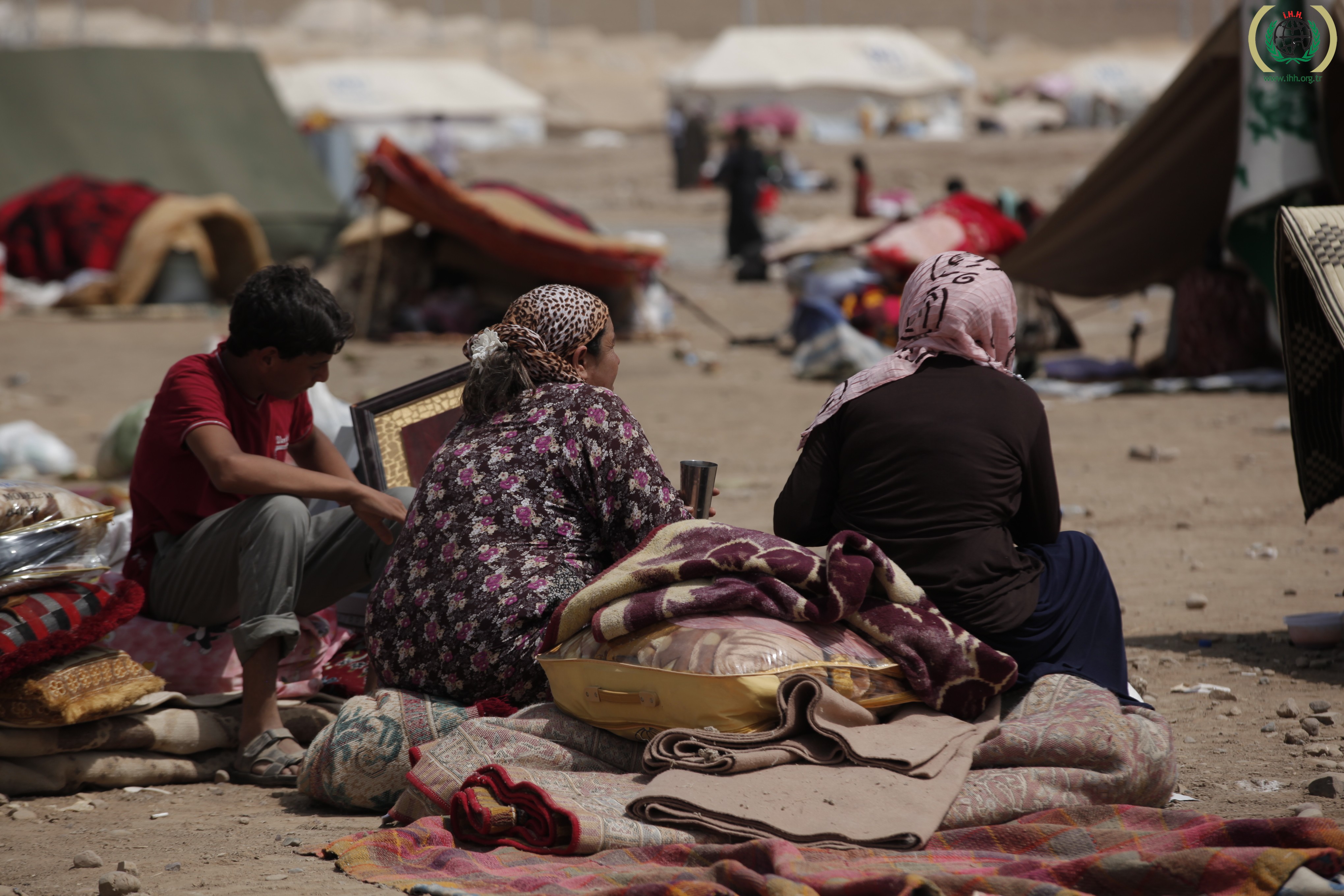
Facebook and the United Nations are working together to provide Internet access to Syrian refugees as they seek resettlement. Web access in refugee camps will help those living there communicate with family and utilize support from aid communities, according to Facebook’s CEO Mark Zuckerberg.

Facebook is also constructing satellites and aircraft that will beam Internet connections to remote villages and towns, similar to Google’s project that accomplishes the same goal with high-altitude balloons. Critics to the program say that both companies are providing Internet access for selfish purposes, as both Facebook and Google profit from expanding their user base.

Facebook’s non-profit organization Internet.org is also under attack. Internet.org seeks to provide Internet access to developing countries, and was launched in India on Friday. Several Internet companies withdrew from the program because they saw the organization as a threat to Net neutrality, which guarantees that all websites are equally accessible.

Zuckerberg will be holding a town hall-style discussion with India’s prime minister this Sunday in defense of the non-profit. He says that by expanding Internet access, companies like Facebook and Google can create 140 million new jobs.

Article via CNETSeptember 26, 2015

Photo: Relief Effort for Syrian Refugees via IHH Humanitarian Relief Foundation [Creative Commons Attribution-NonCommercial-NoDerivs]