David Sparks is famous for being a successful lawyer and a technology geek. He explains how he mixes both law and technology to make a unique practice. “I use technology to make my practice run faster and more smoothly. Nothing that I do is impossible for another lawyer to do and everything I do can be accomplished using either technology or manpower. Technology doesn’t give me something no one else has — but because of it my practice is much more lean, and, among other things, gives me an edge in terms of pricing.”

To keep his law practice running lean, automation is the answer. When asked why he automated his law firm he replied, “First, there’s efficiency—it’s much faster. When you have the computer doing something for you, you no longer have to type out words or take time to manually file documents on your computer. Second, it’s more accurate. The computer is doing the task, so for example, as long as you set up the rules correctly, the computer is always going to name files properly.”

Here are some of the tools that he uses to automate his workflow:

Hazel

Hazel is software for mac that is designed to clean and organize files in the background while you work.

I automate my firm’s documents using Hazel. So when I scan a document into my computer, the document is automatically saved in OCT format and then Hazel reads it and can identify clients, dates, etc., and will name the file and file it away for me in my system,” he says.

TextExpander for Mac

TextExpander allows you to create custom abbreviations that, once typed, will expand to full words or images.

“With TextExpander, when I’m drafting discovery documents — for example the list of 5 contention questions we use in California — I have created text expanders so I can type in the bits that are different in each case and TextExpander automatically creates and generates the questions for me. I was going to hire a paralegal to do this for me, but realized it’d be more efficient and more cost effective for the client to accomplish this task using automation.”

Sparks ends with some advice about bringing more technology into your practice. “My standard advice to lawyers is don’t be afraid of technology. It can make you a better lawyer and can save you a lot of money.”

Article via Above the Law, 23 July 2015

Photo: The Lawyer by Ard van der Leeuw [Creative Commons Attribution-NonCommercial-NoDerivs]

Child laborers are mining cobalt for the devices of major tech companies like Apple, Samsung and Sony, alleges a report issued Tuesday. Amnesty International and African Resources Watch issued a report suspecting that the supply chains of these major electronics companies are using child labor, partly because they have failed to make basic checks to halt these actions.

The report traces the harvesting and sale of cobalt in the poverty-stricken Democratic Republic of Congo — where children as young as seven work the mines. The cobalt is used in lithium-ion batteries that power smartphones and electric cars. The DRC is listed in the U.S. Department of Labor’s Worst Forms of Child Labor report, and goods made under those conditions are listed in the Trafficking Victims Protection Reauthorization Act.

Amnesty International contacted 16 companies listed as customers of the battery manufacturers that reportedly sourced processed ore from the DRC. Half the worlds cobalt comes from this country, specifically.  None of the firms contacted could provide documentation to prove where their cobalt originated. Apple stated in a letter that “…underage labor is never tolerated in our supply chain and we are proud to have led the industry in pioneering new safeguards.” Samsung SDI does not have any transactions with Huayou Cobalt, the company said in a statement.

“Amnesty would like to see the home state countries — U.S., China, Japan, etc. — conduct human rights due diligence on their cobalt supplies,” reported author Mark Dummett. “An effective lasting solution to a complex problem such as this is going to require a collaborative approach with government, civil society, subject matter experts and multiple industries,” said Deborah Albers, vice president of social and environmental sustainability at the Electronic Industry Citizenship Coalition, said.


Article via TechNewsWorld, 20 January 2016

Photo: Conflict minerals 4 – Lezhnev by ENOUGH Project [Creative Commons Attribution-NonCommercial-NoDerivs]
For the past few years, alarmingly low bar pass rates have made headlines. In July 2014, Erica Moeser, president of the National Conference of Bar Examiners declared that the current bar exam test takers are “less able” than their predecessors. Law schools deans argued that this was a harsh categorization of their graduates. However, when the July 2015 bar exam results came in, Moeser’s statement was proven correct. Since the law school crisis began, applicants with lower qualifications who were predicted to encounter difficulty passing the bar exam were admitted in packs.

The great law school brain drain is evident but let’s take a closer look on what caused this great phenomenon. Jerry Organ, professor of the University of St. Thomas School of Law in Minneapolis has been tracking LSAT profiles of law school students for years. His analysis shows that LSAT scores correlate with scores on the bar exam. Below is a graph that displays categories of LSAT scores and the percentage of those with that score matriculated into Law school.

LSAT-Matriculant-Score-Changes-2010-2015-600x368

While the percentage for the students that scored between a 150-159 remained relatively stable, the 160+ category slowly declined and the students that scored below a 150 continue to increase every year. This is what happens when law schools need money and accept virtually anyone. Organ noted that “the top is eroding and the bottom is growing” and predicts the brain drain will have lasting effects: “Given that the LSAT profiles of matriculants and of law schools for fall 2013, fall 2014 and fall 2015 are less robust than those for fall 2011 and fall 2012 (the classes that graduated in 2014 and 2015, respectively), one can anticipate that the declines in median MBE scaled scores and corresponding bar passage rates in 2014 and 2015 will continue in July 2016, 2017 and 2018 absent increases in attrition, significant improvement in academic support programs at law schools, or improved bar preparation efforts on the part of graduates.”

Article via Above the Law, January 20, 2016

Photo: Studying via Francois de Halleux [Creative Commons Attribution-NonCommercial-NoDerivs]

Facebook is promising to fight hate speech amid the European refugee crisis.

“In the past year, we’ve seen millions of people come together online to support refugees and stand in solidarity with the victims of terror attacks,” wrote Facebook COO Sheryl Sandberg in a post on Monday. “But we’ve also heard voices of hate growing louder. With extremism damaging lives and societies across the world, challenging those voices has never been more important.”

The company did not disclose a particular plan, but they did announce the Online Civil Courage Initiative, meant to empower users to fight against hate speech. It also appears that Facebook will be backing more powerful non-governmental organizations which are already involved in fighting radicalism and hate speech online.

The Online Civil Courage initiative is yet another effort to prevent hate speech on social media. In December, Facebook and other companies like Google and Twitter agreed to remove instances of hate speech within 24 hours, in accordance with an agreement with Germany authorities. German politicians and celebrities also voiced concern about rising hatred on social media, as nearly 1.1 million migrants and refugees entered the country in 2015 alone. Last August, Germany’s minister of justice asked Facebook to remove racist posts targeting asylum seekers.  Three months after that prosecutors opened a criminal investigation because they suspected that Facebook failed to take down a wave of anti-immigrant posts on the social network, inciting racial hatred.

Following the terror attacks in Paris, France also called on Facebook, Twitter, Apple, Google and Microsoft to combat extremist propaganda and expand safety tools in the event of a future attack.

“Hate speech has no place online — or in society,” Sandberg said. “Together, we can make sure the voices of peace, truth and tolerance are heard. Love is louder than hate.”


Article via Mashable, 19 January 2016

Photo:Facebook icon by Jurgen Appelo[Creative Commons Attribution-NonCommercial-NoDerivs]

A new report by the Nuclear Threat Initiative found that twenty countries with either nuclear weapon materials or power plants “do not even have basic requirements to protect nuclear facilities from cyber attacks.”

The report draws relevance from a recent cyber attack that caused a power outage in Ukraine—the first blackout ever induced by hackers. The event created international concern about the industrial sector’s susceptibility to cyber attacks.

According to Page Stoutland, NTI’s vice president for scientific and technical affairs, countries with developed nuclear programs have established safeguards against hackings whereas nations with burgeoning programs have greater gaps in their regulatory policies. “What we have observed is what I call enormous unevenness on the global stage to address this issue,” he said.

The United States, for example, takes several precautions to keep nuclear power plants secure. Plant systems are disconnected from the Internet and specialized hardware separates business computer systems from nuclear operation computer systems to prevent hackers from infiltrating operations through the Web.

“Nothing suggests that a cyber attack executed through the Internet could cause a nuclear reactor to malfunction and breach containment,” stated a 2015 report by the Department of Homeland Security.

Other groups disagree. According to a 2013 CNN report, command and control systems of nuclear power plants could be navigated online. Moreover, a 2015 report by the London-based think tank Chatham House stated that there was an “element of denial” among nuclear power plant operators about the likelihood of cyber attacks.

“Often, nuclear facilities will have undocumented connections to the internet” that hackers can use to infiltrate nuclear systems, said Chatham House.

Article via The Washington Post, 15 January 2016

Photo: Central nuclear de Trillo by Tonymadrid Photography [Creative Commons Attribution-NonCommercial-NoDerivs]

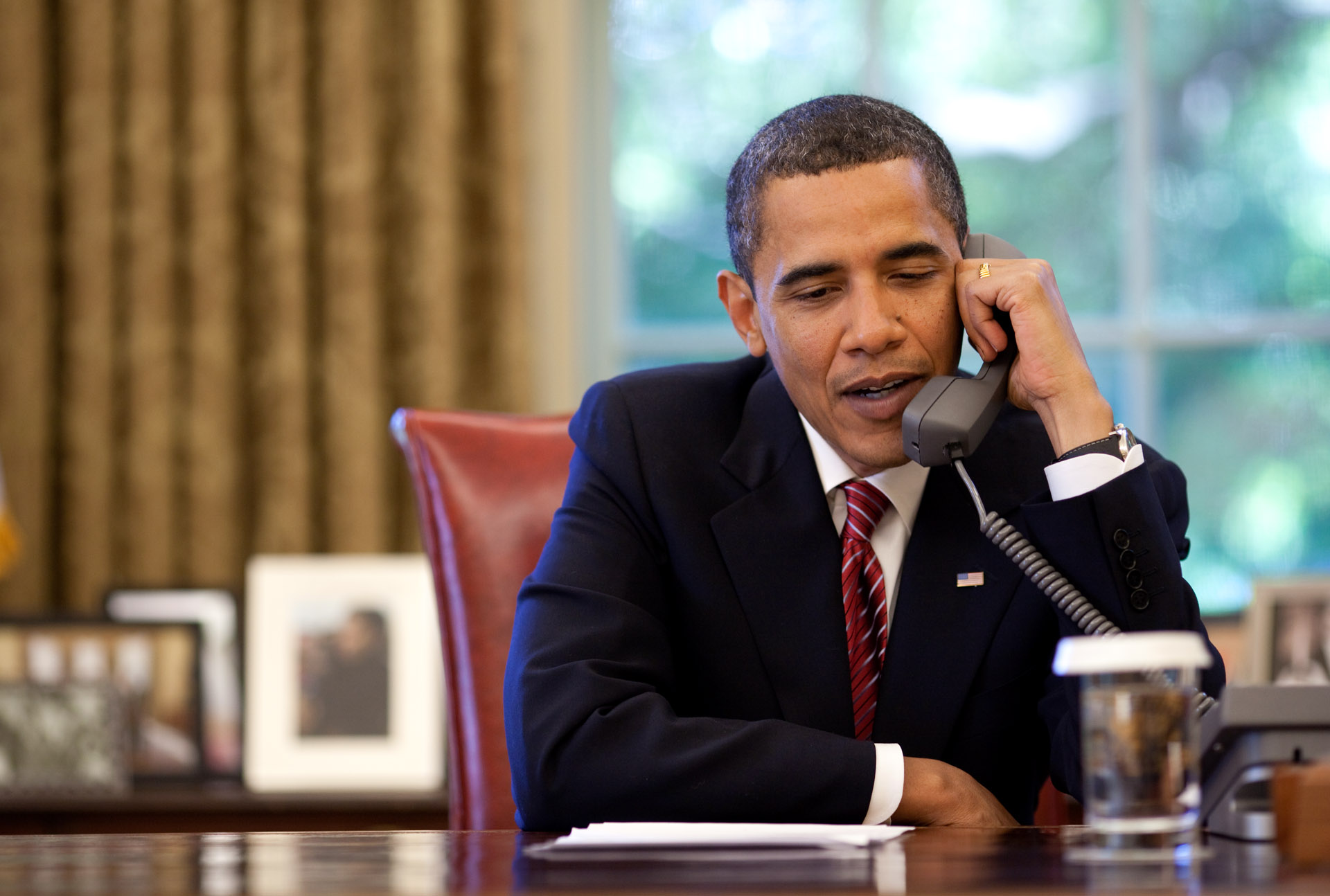
Federal administration officials collaborated with senior executives from several large tech firms at last week’s summit on terrorist communication via social media. General Loretta Lynch, FBI Director James Comey and Assistant Attorney General for National Security John Carlin represented the Department of Justice at the conference. Facebook, Google, Twitter, Apple, and other large Silicon Valley companies attended. The meeting was part of President Obama’s overall mission as announced last week to combat violent extremism both internationally and domestically.

“Today’s developments reflect President Obama’s commitment to take every possible action to confront and interdict terrorist activities wherever they occur, including online,” said National Security Council representative Ned Price.

Multiple tech firms discussed their goals to prevent communication between terrorists on their social media outlets. “We explained our policies and how we enforce them—Facebook does not tolerate terrorists or terror propaganda and we work aggressively to remove it as soon as we become aware of it,” said a Facebook spokesperson.

The summit came after the Department of Homeland Security’s and the Department of Justice’s announcement of the Countering Violent Extremism Task Force, an amalgamation of different agencies given the task of “discourage[ing] violent extremism and undercut[ting] terrorist narratives” with an additional goal to “build relationships and promote trust” with certain communities across the country, said Secretary of Homeland Security Jeh Johnson.

Article via TechNewsWorld, 13 January 2016

Photo: President Obama Talks to the Crew of Atlantis (P052009PS-0698) by NASA HQ PHOTO. [Creative Commons Attribution-NonCommercial-NoDerivs]