
As this is an election year, the American public will be hearing many speeches from  politicians addressing the nation.  Phrases such as “My Fellow Americans”, “main street” and “small businesses” are staples that they average person can predict to hear from any politician. These political phrases are not only predicted by Americans, but now are being predicted by robots.

“Mr. Speaker, supporting this rule and supporting this bill is good for small business. It is great for American small business, for Main Street, for jobs creation. We have an economy that has created nearly 2 million jobs in the past couple of months: apparel, textiles, transportation and equipment, electronic components and equipment, chemicals, industrial and commercial equipment and computers, instruments, photographic equipment, metals, food, wood and wood products. Virtually every state in the union can claim at least one of these industrial sectors. In fact, one young girl, Lucy, wanted to make sure that the economy keeps growing. That should not be done on borrowed money, on borrowed time.”

This speech was written by a computer.

This comes from a research project at the University of Massachusetts Amherst. The researchers created a predictive algorithm that laid down words based on the previous 5 words that came before them. In program analyzed 3800 speeches that were introduced in the House.

The program is not perfect. There were speeches produced that came out a bit non-sensical. One computer generated address had this to say:

“For example, I mean probably all of us have had a mom or a grandmom or an uncle to whom we say, hey, I noticed your legs are swelling again. Fluid retention. Fluid retention.”

What this project does show is that their artificial intelligence can be useful, and maybe be the starting place for speech writing. It is not unrealistic to assume that future State of the Union addresses may first start with an algorithm.


Article via The Washington Post, 25 January 2016

Photo: 01-27-11 at 14-34-48 bySpeaker John Boehner  [Creative Commons Attribution-NonCommercial-NoDerivs]

Vidya Pappachan, an attorney for the Legal Aid Society in New York City did not have enough time to prepare for her client’s case on a drug felony charge. However, she had a tool that helped her look up information about the officers that arrested her client.

The database is called the Cop Accountability Project. Through this, she learned that the officers were involved in misconduct cases that involved false arrests and cost NYC more than half a million dollars in settlement payouts. Even more, this was much similar to the situation in which her client was arrested. There was no drug stash found and no other evidence besides the arresting officers’ account of the incident. Since Pappachan proved the three officers were involved in prior misconduct cases, she challenged the weight of the evidence against her client. The judge agreed with her proposition and the client was released without bail.

Beyond New York, similar projects are popping up. The Indianapolis Police department created a portal that tracks officer complaints, use of force, and shooting incidents. In Chicago, there are two separate but complementary tools that track police misconduct cases. Michelle Bonner, former chief counsel to the Legal Aid Society called the New York project “a great advance in the evolution for defender databases.”

The project stemmed from the grassroots of newspaper clippings and paper documents. After 1998, it evolved into a database in the form of a digital library catalog program called Inmagic and later into an Excel spreadsheet where documents were scanned or uploaded to a shared file.

This tool has brought mixed reaction from judges. Some are very open to hearing this information and some say it’s not relevant at this stage of the case. The New York City Patrolmen’s Benevolent Association has a unanimous opinion. Patrick Lynch, the president of the city’s largest police union, said : “Compiling a list of police officers who are alleged to be ‘bad’ based upon newspaper stories, quick-buck lawsuits and baseless complaints … does nothing more than soil the reputation of the men and women who do the difficult and dangerous job of keeping this city and its citizens safe.”

This project will continue to morph as the Legal Aid Society trains its lawyers to better integrate this database into their practice.

Article via ABA Journal, February 2016 issue

Photo: Paris – Police via clement127 [Creative Commons Attribution-NonCommercial-NoDerivs]
It pays well to be a techie in the US. From 2014 to 2015 tech salaries experienced their largest annual jump ever, to nearly 8 percent. The average salary of $96,370 reflects the demand for highly skilled technical workers. “Opportunities await…for highly skilled tech professionals…”, stated Bob Melk, President of Dice.com, the site that conducted this annual survey. Dice surveyed 16,301 employed technology professionals between October and November 2015.

A person employed in the technology industry saw their salary rise 7.7 percent from 2014 to 2015.  Not only is this the biggest increase in salary every, according to the annual survey done by Dice.com, employees could also expect to bring home bigger bonuses as well.

Those most likely to receive bonuses were senior tech employees. The percentage of survey respondents that reported a bonus stayed steady at 37 percent. But, the amount of these bonuses last year enjoyed a 24 percent increase from where they were in 2009. The wage increase indicates a healthy job market, and an emphasis on valuing talented employees.

“The competition for tech talent today is undeniable,” Melk said in a statement. “Demand for skilled talent and low unemployment rates for tech professionals aren’t making the hiring landscape any easier. Employers realize offering competitive pay is a necessity.”

Many cities on the list boasted average salaries that passed the $100,000 annual mark. Although there were the usual suspects, such as San Francisco and New York, there were also unexpected cities like Minneapolis on list. While Minneapolis is not usually considered a tech hub, there has been a growing community of seasoned engineers gathering there. Other unexpected cities added to the $100,000 club include Washington, DC and Portland.

Tech jobs appear in every sector of our economy, and therefore high paying jobs are no longer relegated to traditional technology hubs like Silicon Valley. From those surveyed, the industries where experienced workers were most likely to receive bonuses included banking/financial, telecom, hardware, entertainment/media and utilities industries.


Article via Cnet: 26, January 2016

Photo: Money by Pictures of Money [Creative Commons Attribution-NonCommercial-NoDerivs]
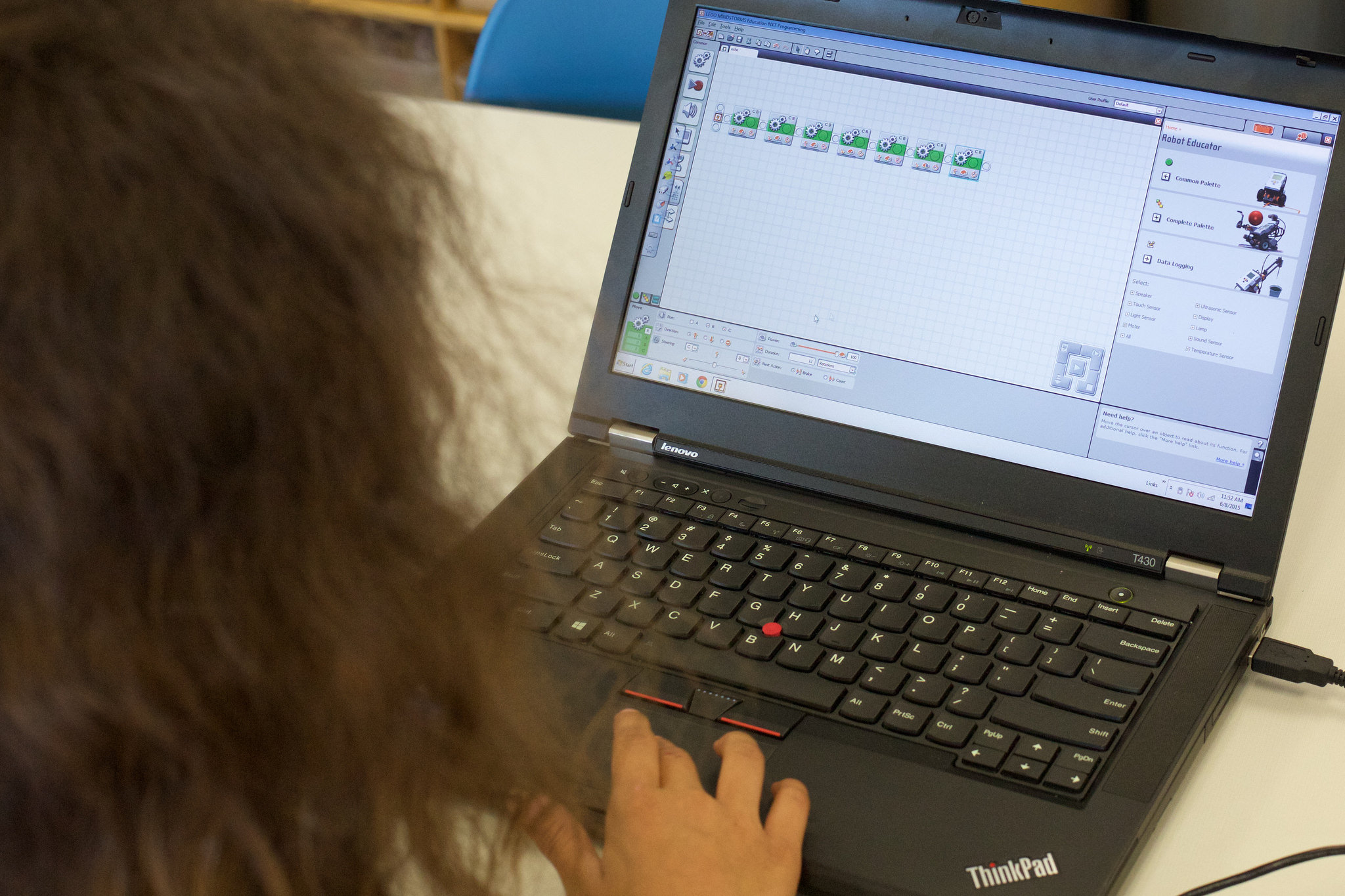
In 2013, only 18% of U.S. college graduates with a computer science degree were women.  It seems like if you give the opportunity for a woman to code, the technology industry expects her to ask “where are the pink accessories?”

More girls should be granted access to tech spaces. The root of this problem does not lie in universities or even Silicon Valley and their notorious nonexistent gender diversity. It stems even further, from a very young age. Girls and boys are taught that math and science are for the boys. Whenever a computer crashes, you call a technology specialist and chances are, he is a male. So how can this field invite girls in? A potential answer is “pinkifying” coding. They use this tactic because girls may find coding uninteresting and using the color pink can help encourage and invite them to try something new. The color is meant to emphasize “you’re a girl who codes” and “you’re a coder.”

Emily Reid, curriculum director of Girls Who Code, tells Mashable the tendency to pinkify coding comes from a desire to “meet girls where we think they are.” While she says the intention is good, the problem comes with assuming girls won’t be inherently interested in computer science — that things like “pink and princesses” are needed to lure them in.

Coding is a space that is historically not inviting to girls, especially African American girls. Kimberly Bryant, founder of Black Girls Code, also uses the color pink to appeal to girls.

All in all, it’s a controversial solution. If girls were encouraged from childhood, this would not be so “offensive.” But it’s definitely a baby step towards evening out a male-centered profession.

Article via Mashable, January 24, 2016

Photo: Crossroads Elementary School via DoDEA [Creative Commons Attribution-NonCommercial-NoDerivs]

Tami Reiss aims to prevent the use of tentative, apologetic qualifiers that many women use in the workplace with her new Gmail plug-in, Just Not Sorry. Offered for Google Chrome, the plug-in underlines tempering words like “sorry” and “just” written in emails and alerts the user with a pop-up describing the used phrase’s connotation. Tami Reiss is the CEO of the consulting firm Cyrus Innovation.

“The women in these rooms were all softening their speech in situations that called for directness and leadership,” Reiss said of her experience working at Cyrus Innovation. “We had all inadvertently fallen prey to a cultural communication pattern that undermined our ideas. As entrepreneurial women, we run businesses and lead teams—why aren’t we writing with the confidence of their positions?”

The plug-in has inspired a movement to ensure that #10000women send direct, unapologetic emails consistently throughout 2016. It has already been downloaded by thousands of users.

“This app prevented me from needlessly writing I am sorry in 6 emails today alone,” wrote one user in a review on Google Chrome’s Web Store. “LOVE IT. Thank you. #sorrynotsorry.”

Article via Good, 30 December 2015

Photo: Yackathon! Yelp’s First Community Hackathon in Montreal by Yelp Inc. [Creative Commons Attribution-NonCommercial-NoDerivs]

Oxfam International, a coalition of 17 organizations dedicated to reducing world poverty, just released its newest report on global income inequality. Fittingly titled “An Economy for the 1%,” the report states that the globe’s top 1 percent of earners now own more than the other 99 percent altogether. Moreover, the 62 richest people in the world own as much as 50 percent of the planet’s population.

Since the year 2000, income inequality has skyrocketed. The bottom 50 percent of the population have experienced a decrease in wealth of 41 percent—over a trillion dollars—and the top 1 percent has accumulated half of the total increase in global wealth since 2000. This occurs even as new technologies are brought to developing countries in order to improve their economies and help individuals.

The largest share of blame, according to the report, should be dealt to wealthy individuals who circumvent taxes through the use of consultants and offshore accounts. However, the increase in income inequality is also partially due to improvements in technology that increase capital gains.

“One of the key trends underlying this huge concentration of wealth and incomes is the increasing return to capital versus labor. In almost all rich countries and in most developing countries, the share of national income going to workers has been falling,” said the report. “This means workers are capturing less and less of the gains from growth.”

This issue is augmented by modern intellectual property laws, which drive out competitors and increase prices. The pharmaceutical industry, for example, spent over $228 million in 2014 on lobbying campaigns.

World Economic Forum Founder Klaus Schwab talked about the “fourth industrial revolution” that has resulted from the developments of new technologies. “Those who are entrepreneurs, who have talents, will push innovation—will gain from the revolution—and those who are on the other side, particularly in service positions, will lose,” he said.

From another perspective, this means that entrepreneurs in developing countries have a newfound shot at success. Half as many people lived below the extreme poverty line in 2010 than in 1990. According to the Oxfam report, however, the number of people living in extreme poverty “still remains unacceptably high.”

Article via The Washington Post, 21 January 2016

Photo: Boss by Santiago S.V. [Creative Commons Attribution-NonCommercial-NoDerivs]