
Google plans to equip 400 train station across India with high-speed Internet, as announced by the company’s CEO Sundar Pichai last Sunday. This announcement occurred at the same time that India’s Prime Minister Narendra Modi visited Google’s headquarters in Mountain View, California. Bringing high-speed WiFi to rural areas of India by 2019 is one of Modi’s goals as part of his Digital India Initiative.

Google is collaborating with Indian Railways and RailTel, an Internet service provider along railway lines. By the end of next year, 100 railway stations will have Internet. This will grant access for the 10 million people who use the stations every day.

India’s huge market will benefit Google greatly, as the company profits off advertising. However, India’s limited infrastructure will still prove an obstacle. Both Google and its competitor Facebook have experimented with drones and balloons to offer service to rural areas. Kevin Krewell, principal analyst at Tirias Research, commented on the difficulties of building in developing areas: “Power can be a problem. Running new wires is difficult — and keeping those wires from being stolen even more so.”

Article via TechNewsWorld, 29 September 2015

Photo: Train at Mahim Junction, Mumbai via Adam Cohn [Creative Commons Attribution-NonCommercial-NoDerivs]

Microsoft and Google agreed Wednesday to dismiss nearly 20 patent related lawsuits that they have pending against one another.

The two rivals have filed lawsuits against each other for the last 5 years over royalties related to wi-fi, smartphones and web video. The core of these lawsuits has been an ongoing fight over the use of  patents. Both Google and Microsoft have fought viciously to use patents owned by the one another, and to collect royalties for their use.

The patent disagreement started in 2010 when Microsoft filed suit against Motorola, which was acquired by Google the following year. Microsoft, like other prominent software companies, licenses patents from Google for various products and devices. Microsoft’s suit alleged that Android devices infringed on Microsoft patents and that Motorola was charging excessively for the royalties. Google fought back claiming that Motorola’s royalty rates were fair.

In 2013, Microsoft won its case against Motorola and got the royalty rate reduced to 22 times lower than Motorola was charging.

Neither company disclosed the settlement to end their patent feud, but they did say that they “agreed to collaborate on certain patent matters and anticipate working together in other areas in the future to benefit our customers.”


Article via CNET, 30 September 2015

Photo: Google Campus Mountain View, CA via Eric Langhorst[Creative Commons Attribution-NonCommercial-NoDerivs]


Volkswagon has been in the news lately because of a scandal involving software used to trick emissions tests on diesel vehicles.  The software was rigged to allow their diesel vehicles to pass their emissions test even though the emissions from the vehicles are well above the standard. Immediately following the news, the US has issued a recall for the vehicles, as well as a federal probe to find out what the company knew and when. In the meantime, lawsuits are being filed all around the country.

Robert Clifford, a prominent plantiff lawyer, expects a consolidation of lawsuits in the near future. Clifford has held a number of leadership roles in the American Bar Association and filed a suit against Volkswagen. “No doubt about it, there will be an MDL [multi-district litigation] here,” said Clifford. An overview done by the Wall Street Journal further confirms that laywers are looking to consolidate the lawsuits against Volkswagon.

Amie Parsons, a real estate agent in Dallas, recently filed lawsuit against Volkswagon. Parsons states that Volkswagon’s dishonesty seriously affects her bottom line as a real estate agent. Her attorney, Charles “Trey” Branham, spoke to a newspaper on her behalf. He stated that his client drives people around everyday for her profession, and [the Volkswagon scandal] causes her a big problem. Branham goes on to say “…it is something that affects real people on a daily basis, and it is a problem for them, not to mention the problem of putting 40 times the legal limit of pollution into the air.”


Article via ABAJournal, 29 September 2015

Photo: VW Kombi via Long Road Photography [Creative Commons Attribution-NonCommercial-NoDerivs]
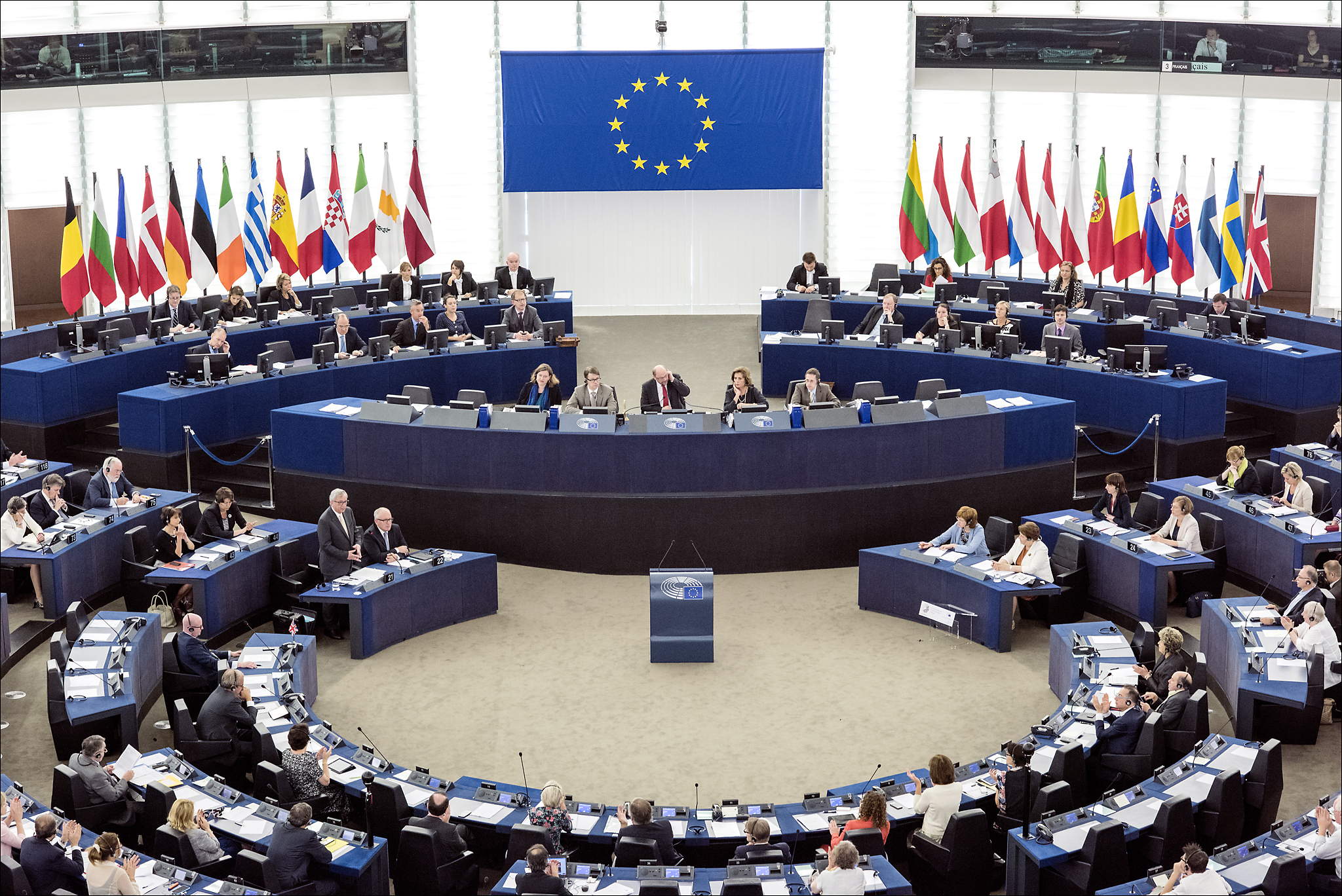
Google appealed EU’s “right to be forgotten” law that allows citizens to apply for the removal of false or damaging information indexed by search engines. Although the company is willing to comply by the law for European domains, like Google.fr, France’s data regulation authority (CNIL) ordered Google to comply by the law for its international domain, Google.com.

If Google refuses, the company may suffer significant fines or sanctions. Google officials argue that applying the EU’s “right to be forgotten” rule to its international server is both time and resource consuming, and may result in widespread censorship. Google does not have the right to appeal again until it has been fined for violating the CNIL order. After that, however, the company will be given the chance to refute the fines in France’s Supreme Court. The EU’s recent regulatory fine structure could charge Google for up to 5 percent of the company’s international operation cost, which would amount to roughly € 3 billion.

Google’s global privacy officer Peter Fleischer released a statement: “We believe that no country should have the authority to control what content someone in a second country can access.”

Article via Legaltech NewsSeptember 22, 2015

Photo: Review of the Latvian Presidency via European Parliament [Creative Commons Attribution-NonCommercial-NoDerivs]
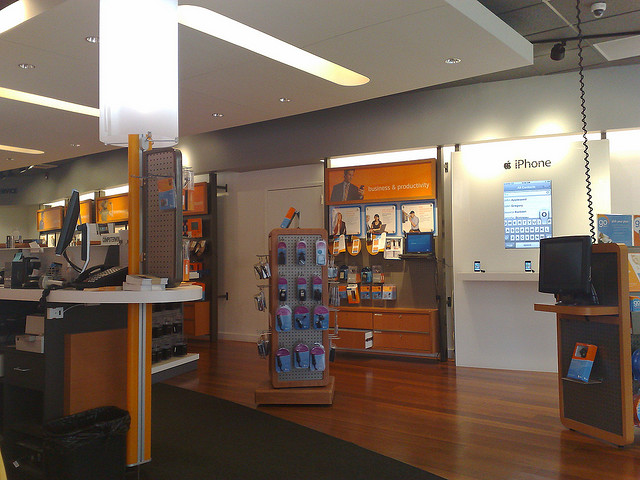
A southern California company and former AT&T sales reps are being sued by AT&T Mobility. They are accused of uploading malicious software to unlock phones so that the phones can be used by any wireless network without a contract. It is likely that the sales reps were hoping to exploit the resale market for cell phones.

Lawyers for AT&T Mobility stated that schemes like this are not uncommon. The lawsuit names SwiftUnlocks, as the southern California company referenced above. This is a company that unlocks cell phones for a fee. The lawsuit goes on to describe a scheme that involves the former sales reps profiting from using SwiftUnlocks to unlock phones in milliseconds. It was precisely the act of unlocking many phones so quickly, that drew attention to these sales reps, eventually promoting an investigation.

It is alleged that the former reps earned between $10,000 and $20,000 from Swift Unlocks before tipping off their bosses with their questionable behavior.

Although the suit does not mention criminal fraud, it could still prove expensive for Swift Unlocks and the former sales reps. It is expected that the damages would include lost profit as well as factoring in the revenue that the sales reps made during their alleged scheme.

Article via CNET, 19 September 2015

Photo: This trip to the at&t store is taking longer than I expected via Keith Lam [Creative Commons Attribution-NonCommercial-NoDerivs]

The world that we live in is still very much unequal. It can be a challenge to fight for the rights of those that are mistreated or ignored. Social justice is about shedding light on imbalances and doing something to change them. Information, Communication, and Technology for Development (ICT4D) is a tactic that uses information and technology to advance progress in the fields of human rights, socio-economic justice and development.

If you are an individual or an organization that is trying to make an impact, check out our Information, Communication and Technology for Development Resources.

There you will find links to NGO’s such as Tacital Tech that is looking to advance advocacy through information technology and management.

If you are looking to create your own NGO you will find resources like Open World. They provide micro scholarships for grassroots initiatives interested in freedom and sustainability.

Or, if you are just looking to get started social justice, you can link to guides like, The Barefoot Guide. This downloadable guide will help an organization start working on projects of social change.

There are many applications of information, communication and technology for development. One of the best uses of ICT4D has been for educating the general public. Whether your goal is formal or informal education, using information, communication, and technology for development applications can help expand knowledge about your organization.
Photo: Rural Roads Sector 1 Project via:  Asian Development Bank[Creative Commons Attribution-NonCommercial-NoDerivs]