In preparation for Legaltech West, a conference on legal technologyfour general counselors from companies in Silicon Valley such as SurveyMonkey and Adobe System were asked to speak on a panel entitled “A Day in the Life: The Role of the Silicon Valley General Counsel”. The moderator for the panel, Dean Gonsowski, global head of information governance at Recommind, thinks that the title is bit misleading. For these lawyers, there’s no such thing as a typical day. Working in an ever-changing environment like Silicon Valley means that these general counselors not only have to be comfortable dealing with traditional tasks, they also have to be able to handle unique and challenging problems every day. However, Gonsowski describes these challenges as just “blips in the radar”.

So what allows these general counselors to continue to do their jobs in an environment driven by constantly-evolving technology? While being knowledgeable about tech is definitely required, preparing for technological problems such as data breaches is considered ordinary in Silicon Valley. Rather, general counselors have to be able to effectively handle unprecedented problems. For example, the general counselor from SurveyMonkey speaking on the panel was able to direct a smooth transition after the CEO was unfortunately lost in an accident, despite not having adequately prepared for such an occurrence. Gonsowski cites her experience working in a fast-paced environment as the reason her and her team were able to handle the situation. These general counselors’ work amidst constant variability and disruption prepares them to handle problems a company much older may not experience at all.

Gonsowki thinks that hearing about these general counselors’ day-to-day lives may inspire people to try to follow in their footsteps. But, based on the fact that virtually any kind of problem can be handed to them, legal counsel in Silicon Valley don’t usually have a set job description or even a normal operating procedure. Therefore, according to Gonsowski, “this level of chaos is not going to be for everybody”.

Article via Legaltech NewsJuly 7, 2015

Photo: oracle via Dave [Creative Commons Attribution-NonCommercial-NoDerivs]

The startup Kickstarter has reorganized into a public benefit corporation, a legal move that states that the startup intends to have “a positive impact upon society”. Now, the company famous for funding new and upcoming projects is legally obligated  to take into account public benefit when making decisions. Additionally, Kickstarter will be required to disclose information on its social impact. This choice to start moving away from overbearing investors and shareholders is a growing trend among startups. Derrick Feldman, President of Achieve, a company that deals with online fundraising strategies,  states that more technology companies may follow in Kickstarter’s footsteps. He explains that public benefit corporations are useful for startups that “may have wrestled with the way companies have been formed and established in the past.”

Kickstarter, on their part, considers their reorganization another step towards transparency, which they have not always been associated with in the past. In 2012, concerns were raised over where money raised for projects that don’t come to fruition goes. Kickstarter has clarified that concern in their terms of use, and they has taken measures to become more  accountable to the public. Before becoming a public benefit corporation, they were already voluntarily designated a B Corporation and was required to follow exhaustive social and environmental responsibilities. Not many companies have chosen to become a public benefit corporation, but Kickstarter has joined companies such as Patagonia and This American Life in this decision. The co-founders of Kickstarter believe that the number of public benefit corporations will join them in the future, choosing to disregard “business as usual, and the pursuit of profit above all”.

Article via CNETSeptember 21, 2015

Photo: Kickstarter HQ Look via Scott Beale [Creative Commons Attribution-NonCommercial-NoDerivs]
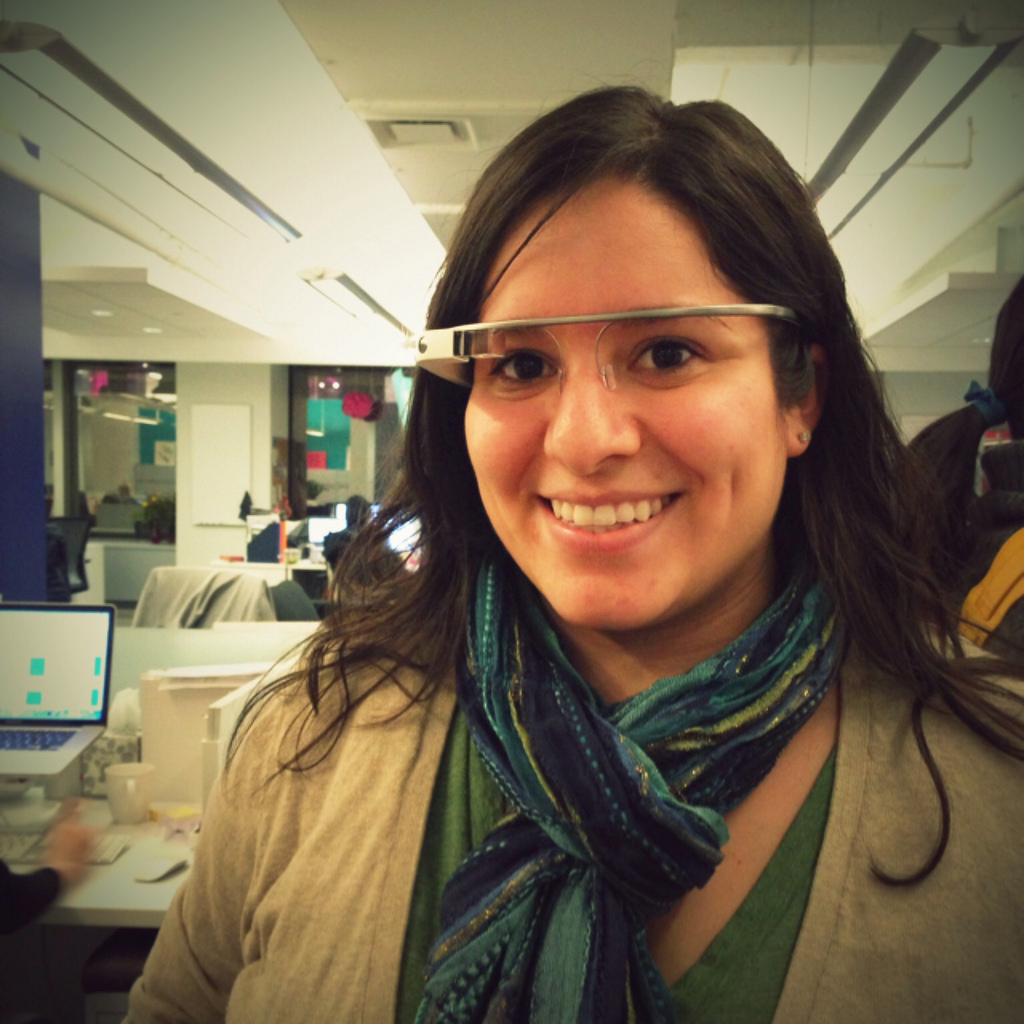
 

While wearable technology like Google Glass and Fitbit may appear to be better suited to consumer and recreational use, Marc Lambert from the firm Fennemore Craig has been creatively using wearable technology to better understand his clients and skillfully equip his lawyers. Lambert states that the process of introducing and using technology within his practice revolves around a “petri dish mentality”. Technology is routinely integrated into use within Lambert’s group, and then they evaluate whether the technology is benefitting their ability to help their clients. If the technology is found to have a positive impact on their work, other lawyers within the firm begin utilizing the technology.

One of the technologies that is allowing Lambert and his group to better communicate clients’ information is Google Glass. Lambert recounts using Google Glass to document how being a double amputee affects the day-to-day activities of client. Better than simply entering a demand letter or asking the client to describe their situation on the stand, Google Glass “is so effective is because it offered a first-person perspective on the hardships our client encountered each and every day of his life”, according to Lambert. Additionally, Lambert hopes that in future iterations of Google Glass hands-free video conferencing will allow him and his group to communicate with injured or handicapped clients that could not use other technology such as iPads to communicate as easily.

While Google Glass may seem more applicable to particular types of cases, Lambert utilizes Fitbits to determine how evidence may appear to focus jury groups. By asking focus groups to wear Fitbits and monitoring their heart rate as evidence is presented to them, Lambert can build a stronger case for his clients. Additionally, Fitbits could be used to provide support to clients’ claims that they are following their healthcare providers’ recommendations.

Though Lambert agrees that technology is a means to an end, it allows for better representation if “you buy in and aren’t simply paying lip service”. Technology is here to stay and innovation will lead to newer and more complex technologies. Therefore, as Lambert explains, it is  “important to educate other lawyers about how technology can be used and lead by example.”

Article via Above the LawSeptember 17, 2015

Photo: Becoming a cyborg via Jenn Vargas [Creative Commons Attribution-NonCommercial-NoDerivs]

 

The concepts of justice and equality were once determined only by judges and lawyers, but over time that has changed as technology has made it possible to connect individuals to important issues. PeaceTones, another project founded by the Internet Bar Organization in addition to The Center, works to make those issues even more accessible—by assisting musicians in releasing their music to the world in the hopes it will inspire global change and vitalization of their communities.

This could seem over ambitious. After all, many people listen to music to relax or relieve stress. Would people be receptive to music that connects people to issues or walks of life that are different from theirs? Are people interested in social problems around the world? Can music even have a profound effect? These are important questions, but I would argue that the actions of the general public have already answered them with a resounding yes.

Recently justice has taken on new definitions as individuals share information and opinions on Facebook, Twitter, Tumblr, and other popular online platforms. According to a New York Times article from 2009, “Social media can’t ensure social justice. But it can affect the invisibility that is the first barrier to achieving it.” Social media, already a large part of how people interact with their friends and family, has also become extremely important in shaping public opinion about certain issues. An article in the Astana Times explains, “Social media has established new ways of communicating and creating perceptions between businesses and consumers, organizations and their audiences, political offices and their electorate.” So if something that was once primarily used for catching up with friends or sharing funny cat videos can have such a large effect on one’s views, why not music?

An article published by NY Daily News argues that “music has always been a tuneful force for political change“. PeaceTones’ goal is not new or radical, but simply an organized effort to assist talented musicians in the work they are already accomplishing. PeaceTones seeks to provide musicians with the legal, business, and technological skills they need to create and release their music, become leaders within their communities, and share their stories with the rest of the world. Not only does PeaceTones provide mentors and training for budding musicians, the majority of the profits go back to the creators and into projects they choose to help their communities.  The arts have long been used to facilitate change and introduce new ideas, and the nonprofit explains in their mission statement that music especially has the ability to “transcend socio-political and economic divides and speak the universal languages of peace and justice.” Simply put, music is for everyone, despite their connection or background, and provides common ground for people to meet and learn from each other.

If you are interested in learning more about PeaceTones and some of their projects or would like to get involved, please visit their website.

Articles: New York Times, August 13, 2009; Astana Times, February 20, 2015;  NY Daily News, October 10, 2009;

Photo: RED HOT MUSIC- No Shallow thoughts via S Vikek [Creative Commons Attribution-NonCommercial-NoDerivs]

Due to confusion about the definition of an application programming interface, or API for short, the US Court of Appeals for the Federal Circuit has ruled that they are are subject to copyright. The confusion surrounds the distinction between software and APIs. While the US Court of Appeals for the Federal Circuit, also known as the CAFC, appears to have made the ruling based on the idea that software and APIs are the same, it is clear that there are many differences between the two. According to Pam Samuelson, a highly respected authority on copyright law, “The design of many program structures, including APIs, is inherently functional and aimed at achieving technical goals of efficiency.” Basically, saying an API is the same as software is akin to thinking “a dictionary is the same as a novel that uses those words”, as explained in an article by Techdirt concerning the CAFC’s ruling. Therefore, APIs aren’t copyrightable just because software is.

If APIs are more similar to “processes, procedures, systems, and methods”  than software as Samuelson says in her paper “Three Fundamental Flaws in CAFC’s Oracle v. Google Decision”, does the CAFC ruling make sense? In accordance with section 102 of the Copyright Act, which states, “In no case does copyright protection for an original work of authorship extend to any idea, procedure, process, system…regardless of the form in which it is described, explained, illustrated, or embodied in such work”, APIs should not be copyrightable. However, due to more confusion concerning the purpose and function of APIs, the Supreme Court has refused to hear the case. Therefore, as of now, the ruling made by the CAFC will remain in place.

Article via Techdirt, August 18, 2015

Photo: Free Stock: Copyright sign 3D render via MusesTouch – digiArt & design [Creative Commons Attribution-NonCommercial-NoDerivs]

 

Innovation has allowed cars to be outfitted with rear-end cameras, internet connectivity, computerized maintenance systems, and other technological components that can greatly benefit drivers. Unfortunately, new technology sometimes leads to new problems. The instant a car connects to networks,  it is opened up to cyberattacks, which could eventually lead to hackers controlling the car remotely. This could potentially create a multitude of problems, which has caused Intel to create the Automotive Security Review Board. The goal of the ASRB is to diminish the risk that cyberattacks present to vehicles. Chris Young, the Senior Vice President and General Manager of Intel Security, states that “with the help of the ASRB, Intel can establish security best practices and encourage that cyber-security is an essential ingredient in the design of every connected car.”

The board seeks to use ongoing security tests and audits to determine how best to advise automobile manufacturers. This, in turn, will keep cars and their drivers safer. Considering that some companies are already recalling cars due to security breaches, the ASRB and their findings will be useful to automotive companies. Intel will provide its advanced development platforms to assist with the board’s research into security and has already published an initial version of its automotive cybersecurity best practices that will be updated as the ASRB continues to conduct research. A key component of Intel’s advice centers on the fact that vehicle security is something that needs to be monitored and updated even after the sale of the car is finalized. As Intel stated in their report on best practices, “Threat analysis and risk assessment continues throughout the life of the car as old vulnerabilities are patched and new ones come to light, so the risk of attack can even increase with time.” As new threats are presented to technology, especially to its applications in cars, manufacturers will need the cybersecurity research that organizations like the Automotive Security Review Board are conducting.

Article via CNET, September 14, 2015

Photo: Urban Congestion via Doug [Creative Commons Attribution-NonCommercial-NoDerivs]