
Google plans to equip 400 train station across India with high-speed Internet, as announced by the company’s CEO Sundar Pichai last Sunday. This announcement occurred at the same time that India’s Prime Minister Narendra Modi visited Google’s headquarters in Mountain View, California. Bringing high-speed WiFi to rural areas of India by 2019 is one of Modi’s goals as part of his Digital India Initiative.

Google is collaborating with Indian Railways and RailTel, an Internet service provider along railway lines. By the end of next year, 100 railway stations will have Internet. This will grant access for the 10 million people who use the stations every day.

India’s huge market will benefit Google greatly, as the company profits off advertising. However, India’s limited infrastructure will still prove an obstacle. Both Google and its competitor Facebook have experimented with drones and balloons to offer service to rural areas. Kevin Krewell, principal analyst at Tirias Research, commented on the difficulties of building in developing areas: “Power can be a problem. Running new wires is difficult — and keeping those wires from being stolen even more so.”

Article via TechNewsWorld, 29 September 2015

Photo: Train at Mahim Junction, Mumbai via Adam Cohn [Creative Commons Attribution-NonCommercial-NoDerivs]

Gone are the days when law firms could rely on business from traditional sources. Due to the financial crisis in 2008, many law firms are still operating on a leaner staff and are looking for ways to cut expenses. To mitigate this need firms are looking to grow their expertise by connecting with outside experts, while also lowering their costs. In the information age, this means relying more on external digital sources for research instead of traditional in house law libraries.

Many prominent law firms have cut their costs by shrinking the size of their law library. In this leaner model, law firms cannot afford the costs of duplicate content and a buffet style approach to purchasing information. The demand for sophisticated research has increased, making law firms more dependent on access to vast amounts of content.

Two venders, LexisNexis and Westlaw are leading the market of law firms looking to meet the high information demand. As outsourcing has become more accepted in the legal community, there are more new companies coming aboard to meet legal information needs. Outsourced consultants are valuable to law firms because they can deliver high level services and expertise at scale. The companies allow law firms to take advantage of both broad and deep information, along with industry expertise, something that in house libraries alone cannot match.

For law firms, this means a lower administrative burden while increasing efficiency. As law firms conform and adjust to a changing market and economy, these services offer a means of staying relevant and competitive.


Article via LegalTechNews, 1 October 2015

Photo: law books via  Mr.TinDC [Creative Commons Attribution-NonCommercial-NoDerivs]
 

Twitter

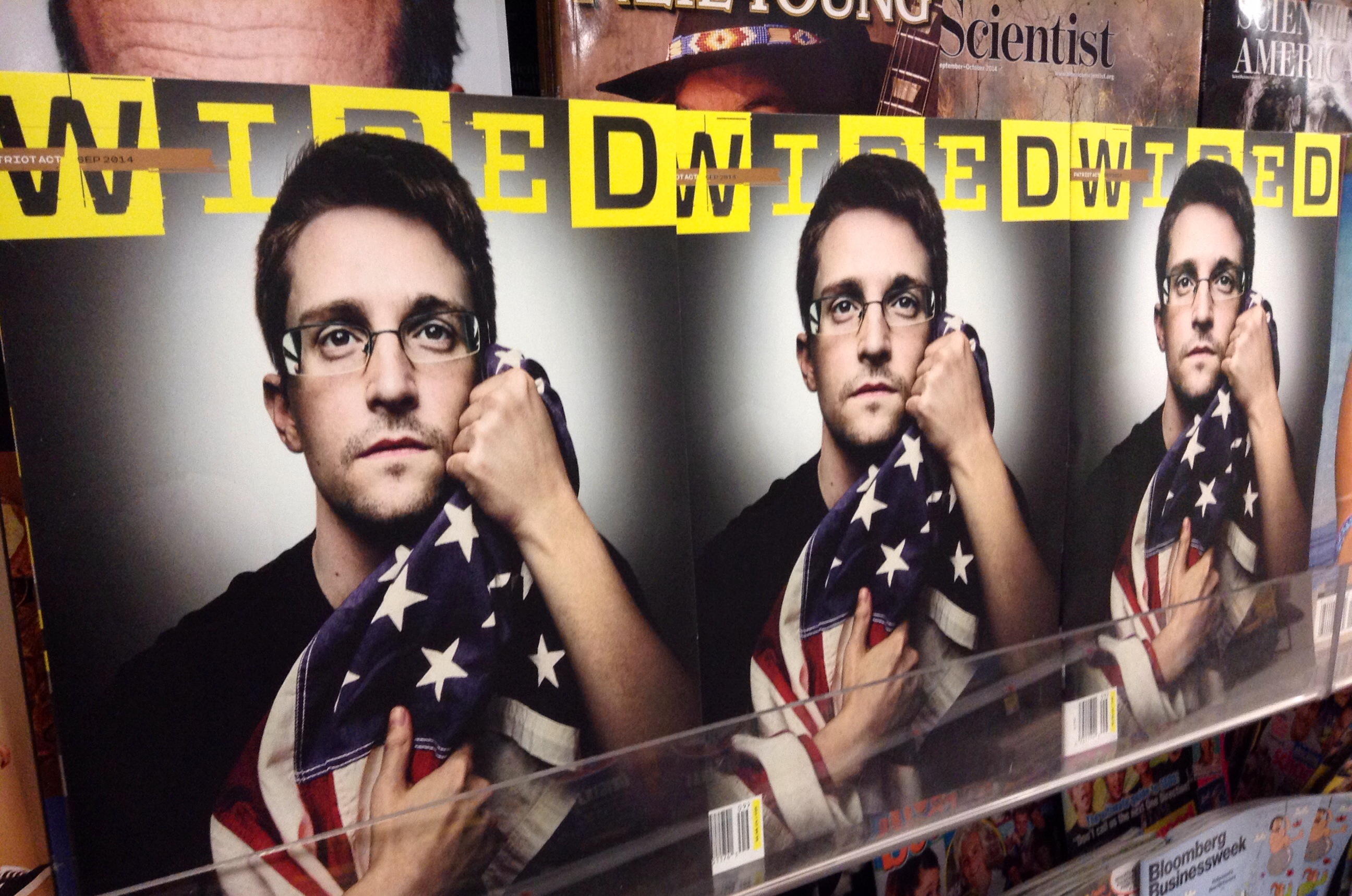
After keeping a relatively low profile since his exile to Moscow in 2013, Edward Snowden has made himself public on Twitter. His first post on Tuesday, “Can you hear me now?”, was a nod to his past whistleblowing as well as a subtle reference to a Verizon television commercial. Within two hours, Snowden had 300,000 followers.

Ben Wizner, one of Snowden’s lawyers, has confirmed that the account is authentic. The fugitive’s first tweet was welcomed by a response tweet—“Yes! Welcome to Twitter.”—from Twitter’s co-founder Jack Dorsey. Astrophysicist and cosmologist Neil deGrasse Tyson also acknowledged Snowden, and ended a Twitter back-and-forth with: “Ed @Snowden, after discussing everything from Chemistry to the Constitute on #StarTalk, you’re a patriot to me. Stay safe.”

Snowden follows only one account, belonging to the NSA.

Article via CNET, 29 September 2015

Photo: Edward Snowden Wired via Mike Motzart [Creative Commons Attribution-NonCommercial-NoDerivs]
Microsoft and Google agreed Wednesday to dismiss nearly 20 patent related lawsuits that they have pending against one another.

The two rivals have filed lawsuits against each other for the last 5 years over royalties related to wi-fi, smartphones and web video. The core of these lawsuits has been an ongoing fight over the use of  patents. Both Google and Microsoft have fought viciously to use patents owned by the one another, and to collect royalties for their use.

The patent disagreement started in 2010 when Microsoft filed suit against Motorola, which was acquired by Google the following year. Microsoft, like other prominent software companies, licenses patents from Google for various products and devices. Microsoft’s suit alleged that Android devices infringed on Microsoft patents and that Motorola was charging excessively for the royalties. Google fought back claiming that Motorola’s royalty rates were fair.

In 2013, Microsoft won its case against Motorola and got the royalty rate reduced to 22 times lower than Motorola was charging.

Neither company disclosed the settlement to end their patent feud, but they did say that they “agreed to collaborate on certain patent matters and anticipate working together in other areas in the future to benefit our customers.”


Article via CNET, 30 September 2015

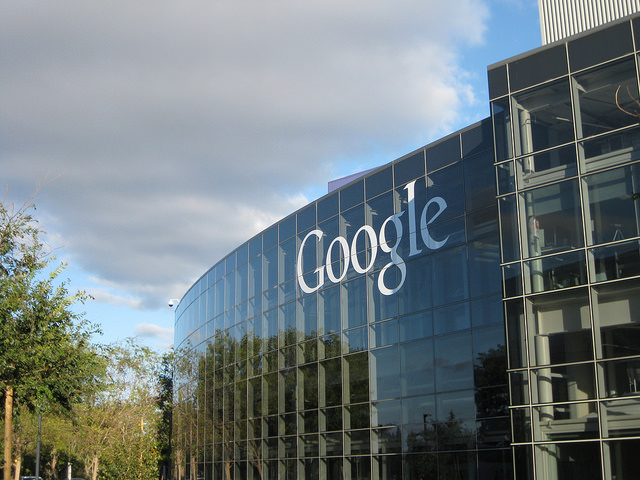
Photo: Google Campus Mountain View, CA via Eric Langhorst[Creative Commons Attribution-NonCommercial-NoDerivs]


Volkswagon has been in the news lately because of a scandal involving software used to trick emissions tests on diesel vehicles.  The software was rigged to allow their diesel vehicles to pass their emissions test even though the emissions from the vehicles are well above the standard. Immediately following the news, the US has issued a recall for the vehicles, as well as a federal probe to find out what the company knew and when. In the meantime, lawsuits are being filed all around the country.

Robert Clifford, a prominent plantiff lawyer, expects a consolidation of lawsuits in the near future. Clifford has held a number of leadership roles in the American Bar Association and filed a suit against Volkswagen. “No doubt about it, there will be an MDL [multi-district litigation] here,” said Clifford. An overview done by the Wall Street Journal further confirms that laywers are looking to consolidate the lawsuits against Volkswagon.

Amie Parsons, a real estate agent in Dallas, recently filed lawsuit against Volkswagon. Parsons states that Volkswagon’s dishonesty seriously affects her bottom line as a real estate agent. Her attorney, Charles “Trey” Branham, spoke to a newspaper on her behalf. He stated that his client drives people around everyday for her profession, and [the Volkswagon scandal] causes her a big problem. Branham goes on to say “…it is something that affects real people on a daily basis, and it is a problem for them, not to mention the problem of putting 40 times the legal limit of pollution into the air.”


Article via ABAJournal, 29 September 2015

Photo: VW Kombi via Long Road Photography [Creative Commons Attribution-NonCommercial-NoDerivs]

In the past, only five malware-infected applications have made it into the Apple App Store. That number has grown, though, as 25 apps have been identified and pulled from the App Store for containing malware. This cyber breach is due to a program called XcodeGhost, an imitation of the program Xcode, which is the platform develops utilize to make programs for iOS and Mac. While the official Xcode program takes about half an hour to download in the United States, the time is almost triple for developers in China. Most decide to download the program from local servers, which allowed the counterfeit XcodeGhost to be substituted for the real Xcode program and downloaded in in its place. Thankfully, apps developed using this malware have not been observed to steal any sensitive information from users that have downloaded them. Still, though the apps appear to be harmless, the attack on the App Store is notable according to Palo Alto Network’s Director of Threat Intelligence, Ryan Olsen. The firm was the first to report the existence of the malware-tainted apps, and Olsen states that the cyber breach reveals that the Apple App Store isn’t impenetrable.

To prevent another cyber breach, Apple will provide a way for Chinese developers to download an official copy of Xcode domestically, and Apple is “working with the developers to make sure they’re using the proper version of Xcode to rebuild their apps” according to an Apple spokesperson.

Article via CNETSeptember 22, 2015

Photo: Apps via Pixel Fantasy [Creative Commons Attribution-NonCommercial-NoDerivs]