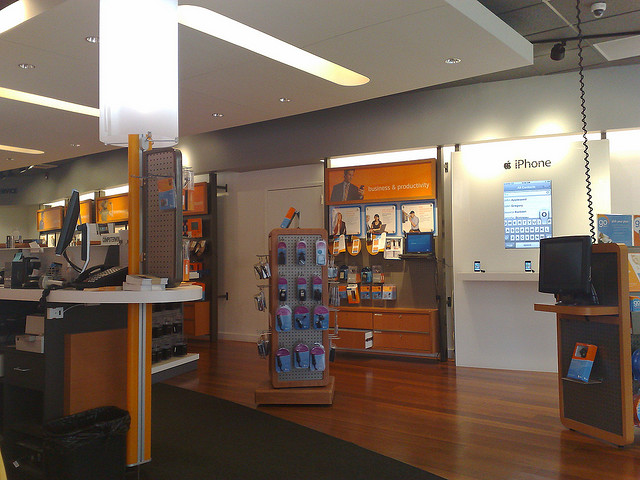
A southern California company and former AT&T sales reps are being sued by AT&T Mobility. They are accused of uploading malicious software to unlock phones so that the phones can be used by any wireless network without a contract. It is likely that the sales reps were hoping to exploit the resale market for cell phones.

Lawyers for AT&T Mobility stated that schemes like this are not uncommon. The lawsuit names SwiftUnlocks, as the southern California company referenced above. This is a company that unlocks cell phones for a fee. The lawsuit goes on to describe a scheme that involves the former sales reps profiting from using SwiftUnlocks to unlock phones in milliseconds. It was precisely the act of unlocking many phones so quickly, that drew attention to these sales reps, eventually promoting an investigation.

It is alleged that the former reps earned between $10,000 and $20,000 from Swift Unlocks before tipping off their bosses with their questionable behavior.

Although the suit does not mention criminal fraud, it could still prove expensive for Swift Unlocks and the former sales reps. It is expected that the damages would include lost profit as well as factoring in the revenue that the sales reps made during their alleged scheme.

Article via CNET, 19 September 2015

Photo: This trip to the at&t store is taking longer than I expected via Keith Lam [Creative Commons Attribution-NonCommercial-NoDerivs]

Recent hackings have been found to especially target three main platforms: healthcare, education, and government. This has compromised the security of healthcare provider Excellus BlueCross BlueShield, the Cal State University System, and the U.S. Department of Energy.

It was discovered last week that over 10 million people are at risk due to a Excellus computer system hacking that’s been occurring since December of 2013. It doesn’t appear that the hackers stole or utilized any important personal information, though they were able to access and view customer names, birth dates, social security numbers, and financial claims. The attack was one of the worst 20 breaches in healthcare of all time. The hacking also parallels recent incidences at Anthem, Office of personnel Management, Sony and Ashley Madison. In all cases, the attacks were committed by people disguised as employees, using stolen credentials to gain access to corporate networks.

Roughly 80,000 students from the Cal State University System lost general information after enrolling in a class on sexual harassment. Their names, numbers, emails, gender, race, and relationship status were provided to a contractor as part of a program on sexual harassment. The contractor, “We End Violence” was hacked, as reported in the Los Angeles Times earlier this month.

The U.S. Department of Energy’s computer systems were attacked 159 times between 2010 and 2014. Officials declined to comment, however, on the nature of what was accessed by hackers or whether any foreign governments were responsible.

Article via ECT News NetworkSeptember 16, 2015

Photo: Longmont Power and Communications-3 via You Belong in Longmont [Creative Commons Attribution-NonCommercial-NoDerivs]
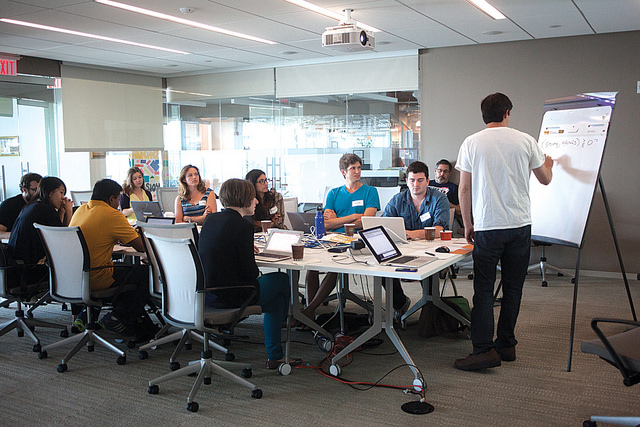
Hackathons have proven to be a great way to use tech for good. Often described as a great equalizer, technology can be leveraged to bring voice to people that society often ignores. Social activists are turning to hackathons to help spread their message and develop solutions, instead of waiting on the government to initiate change.

One such activist is Hera Hussain, founder of the advocacy group Chayn. Chayn is a volunteer-led, open source project that leverages technology to empower women against violence and oppression so they can live happier and healthier lives. They offer tools to help abused women build a domestic violence case without a lawyer, and advise about how a person can be tracked on and offline, among other things. This organization is all about individuals empowered to make change. One of their main ways to get the community involved is hackathons.

Hussain says that hackathons are events that bring together important parts of society that isolate themselves when it comes to women’s issues. “You either have events that just focus on women…” Hussain says, “or you have events that are completely dominated by men and are either forgetting that women exist or have separate issues. There’s very little middle ground that uses an integrated women lens as part of a broader focus of solving societal challenges.”

Bringing together these problem solvers is crucial to making real progress in the future. Hussain states that Chayn is about solving problems with, and not for, women in different communities. This organization is dedicated to allowing women to choose what they want to do with their lives while being treated equally during the process. Hussain says, “We always come back to independence and happiness as our two biggest goals..”

Article via Good Magazine, 22 September 2015

Photo: Hacking for Women’s Empowerment via Bread For The World [Creative Commons Attribution-NonCommercial-NoDerivs]

Domestic workers do the work that make all other work possible. They are the nannies that take care of children, and the house keepers that keep homes clean while their owners are working. They are often working for less than $13 and hour and without benefits like health insurance or social security payments. 95% of these workers are women according to the National Domestic Workers Alliance site.

Ai-jen Poo is trying to change that. She is the director for The National Domestic Workers Alliance, an organization that works for the respect, recognition and inclusion in labor protections for domestic workers. “The future really needs the leadership of women…”, Poo says in the video explaining the organization and their work. “Domestic workers…[are] caring for our children, our aging loved ones, our homes…the most precious elements of our lives”.

The MacArthur Foundation agreed, and awarded Poo a Genius grant for her work with The National Domestic Workers Alliance in 2014. The grant will allow for the Alliance to continue to shed light on the plight of domestic workers, whose work is often hidden from public view. Much of this kind of work was done by family members in the past, and never afforded the protections of labor laws. That means that domestic workers are not only working for little pay, but with no sick time or vacation. No protection against discrimination or harassment. No retirement plan or health insurance plan.

Poo has stated that the biggest change that she is hoping to make is respect and recognition for the value of this work. “We as a country need more care than we ever have before”, says Poo. “Yet, this work is so undervalued in society. It is almost taken for granted or invisible”.


Video via Mashable, 18 September 2015

Photo: Filipino Domestic Worker via ILO in Asia and the Pacific[Creative Commons Attribution-NonCommercial-NoDerivs]

In preparation for Legaltech West, a conference on legal technologyfour general counselors from companies in Silicon Valley such as SurveyMonkey and Adobe System were asked to speak on a panel entitled “A Day in the Life: The Role of the Silicon Valley General Counsel”. The moderator for the panel, Dean Gonsowski, global head of information governance at Recommind, thinks that the title is bit misleading. For these lawyers, there’s no such thing as a typical day. Working in an ever-changing environment like Silicon Valley means that these general counselors not only have to be comfortable dealing with traditional tasks, they also have to be able to handle unique and challenging problems every day. However, Gonsowski describes these challenges as just “blips in the radar”.

So what allows these general counselors to continue to do their jobs in an environment driven by constantly-evolving technology? While being knowledgeable about tech is definitely required, preparing for technological problems such as data breaches is considered ordinary in Silicon Valley. Rather, general counselors have to be able to effectively handle unprecedented problems. For example, the general counselor from SurveyMonkey speaking on the panel was able to direct a smooth transition after the CEO was unfortunately lost in an accident, despite not having adequately prepared for such an occurrence. Gonsowski cites her experience working in a fast-paced environment as the reason her and her team were able to handle the situation. These general counselors’ work amidst constant variability and disruption prepares them to handle problems a company much older may not experience at all.

Gonsowki thinks that hearing about these general counselors’ day-to-day lives may inspire people to try to follow in their footsteps. But, based on the fact that virtually any kind of problem can be handed to them, legal counsel in Silicon Valley don’t usually have a set job description or even a normal operating procedure. Therefore, according to Gonsowski, “this level of chaos is not going to be for everybody”.

Article via Legaltech NewsJuly 7, 2015

Photo: oracle via Dave [Creative Commons Attribution-NonCommercial-NoDerivs]
The startup Kickstarter has reorganized into a public benefit corporation, a legal move that states that the startup intends to have “a positive impact upon society”. Now, the company famous for funding new and upcoming projects is legally obligated  to take into account public benefit when making decisions. Additionally, Kickstarter will be required to disclose information on its social impact. This choice to start moving away from overbearing investors and shareholders is a growing trend among startups. Derrick Feldman, President of Achieve, a company that deals with online fundraising strategies,  states that more technology companies may follow in Kickstarter’s footsteps. He explains that public benefit corporations are useful for startups that “may have wrestled with the way companies have been formed and established in the past.”

Kickstarter, on their part, considers their reorganization another step towards transparency, which they have not always been associated with in the past. In 2012, concerns were raised over where money raised for projects that don’t come to fruition goes. Kickstarter has clarified that concern in their terms of use, and they has taken measures to become more  accountable to the public. Before becoming a public benefit corporation, they were already voluntarily designated a B Corporation and was required to follow exhaustive social and environmental responsibilities. Not many companies have chosen to become a public benefit corporation, but Kickstarter has joined companies such as Patagonia and This American Life in this decision. The co-founders of Kickstarter believe that the number of public benefit corporations will join them in the future, choosing to disregard “business as usual, and the pursuit of profit above all”.

Article via CNETSeptember 21, 2015

Photo: Kickstarter HQ Look via Scott Beale [Creative Commons Attribution-NonCommercial-NoDerivs]