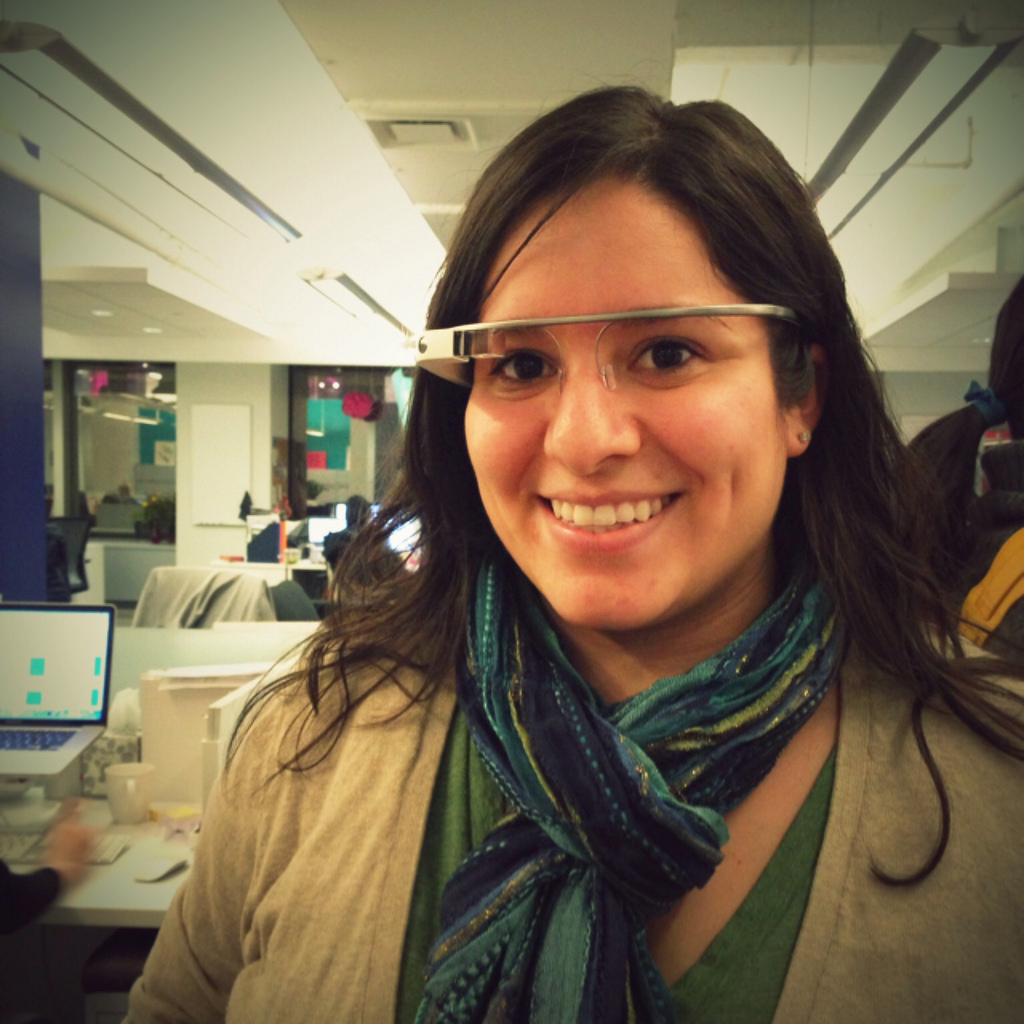
While wearable technology like Google Glass and Fitbit may appear to be better suited to consumer and recreational use, Marc Lambert from the firm Fennemore Craig has been creatively using wearable technology to better understand his clients and skillfully equip his lawyers. Lambert states that the process of introducing and using technology within his practice revolves around a “petri dish mentality”. Technology is routinely integrated into use within Lambert’s group, and then they evaluate whether the technology is benefitting their ability to help their clients. If the technology is found to have a positive impact on their work, other lawyers within the firm begin utilizing the technology.

One of the technologies that is allowing Lambert and his group to better communicate clients’ information is Google Glass. Lambert recounts using Google Glass to document how being a double amputee affects the day-to-day activities of client. Better than simply entering a demand letter or asking the client to describe their situation on the stand, Google Glass “is so effective is because it offered a first-person perspective on the hardships our client encountered each and every day of his life”, according to Lambert. Additionally, Lambert hopes that in future iterations of Google Glass hands-free video conferencing will allow him and his group to communicate with injured or handicapped clients that could not use other technology such as iPads to communicate as easily.

While Google Glass may seem more applicable to particular types of cases, Lambert utilizes Fitbits to determine how evidence may appear to focus jury groups. By asking focus groups to wear Fitbits and monitoring their heart rate as evidence is presented to them, Lambert can build a stronger case for his clients. Additionally, Fitbits could be used to provide support to clients’ claims that they are following their healthcare providers’ recommendations.

Though Lambert agrees that technology is a means to an end, it allows for better representation if “you buy in and aren’t simply paying lip service”. Technology is here to stay and innovation will lead to newer and more complex technologies. Therefore, as Lambert explains, it is  “important to educate other lawyers about how technology can be used and lead by example.”

Article via Above the LawSeptember 17, 2015

Photo: Becoming a cyborg via Jenn Vargas [Creative Commons Attribution-NonCommercial-NoDerivs]

 

Clover Health, a San Francisco insurance startup, is using data to change the landscape of modern healthcare. The company examines insurance claims from a person’s medical history to offer directed care to high-risk patients, especially seniors.

In an equity round led by First Round Capital, Clover raised over $100 million in funding. The company looks to replace the larger, more conventional Medicare health insurance companies that don’t currently analyze data to offer targeted healthcare.

Clover accesses medical information only available to insurance providers who collect claims, like lab tests and radiology results. Using this information, Clover’s software models identify patient issues and trends, allowing the company’s staff of nurses and social workers the opportunity to intervene. This falls in line with one of the company’s Health goals to reduce the number of visits customers take in hospitals.

Clover Health’s CTO, Kris Gale, describes the company model: “At the core we’re using data and software to build clinical profiles of people, identify gaps in care, and fill those gaps in care. We have a small team that will do targeted interventions to drive improved health outcomes of people. Every in-patient hospital admission we can prevent by filling these gaps in care, this ends up being a positive for us.”

Article via TechCrunch; September 19, 2015

Photo: Child receives ear exam via World Bank Photo Collection [Creative Commons Attribution-NonCommercial-NoDerivs]

John Oliver is the host of HBO’s Last Week Tonight with John OliverThe show is a satirical take on the news of the week and lasts about 30 minutes.  Prior to Last Week Tonight, John Oliver was was correspondent on The Daily Show with Jon Stewartstand up comedian, and and Emmy award winning writer. Now that Oliver is squarely in the spotlight with his own show, he has used it as a platform to talk about social justice and civil rights concerns.

His show has touched on many of the hot issues of the day like the use of torture by the US Government and LGBT Rights. He has also shed light on less know concerns, such as the misuse of farmers by companies associated with chicken in the US. He devotes a lot of air time on his show to discuss these topics which results in an audience that not only becomes aware of the issues, but becomes engaged. You can see the effect in the blogosphere and search traffic directly after his show airings.

His effect is reaching all the way to the halls of congress. Marcy Kaptur, a congresswoman from Ohio, started working on legislation related to the story Oliver did on farmers. Her recent victory in this battle has secured new protections for farmers. Another congresswoman from Maine stated the Oliver’s coverage on the subject helped to support the legislative action.

John Oliver’s gift seems to be bringing new interest to those fighting in the trenches for change. His show provides a voice for topics big and small and aids the fight for social justice.


Article via Mashable, 5 September 2015

Photo:John Oliver on the NSA Recording Your Phone and E-Mail via:  KAZ Vorpal[Creative Commons Attribution-NonCommercial-NoDerivs]

The concepts of justice and equality were once determined only by judges and lawyers, but over time that has changed as technology has made it possible to connect individuals to important issues. PeaceTones, another project founded by the Internet Bar Organization in addition to The Center, works to make those issues even more accessible—by assisting musicians in releasing their music to the world in the hopes it will inspire global change and vitalization of their communities.

This could seem over ambitious. After all, many people listen to music to relax or relieve stress. Would people be receptive to music that connects people to issues or walks of life that are different from theirs? Are people interested in social problems around the world? Can music even have a profound effect? These are important questions, but I would argue that the actions of the general public have already answered them with a resounding yes.

Recently justice has taken on new definitions as individuals share information and opinions on Facebook, Twitter, Tumblr, and other popular online platforms. According to a New York Times article from 2009, “Social media can’t ensure social justice. But it can affect the invisibility that is the first barrier to achieving it.” Social media, already a large part of how people interact with their friends and family, has also become extremely important in shaping public opinion about certain issues. An article in the Astana Times explains, “Social media has established new ways of communicating and creating perceptions between businesses and consumers, organizations and their audiences, political offices and their electorate.” So if something that was once primarily used for catching up with friends or sharing funny cat videos can have such a large effect on one’s views, why not music?

An article published by NY Daily News argues that “music has always been a tuneful force for political change“. PeaceTones’ goal is not new or radical, but simply an organized effort to assist talented musicians in the work they are already accomplishing. PeaceTones seeks to provide musicians with the legal, business, and technological skills they need to create and release their music, become leaders within their communities, and share their stories with the rest of the world. Not only does PeaceTones provide mentors and training for budding musicians, the majority of the profits go back to the creators and into projects they choose to help their communities.  The arts have long been used to facilitate change and introduce new ideas, and the nonprofit explains in their mission statement that music especially has the ability to “transcend socio-political and economic divides and speak the universal languages of peace and justice.” Simply put, music is for everyone, despite their connection or background, and provides common ground for people to meet and learn from each other.

If you are interested in learning more about PeaceTones and some of their projects or would like to get involved, please visit their website.

Articles: New York Times, August 13, 2009; Astana Times, February 20, 2015;  NY Daily News, October 10, 2009;

Photo: RED HOT MUSIC- No Shallow thoughts via S Vikek [Creative Commons Attribution-NonCommercial-NoDerivs]

The world that we live in is still very much unequal. It can be a challenge to fight for the rights of those that are mistreated or ignored. Social justice is about shedding light on imbalances and doing something to change them. Information, Communication, and Technology for Development (ICT4D) is a tactic that uses information and technology to advance progress in the fields of human rights, socio-economic justice and development.

If you are an individual or an organization that is trying to make an impact, check out our Information, Communication and Technology for Development Resources.

There you will find links to NGO’s such as Tacital Tech that is looking to advance advocacy through information technology and management.

If you are looking to create your own NGO you will find resources like Open World. They provide micro scholarships for grassroots initiatives interested in freedom and sustainability.

Or, if you are just looking to get started social justice, you can link to guides like, The Barefoot Guide. This downloadable guide will help an organization start working on projects of social change.

There are many applications of information, communication and technology for development. One of the best uses of ICT4D has been for educating the general public. Whether your goal is formal or informal education, using information, communication, and technology for development applications can help expand knowledge about your organization.
Photo: Rural Roads Sector 1 Project via:  Asian Development Bank[Creative Commons Attribution-NonCommercial-NoDerivs]

On Tuesday, Uber requested an appeal to a ruling made earlier this year that determined Uber drivers are employees and not independent contractors. The company has claimed that it is merely an app and not an employer of the nearly 160,000 drivers that are affliated with Uber in the US.

In an effort to defend itself again a class-action suit, uber filed a motion shortly after the ruling which opposes any class action driver suit. The company claims that the few drivers who believe that the Uber should reimburse them for expenses and tips do not represent the majority of drivers who are happy with the relationship that they have with the tech company.

But on September 1, US District Judge Edward Chen approved a class action status for that lawsuit. Uber is currently appealing this ruling in the hopes that the appeal court with reverse the judges order. In a 22 page request for appeal, Uber attorney Ted Boutrous wrote,”The potential ramifications of this closely-watched class-certification order are difficult to overstate.”

Uber has been battling this case since 2013 in an effort to get it thrown out. If the court upholds the Judge’s decision it would mean big changes for Uber. Not only would it have to start paying for expenses, such as vehicle upkeep, but it would also have to pay other costs such as social security, health care, paid time off and overtime.


Article via CNET, 15 September 2015

Photo: Taxi Driver/Santiago, Chile via Hotch Chang[Creative Commons Attribution-NonCommercial-NoDerivs]