
Innovation has allowed cars to be outfitted with rear-end cameras, internet connectivity, computerized maintenance systems, and other technological components that can greatly benefit drivers. Unfortunately, new technology sometimes leads to new problems. The instant a car connects to networks,  it is opened up to cyberattacks, which could eventually lead to hackers controlling the car remotely. This could potentially create a multitude of problems, which has caused Intel to create the Automotive Security Review Board. The goal of the ASRB is to diminish the risk that cyberattacks present to vehicles. Chris Young, the Senior Vice President and General Manager of Intel Security, states that “with the help of the ASRB, Intel can establish security best practices and encourage that cyber-security is an essential ingredient in the design of every connected car.”

The board seeks to use ongoing security tests and audits to determine how best to advise automobile manufacturers. This, in turn, will keep cars and their drivers safer. Considering that some companies are already recalling cars due to security breaches, the ASRB and their findings will be useful to automotive companies. Intel will provide its advanced development platforms to assist with the board’s research into security and has already published an initial version of its automotive cybersecurity best practices that will be updated as the ASRB continues to conduct research. A key component of Intel’s advice centers on the fact that vehicle security is something that needs to be monitored and updated even after the sale of the car is finalized. As Intel stated in their report on best practices, “Threat analysis and risk assessment continues throughout the life of the car as old vulnerabilities are patched and new ones come to light, so the risk of attack can even increase with time.” As new threats are presented to technology, especially to its applications in cars, manufacturers will need the cybersecurity research that organizations like the Automotive Security Review Board are conducting.

Article via CNET, September 14, 2015

Photo: Urban Congestion via Doug [Creative Commons Attribution-NonCommercial-NoDerivs]

The best protection against widespread government surveillance now comes from major tech companies, including those accused of collecting mass amounts of data to sell to other companies seeking targeted advertising.

The FBI has accused Apple of aiding criminals by offering default encryption in the new iPhones it sells. Government reproach is also directed towards Google, which is offering the same encryption for its new Android phones. However, the majority of Americans are grateful for the tech companies’ new developments; a recent Pew survey found that 65 percent of people believe that there aren’t enough limits on government surveillance.

Smartphone encryption is not the only guard against surveillance, either. Google and Yahoo announced that they’re both working on end-to-end encryption in email, and Facebook was established on a Tor hidden services site so that people with access to network traffic can’t access user data.

Encryption tools are generally difficult to operate, and thus only tech-savvy users have been able to achieve full privacy. As a result, anyone using encryption tools was unique and therefore suspicious to government officials. With new integrated encryption, privacy will be more universal, and those previously using encryption systems will be better camouflaged.

Articles: The Center for Internet and Society, September 9, 2015

Photo: DC Ralley Against Mass Surveillance via Susan Melkisethian [Creative Commons Attribution-NonCommercial-NoDerivs]
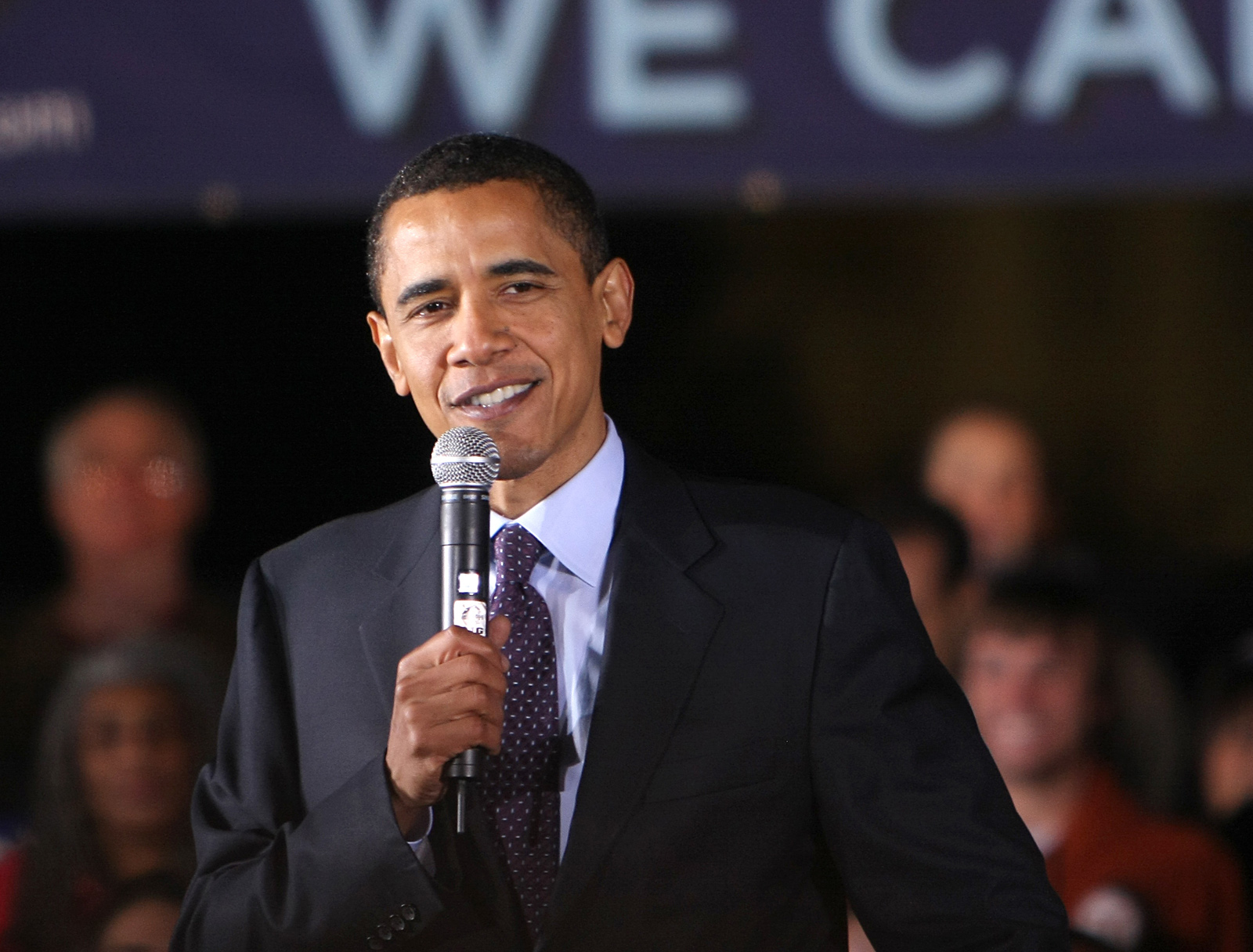
According to a study done by Robert Epstein and Ronald E. Robertson, changes made to Google’s search algorithm have the ability to manipulate voting preferences of undecided voters by 20 percent or more. Published in the Proceedings of the National Academy of Sciences (PNAS), the study experimented with the Search Engine Manipulation Effect (SEME) in two countries with over 4,500 participants.

The investigators conducted an experiment where participants were randomly assigned to one of three groups in which search rankings favored Candidate A, B, or neither. Before researching for 15 minutes on a search-engine called Kadoodle, participants were provided a short description of both candidates and asked whom they would be voting for. The 30 search results were the same for everybody, but ordered differently depending on the group. The number of people favoring a candidate increased between 37 and 60 percent due to the biased search algorithm.

Google adjusts its search algorithm 600 times a year. In refutation of SEME, Google comments: “Providing relevant answers has been the cornerstone of Google’s approach to search from the very beginning. It would undermine the people’s trust in our results and company if we were to change course.”


Articles: Politico Magazine, August 19, 2015; via MILRN

Photo: Campaigning with a Smile via Jack [Creative Commons Attribution-NonCommercial-NoDerivs]

Ellen Pao has been in the news a lot in the last couple of years. She has had a very high profile suit (and loss) to Kleiner Perkins Caufield & Byers as well as very public exit as CEO from Reddit.  After 3 years of litigation in her sex discrimination suit against Kleiner Perkers, she has decided to call it quits.

According to a guest post that she wrote on re/code, Pao has decided to move on.

“Over the past three and a half years, I have pursued a legal case against Kleiner Perkins for gender discrimination and retaliation”, says Pao. “Seeking justice in the courts has been painful for me personally and professionally, and for my family. I am now moving on…”

She went on to say how her experience shows how hard it is to bring gender discrimination suits in our legal system.

“Our society is struggling with workplace discrimination and harassment…human resources is a company-oriented function — when you can find it at all. But we have a long way to go, as women and minorities continue to make up a small fraction of the management at our most lucrative and productive companies.”

Ellen Pao’s struggle is a reminder that gender discrimination is still a large issue that is hard to prosecute. She documents how she was out numbered by the other side from the beginning, and believed that her only option was to trade her silence for a settlement. She has chosen to do neither in an attempt to bring sex discrimination issues to light in the hopes to foster debate and improvement.

Article via CNet, 10 September 2015

Photo: The girl with no feet via Riccardo Romano[Creative Commons Attribution-NonCommercial-NoDerivs]

The Internet of Things (IoT) is the next revolution in tech. It promises to take devices and connect them together via the internet. Once these devices live together in a network, they will then be able to communicate to each other, machine-to-machine. This level of complexity introduces a new level of legal risk.

As it is today, if something goes wrong with your appliance then you can report to the manufacturer about the faulty product. The Internet of Things will complicate this straightforward matter. In the future, it may be that all parties involved can be held accountable for a product failure. This includes not only the manufacturer, but the internet service provider, the web hosted servers, etc.

This brings up a related issue, user contracts. Due to the legal complications of connecting smart devices, will manufactures for the users to void their contract if their product is connected? At the heart of this concern is data. What will happen if there is a data or security breach? Products connected via Internet of Things will share data. In the event of an attack, who will be legally responsible for the data breach and the fallout?

“The privacy implications are potentially huge,”says Trey Hanbury , an attorney that was interviewed about the formation of Internet of Things ecosystem.

Juniper Research suggest that the internet of things will lead to a more robust security model precisely for this reason. The ideal model would be able to shut down part of the network where an attack is happening without effecting the devices connected to other parts of the network.

What is clear is that lawyers need to get ready for a new period of legal risk and uncertainty due to the IoT revolution. Companies are already heavily investing in building more connected devices. By the year 2020, there is expected to be an infrastructure running that will support a heavily connected world. It will be an exciting time to sort out how the next generation of security and liability will be legally accessed when property has gone digital.

 Article via LegalTechNews, 4 September 2015

Photo: Brooklyn Community Board via Bryan Bruchman[Creative Commons Attribution-NonCommercial-NoDerivs]

The Department of Justice has put stricter regulations on the use of cell-site simulators by requiring a warrant to be issued before one can be used, except in the case of “exigent” or “exceptional circumstances”, according to the CNN report covering the announcement. Cell-site simulators, which acquire locational data from cellphones by posing as cell towers, have not been regulated previously. The use of cell-site simulators have proven very helpful to law enforcement trying to locate kidnapping victims, terrorists, and other fugitives. While effective, these simulators also gather information about citizens who have not committed any crimes. This breach of privacy calls into question the ethics behind using cell-site simulators which in turn led to the announcement from the Department of Justice.

The new regulations have been praised as a step in the right direction for protecting citizen’s privacy after previous scandals of government agencies hiding their surveillance technology from the public. However, the Department of Justice’s announcement only applies to federal agencies, not local or state law enforcement. The staff attorney for the American Civil Liberties Union, Nathan Freed Wessler, stated that “Congress should act to pass more comprehensive legislation to ensure that Americans’ privacy is protected from these devices and other location tracking technologies” by including law enforcement agencies that purchased cell-site simulations with federal funding under the new regulations.

Articles via ABA Journal, September 4, 2015: CNN, September 3, 2015

Photo: Timelaps with Oneplus One Cellphone via Damien Thorne [Creative Commons Attribution-NonCommercial-NoDerivs]