In preparation for Legaltech West, a conference on legal technologyfour general counselors from companies in Silicon Valley such as SurveyMonkey and Adobe System were asked to speak on a panel entitled “A Day in the Life: The Role of the Silicon Valley General Counsel”. The moderator for the panel, Dean Gonsowski, global head of information governance at Recommind, thinks that the title is bit misleading. For these lawyers, there’s no such thing as a typical day. Working in an ever-changing environment like Silicon Valley means that these general counselors not only have to be comfortable dealing with traditional tasks, they also have to be able to handle unique and challenging problems every day. However, Gonsowski describes these challenges as just “blips in the radar”.

So what allows these general counselors to continue to do their jobs in an environment driven by constantly-evolving technology? While being knowledgeable about tech is definitely required, preparing for technological problems such as data breaches is considered ordinary in Silicon Valley. Rather, general counselors have to be able to effectively handle unprecedented problems. For example, the general counselor from SurveyMonkey speaking on the panel was able to direct a smooth transition after the CEO was unfortunately lost in an accident, despite not having adequately prepared for such an occurrence. Gonsowski cites her experience working in a fast-paced environment as the reason her and her team were able to handle the situation. These general counselors’ work amidst constant variability and disruption prepares them to handle problems a company much older may not experience at all.

Gonsowki thinks that hearing about these general counselors’ day-to-day lives may inspire people to try to follow in their footsteps. But, based on the fact that virtually any kind of problem can be handed to them, legal counsel in Silicon Valley don’t usually have a set job description or even a normal operating procedure. Therefore, according to Gonsowski, “this level of chaos is not going to be for everybody”.

Article via Legaltech NewsJuly 7, 2015

Photo: oracle via Dave [Creative Commons Attribution-NonCommercial-NoDerivs]

The startup Kickstarter has reorganized into a public benefit corporation, a legal move that states that the startup intends to have “a positive impact upon society”. Now, the company famous for funding new and upcoming projects is legally obligated  to take into account public benefit when making decisions. Additionally, Kickstarter will be required to disclose information on its social impact. This choice to start moving away from overbearing investors and shareholders is a growing trend among startups. Derrick Feldman, President of Achieve, a company that deals with online fundraising strategies,  states that more technology companies may follow in Kickstarter’s footsteps. He explains that public benefit corporations are useful for startups that “may have wrestled with the way companies have been formed and established in the past.”

Kickstarter, on their part, considers their reorganization another step towards transparency, which they have not always been associated with in the past. In 2012, concerns were raised over where money raised for projects that don’t come to fruition goes. Kickstarter has clarified that concern in their terms of use, and they has taken measures to become more  accountable to the public. Before becoming a public benefit corporation, they were already voluntarily designated a B Corporation and was required to follow exhaustive social and environmental responsibilities. Not many companies have chosen to become a public benefit corporation, but Kickstarter has joined companies such as Patagonia and This American Life in this decision. The co-founders of Kickstarter believe that the number of public benefit corporations will join them in the future, choosing to disregard “business as usual, and the pursuit of profit above all”.

Article via CNETSeptember 21, 2015

Photo: Kickstarter HQ Look via Scott Beale [Creative Commons Attribution-NonCommercial-NoDerivs]
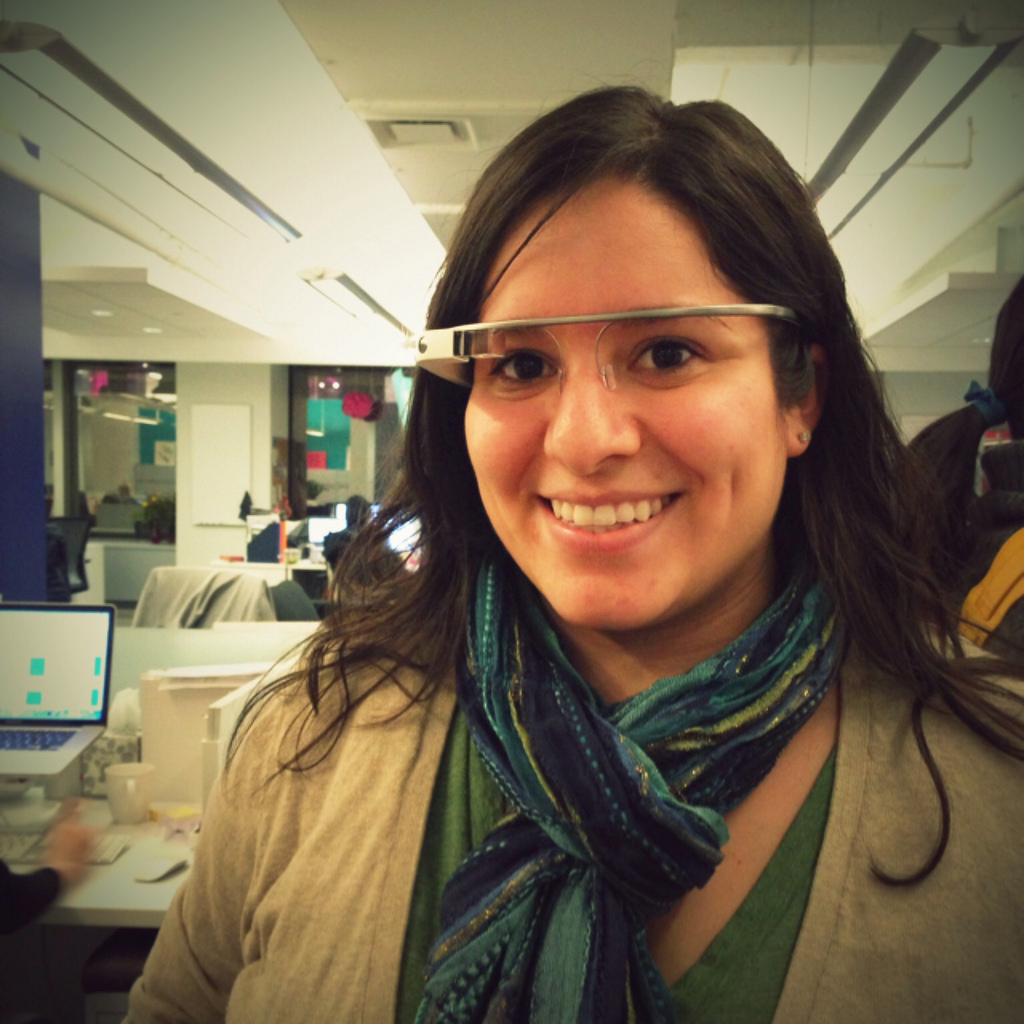
 

While wearable technology like Google Glass and Fitbit may appear to be better suited to consumer and recreational use, Marc Lambert from the firm Fennemore Craig has been creatively using wearable technology to better understand his clients and skillfully equip his lawyers. Lambert states that the process of introducing and using technology within his practice revolves around a “petri dish mentality”. Technology is routinely integrated into use within Lambert’s group, and then they evaluate whether the technology is benefitting their ability to help their clients. If the technology is found to have a positive impact on their work, other lawyers within the firm begin utilizing the technology.

One of the technologies that is allowing Lambert and his group to better communicate clients’ information is Google Glass. Lambert recounts using Google Glass to document how being a double amputee affects the day-to-day activities of client. Better than simply entering a demand letter or asking the client to describe their situation on the stand, Google Glass “is so effective is because it offered a first-person perspective on the hardships our client encountered each and every day of his life”, according to Lambert. Additionally, Lambert hopes that in future iterations of Google Glass hands-free video conferencing will allow him and his group to communicate with injured or handicapped clients that could not use other technology such as iPads to communicate as easily.

While Google Glass may seem more applicable to particular types of cases, Lambert utilizes Fitbits to determine how evidence may appear to focus jury groups. By asking focus groups to wear Fitbits and monitoring their heart rate as evidence is presented to them, Lambert can build a stronger case for his clients. Additionally, Fitbits could be used to provide support to clients’ claims that they are following their healthcare providers’ recommendations.

Though Lambert agrees that technology is a means to an end, it allows for better representation if “you buy in and aren’t simply paying lip service”. Technology is here to stay and innovation will lead to newer and more complex technologies. Therefore, as Lambert explains, it is  “important to educate other lawyers about how technology can be used and lead by example.”

Article via Above the LawSeptember 17, 2015

Photo: Becoming a cyborg via Jenn Vargas [Creative Commons Attribution-NonCommercial-NoDerivs]

 

The world that we live in is still very much unequal. It can be a challenge to fight for the rights of those that are mistreated or ignored. Social justice is about shedding light on imbalances and doing something to change them. Information, Communication, and Technology for Development (ICT4D) is a tactic that uses information and technology to advance progress in the fields of human rights, socio-economic justice and development.

If you are an individual or an organization that is trying to make an impact, check out our Information, Communication and Technology for Development Resources.

There you will find links to NGO’s such as Tacital Tech that is looking to advance advocacy through information technology and management.

If you are looking to create your own NGO you will find resources like Open World. They provide micro scholarships for grassroots initiatives interested in freedom and sustainability.

Or, if you are just looking to get started social justice, you can link to guides like, The Barefoot Guide. This downloadable guide will help an organization start working on projects of social change.

There are many applications of information, communication and technology for development. One of the best uses of ICT4D has been for educating the general public. Whether your goal is formal or informal education, using information, communication, and technology for development applications can help expand knowledge about your organization.
Photo: Rural Roads Sector 1 Project via:  Asian Development Bank[Creative Commons Attribution-NonCommercial-NoDerivs]

On Tuesday, Uber requested an appeal to a ruling made earlier this year that determined Uber drivers are employees and not independent contractors. The company has claimed that it is merely an app and not an employer of the nearly 160,000 drivers that are affliated with Uber in the US.

In an effort to defend itself again a class-action suit, uber filed a motion shortly after the ruling which opposes any class action driver suit. The company claims that the few drivers who believe that the Uber should reimburse them for expenses and tips do not represent the majority of drivers who are happy with the relationship that they have with the tech company.

But on September 1, US District Judge Edward Chen approved a class action status for that lawsuit. Uber is currently appealing this ruling in the hopes that the appeal court with reverse the judges order. In a 22 page request for appeal, Uber attorney Ted Boutrous wrote,”The potential ramifications of this closely-watched class-certification order are difficult to overstate.”

Uber has been battling this case since 2013 in an effort to get it thrown out. If the court upholds the Judge’s decision it would mean big changes for Uber. Not only would it have to start paying for expenses, such as vehicle upkeep, but it would also have to pay other costs such as social security, health care, paid time off and overtime.


Article via CNET, 15 September 2015

Photo: Taxi Driver/Santiago, Chile via Hotch Chang[Creative Commons Attribution-NonCommercial-NoDerivs]

Former technician Katherine Moussouris sued Microsoft this Wednesday for gender discrimination. She alleges that Microsoft paid and promoted female employees less than male coworkers, and that women in the company were also ranked consistently below men. Moussouri proposed the class action lawsuit after working at Microsoft between 2007 and 2014.

The lawsuit states that the tech company’s practices and policies “systematically violate female technical employees’ rights and result in unchecked gender bias that pervades its corporate culture.”

This suit occurs as other tech giants, recently Twitter and Facebook, also battle gender discrimination lawsuits. Public interest in women’s role in the workplace has increased since Ellen Pao filed a high-profile lawsuit against the Silicon Valley venture capital firm Kleiner Perkins Caufield & Byers for unequal treatment on the basis of gender.

Microsoft released a statement in response to Moussouri’s allegations: “We’re committed to a diverse workforce, and to a workplace where all employees have the chance to succeed.”


Article via CNET, 16 September 2015

Photo: Microsoft via Thomas Hawk [Creative Commons Attribution-NonCommercial-NoDerivs]