
Child laborers are mining cobalt for the devices of major tech companies like Apple, Samsung and Sony, alleges a report issued Tuesday. Amnesty International and African Resources Watch issued a report suspecting that the supply chains of these major electronics companies are using child labor, partly because they have failed to make basic checks to halt these actions.

The report traces the harvesting and sale of cobalt in the poverty-stricken Democratic Republic of Congo — where children as young as seven work the mines. The cobalt is used in lithium-ion batteries that power smartphones and electric cars. The DRC is listed in the U.S. Department of Labor’s Worst Forms of Child Labor report, and goods made under those conditions are listed in the Trafficking Victims Protection Reauthorization Act.

Amnesty International contacted 16 companies listed as customers of the battery manufacturers that reportedly sourced processed ore from the DRC. Half the worlds cobalt comes from this country, specifically.  None of the firms contacted could provide documentation to prove where their cobalt originated. Apple stated in a letter that “…underage labor is never tolerated in our supply chain and we are proud to have led the industry in pioneering new safeguards.” Samsung SDI does not have any transactions with Huayou Cobalt, the company said in a statement.

“Amnesty would like to see the home state countries — U.S., China, Japan, etc. — conduct human rights due diligence on their cobalt supplies,” reported author Mark Dummett. “An effective lasting solution to a complex problem such as this is going to require a collaborative approach with government, civil society, subject matter experts and multiple industries,” said Deborah Albers, vice president of social and environmental sustainability at the Electronic Industry Citizenship Coalition, said.


Article via TechNewsWorld, 20 January 2016

Photo: Conflict minerals 4 – Lezhnev by ENOUGH Project [Creative Commons Attribution-NonCommercial-NoDerivs]
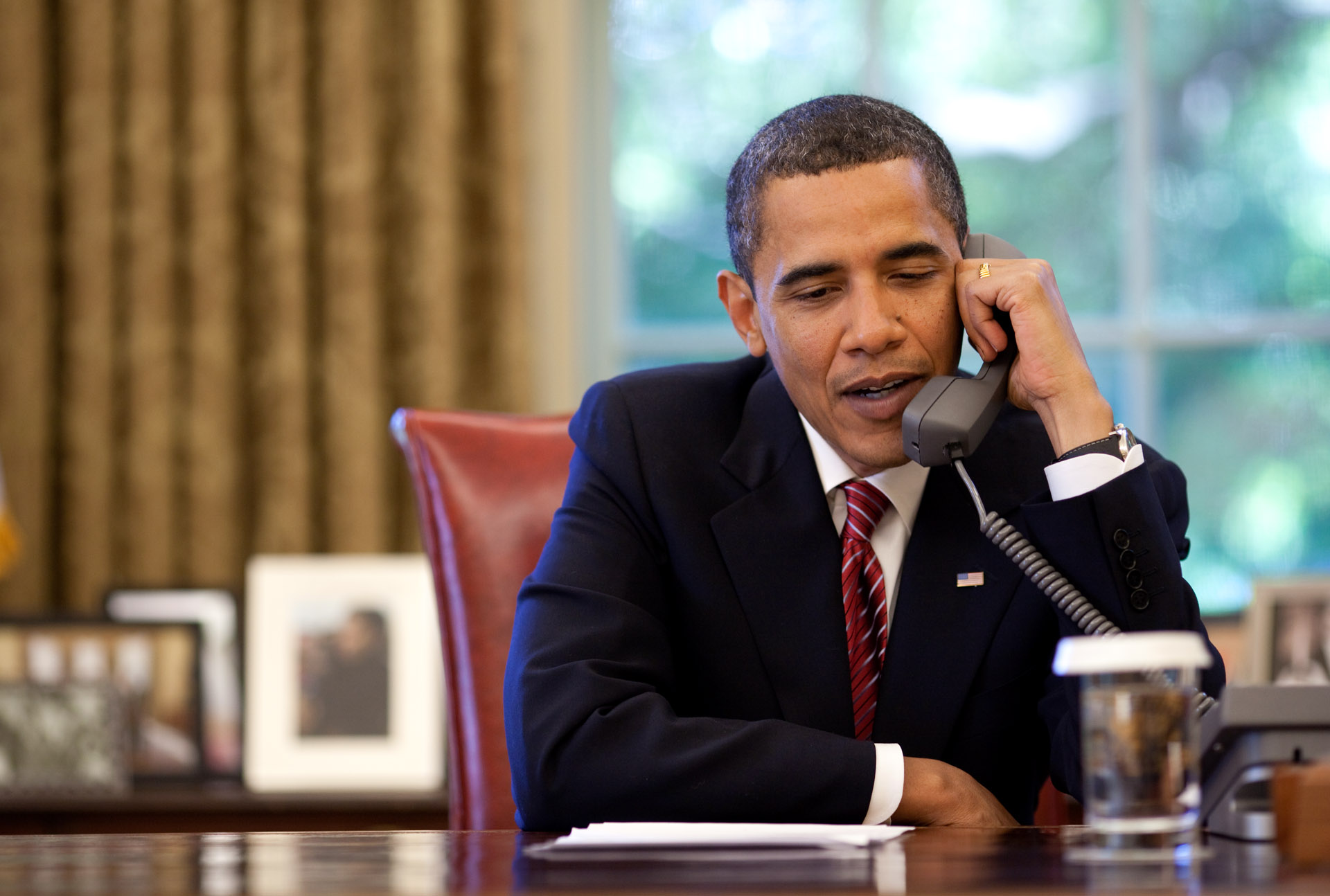
Federal administration officials collaborated with senior executives from several large tech firms at last week’s summit on terrorist communication via social media. General Loretta Lynch, FBI Director James Comey and Assistant Attorney General for National Security John Carlin represented the Department of Justice at the conference. Facebook, Google, Twitter, Apple, and other large Silicon Valley companies attended. The meeting was part of President Obama’s overall mission as announced last week to combat violent extremism both internationally and domestically.

“Today’s developments reflect President Obama’s commitment to take every possible action to confront and interdict terrorist activities wherever they occur, including online,” said National Security Council representative Ned Price.

Multiple tech firms discussed their goals to prevent communication between terrorists on their social media outlets. “We explained our policies and how we enforce them—Facebook does not tolerate terrorists or terror propaganda and we work aggressively to remove it as soon as we become aware of it,” said a Facebook spokesperson.

The summit came after the Department of Homeland Security’s and the Department of Justice’s announcement of the Countering Violent Extremism Task Force, an amalgamation of different agencies given the task of “discourage[ing] violent extremism and undercut[ting] terrorist narratives” with an additional goal to “build relationships and promote trust” with certain communities across the country, said Secretary of Homeland Security Jeh Johnson.

Article via TechNewsWorld, 13 January 2016

Photo: President Obama Talks to the Crew of Atlantis (P052009PS-0698) by NASA HQ PHOTO. [Creative Commons Attribution-NonCommercial-NoDerivs]

President Obama submitted a memorandum on Monday in which he ordered the departments of Defense, Justice and Homeland Security to develop smart gun technology.  This technology includes fingerprint and radio-frequency identification, which serve to track guns and prevent accidental shootings. The president made a deadline of 90 days for the agencies to create a list of recommendations.

According to a statement by President Obama,  gun sales rocketed following the San Bernardino shooting. In a more recent memorandum, Obama spoke about executive actions he took to curb gun violence and urged the nation to have a “sense of urgency” about the issue.

In reference to the 2012 shooting at Sandy Hook Elementary School that killed 20 students and six teachers, Obama said, “Every time I think about those kids, it gets me mad. And by the way, it happens on the streets of Chicago every day.”

Obama’s initiatives intend to end the “gun show loophole” that allows gun dealers and hobbyists to sell at gun shows and online without verifying background checks. Guns rights groups will most likely resist the expansion of background checks and the new effort to develop smart gun technology. Many of these groups claim that smart technology is a means by which the government could track firearms, which would eventually lead to a ban on weapons.

In a statement on Tuesday, the Executive Director of the National Rifle Association Chris Cox said that the NRA would now let “law-abiding gun owners to become scapegoats for President Obama’s failed policies.”

In his memorandum, Obama referenced a 2013 Department of Justice report that discussed how to effectively use gun safety technologies, which included a required owner fingerprint scan before the gun could discharge.

“In its report, the (DOJ) made clear that technology advancement in this area could help reduce accidental deaths and the use of stolen guns in criminal activities,” he said.

Article via CNET, 4 January 2016

Photo: Mauser 1934 by PRO Keary O.

[Creative Commons Attribution-NonCommercial-NoDerivs]

Though it may seem that support for more legal aid would mostly arise from the liberal side of politics, both Republican and Democratic representatives have come together to establish a new legal aid caucus. The caucus, entitled “Access to Civil Legal Services Caucus”, was announced by Representatives Joe Kennedy III from Massachusetts and Susan Brooks from Indiana. Their goal is focused around “expanding access to legal representation for low-income families” including “…veterans, and victims of domestic abuse.” Ensuring that legal services are accessible is extremely important because without it, individuals “can face enormous burdens that devastate families, result in a further descent into poverty, and cause homelessness.”

Additionally, the caucus will focus on making sure there is enough funding for legal aid at the national level. Lack of funding is a serious issue; in 2013, 64% of cases that were eligible for legal aid in Massachusetts were turned away because organizations simply didn’t have enough funding. Representative Kennedy hopes that the caucus will “build a strong coalition in Congress to advocate for civil legal aid programs and ensure access to representation is never limited by income.”

Article via Above the Law, December 8, 2015

Photo: Capitol Hill, Washington DC via Toni Syvänen [Creative Commons Attribution-NonCommercial-NoDerivs]
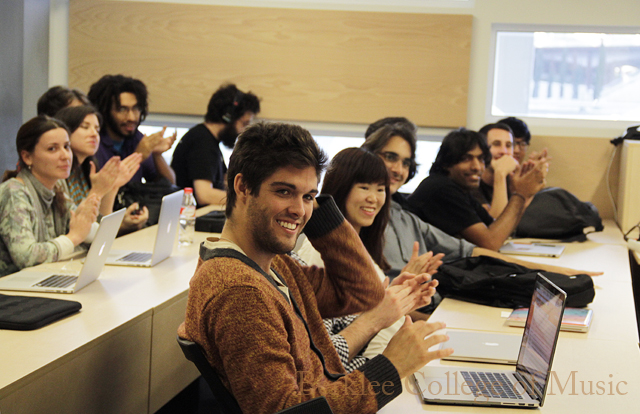
The United Nations is launching an “ideathon” for college students in an effort to address the issue of violence against women and LGBTQ people on university campuses. All of today, students are meeting in two to six hour long “physical brainstorming sessions” with the intention of addressing a key question: “How would you create a culture of transparency on college campuses to end gender-based violence?”

The event is part of the UN’s 16 Days of Activism initiative, under the umbrella campaign of HeForShe, which seeks to incorporate men into the movement for gender equality. HeForShe is providing students participating in the ideathon with a list of realistic suggestions in order to facilitate conversation about implementable changes in campus policies.

According to the UN, one in three women have experienced physical and sexual violence, and one in four are sexually assaulted in college. Moreover, LGBTQ people face double the risk of experiencing gender-based violence in college than their heterosexual peers.

HeForShe advertised the event in a video featuring a college student espousing his school pride: “We can make it somewhere we all feel safe—proud of how we got here, what we learned. We can speak out and never be a bystander.”

Article via Mashable, 3 December 2015

Photo: Visiting Artist: Robert Kraft via Berklee Valencia Campus [Creative Commons Attribution-NonCommercial-NoDerivs]

Many of the 770,000 refugees who have migrated to Europe since January are from middle-class backgrounds, and are therefore educated and tech-savvy. As a result, most use smartphones for GPS navigation and communicate with family through Facebook, Viber, WhatsApp, and Line apps.

With the understanding that smartphones are invaluable tools to refugees, tech companies and aid groups have directed their efforts to creating tech-focused ways to help refugees communicate and travel safely. For example, Google, the International Rescue Committee (IRC) and Mercy Corps collectively launched refugeeinfo.eu last month. The website explains the registration process, locations to eat and sleep, medical help, and traveling to Athens for those who land on the beaches of Greece.

Rey Rodrigues, IRC’s technology coordinator, describes the intentions of refugeeinfo.eu: “We wanted to create a roadmap. You see a lot of refugees walking with their smartphones and power cords and extra batteries. This lets them be self-sufficient.”

It is not uncommon for a refugee to walk up to 10 hours to register with Greek authorities at the southern part of the island, when buses are available for free. The roadmap’s goal is to provide valuable information like this to refugees, especially when translators are not available to convey the information.

Refugeeinfo.eu is one of many tech resources available to refugees. Disaster Tech Lab recently supplied Wi-Fi access to two refugee camps in Lesbos. InfoAid, an android app built by a Hungarian couple, helps refugees access train tickets, medical care and water. First-contact.org provides contact to local NGOs and offers specific information on how to survive on the Greek islands of Lesbos and Samos.

Article via Mashable, November 8, 2015

Photo: Liqaa with her daughter Limar born on August 3, 2013 via Oxfam International [Creative Commons Attribution-NonCommercial-NoDerivs]