Facebook is becoming the next tech giant to spar with law enforcement over privacy concerns.

Diego Dzodan, a Facebook executive, was arrested by Brazilian federal police on Tuesday for “repeated non-compliance with court orders”, according to a statement released by police. Brazilian police want information from a WhatsApp account that is linked to a drug trafficking investigation. WhatsApp is a messaging service that is used monthly by more than 1.5 billion people worldwide. Dzodan was taken into what the Brazilian police call preventative prison and could be held for a week or more.

Facebook wants to ensure that it maintains the privacy of its users from government intervention. In WhatsApp’s case, the company may not be able to help Brazilian authorities because it does not store users’ messages. In addition, WhatsApp is undergoing increased end to end encryption, which will make it even harder for the company to turn over user data. WhatsApp said in a statement that it disagreed with the Brazilian authorities on the case. “We are disappointed that law enforcement took this extreme step,” the messaging business said. “WhatsApp cannot provide information we do not have.”

Facebook, which bought WhatsApp in 2014 for $19 billion in 2014, condemned the Brazilian government’s move releasing this statement:

“We’re disappointed with the extreme and disproportionate measure of having a Facebook executive escorted to a police station in connection with a case involving WhatsApp, which operates separately from Facebook,” a spokesman said. “Facebook has always been and will be available to address any questions Brazilian authorities may have.”

This isn’t the first time Brazil has gone head to head with WhatsApp. In December, a judge ordered the shutdown of WhatsApp for the country for two days after not complying with a criminal investigation, but the ruling was overturned the next day.


Article via CNET, 1 March 2016; The New York Times, 2 March 2016

Photo: WhatsApp / iOS by Álvaro Ibáñez [Creative Commons Attribution-NonCommercial-NoDerivs]

The ability to use social media to shame and hurt people online is called online shaming. You may have heard of versions of online shaming going by names like cyber bullying or revenge porn. Although you may be aware of online shaming, many of us still feel helpless to stop it. Technology has the power to transform people’s lives, but in the wrong hands, it can be used to destroy lives.

One story that captured the attention of the world was that of Tyler Clementi. On Sept. 22, 2010 Tyler went to the George Washington Bridge connecting New York City and New Jersey, and updated his Facebook status: “Jumping off the gw bridge sorry.” The day before, Tyler’s roommate had posted a video of Tyler being intimate with another man without Tyler’s knowledge. The public humiliation was too unbearable for Tyler and he made the decision to end his life.

Tyler’s family took steps to help ensure that online shaming like what happened to Tyler would be addressed. “When we started the foundation, one of the reasons was because we had media attention,” says Jane Clementi.”So many people saw what was going on and no one spoke up,” she says. “No one reached out to Tyler.”

The Tyler Clementi Foundation focuses on helping adults clearly communicate their expectations for respectful behavior. They believe in  turning bystanders into “upstanders” who won’t condone bullying, no matter where it takes place. Since 2011, the Clementi family has spoken to thousands of people about not only calling out harassment, but also comforting and helping the victim. But awareness is not enough to solve the problem. That’s why the foundation partnered with New York Law School to launch the Tyler Clementi Institute for CyberSafety last fall. The institute helps give legal advice and council to parents dealing with cyber bullying, as well as victims of nonconsensual porn, another term for revenge porn or cyber exploitation.

Removing nonconsensual porn has gotten somewhat easier in the last year thanks to Internet and social media companies like Google, Twitter and Facebook adopting streamlined request processes. (In contrast, though, content that merely bullies breaks no laws; the threshold to successfully report and remove such comments is much higher.) In the past, the online shaming was confined to certain forums and message boards. But the rise of social media over the last decade has amplified the effects. Social media “can be easily exploited for shaming,” said Gabriella Coleman, a professor at New York University who studies media and culture. “It’s a good platform.”

In 2009, Brett Ligon, the newly elected district attorney in Montgomery County, Tex., decided to post on Twitter the names of drivers arrested on charges of drunken driving. He wanted to send a message that drunken driving would not be tolerated while he was district attorney. But not everyone was pleased. A handful of people who were named on Twitter complained to The Houston Chronicle after they found out their drunken driving arrests had been widely broadcasted. “I haven’t been proven guilty,” Linda Owens told the newspaper in January. “What happened to our rights?”

So what can you do about online shame? If you are a victim of cyberbullying or revenge porn make sure to keep records of what you are receiving. Giving the police urls and content may allow them to trace the IP address of your attacker. If pictures are involved, remember that pictures carry copyrights. If the picture is a selfie then you may be able to force the pictures off of sites since it violates copyright law. Online shame is not always a crime, as our laws have not yet caught up to our online environments. This is slowly being rectified as over half of all states now have revenge porn laws and legislation meant to ban revenge porn nationally is being pushed through congress.

The most important thing that any of us can do is be an “upstander“. Speak up when you see someone being harrassed. Stop the spread of malicious materials online. Don’t forget to comfort the victim and make sure that they know they are supported.


Article via Mashable, 21 February 2016; The New York Times,26 December 2010; Wired, 24 July 2013; DeleteCyberbullying; EndRevengePorn.org

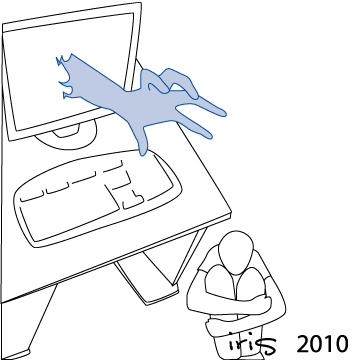
Photo: Cyber Bullying: Hand Reach by iris [Creative Commons Attribution-NonCommercial-NoDerivs]

Apple has plans to make their iPhone harder to hack amid the current controversy with the FBI.

The FBI wants Apple to create new firmware that would allow them to hack into encrypted data on an iPhone that belongs to a San Bernardino terrorist. Apple CEO Tim Cook is fighting the request citing the infringement on digital privacy. He also wrote an open letter to explain Apple’s position. Now the company is thinking of taking further steps and prevent passcode-free recovery mode in future iPhones.

The FBIs current request for backdoor access to the iPhone would require Apple to create software that would allow the FBI to bypass security features that prevent hacking. Specifically, the FBI has already looked at an online backup on iCloud of the phone, but they want Apple to disable a security feature that would allow them to have as many tries as possible to unlock the phone. In order to comply, Apple would have to change their operating system to no longer have this feature, which would make millions of iPhone users vulnerable.

As this issue has escalated, Apple is looking to prevent these types of request in the future. When it comes to iCloud security, Apple encrypts its data on its servers but still owns the decryption keys. So if the FBI asks Apple for iCloud data, Apple can decrypt iPhone backups and hand them to the FBI. Now the company is thinking of changing that.

Instead, Apply may give the private keys to the customer, which would remove Apple from being able to decrypt backups. This would mean that future government request for decrypted data would not be possible, but it also means that Apply would not be able to help customers either, since they would not be able to decrypt their backups.

In the Future Apple wants to find a way to limit or do away with DFU (device firmware update) mode. Apple created DFU mode for troubleshooting purposes, such as when your iPhone doesn’t work anymore because of a broken operating system.  If such a big crash happens, Apple lets you boot your iPhone into DFU mode, so that you can reinstall a fresh version of iOS without having to enter a passcode.

DFU mode is at the center of the debate because its current design makes the FBI requests possible, if Apple chooses to make the software changes. You can currently reinstall a new operating system without having to enter a passcode. In fact this is how many jailbreak the iPhone. But, if Apple requires that you enter your passcode to enter into DFU mode, that all changes. Apple would no longer have the ability to create software that lets the government hack into your phone.

In the wake of increasing government request of user data and the revelation of NSA breaches by Snowden, Apple has make it harder to hack iPhones. The tech giant looks to stay that course and increase security for the protection of its customers and their data.

Article via TechCrunch, 25 February 2016

Photo: Tim Cook explica su postura al FBI del caso San Bernardino by iphonedigital [Creative Commons Attribution-NonCommercial-NoDerivs]
 

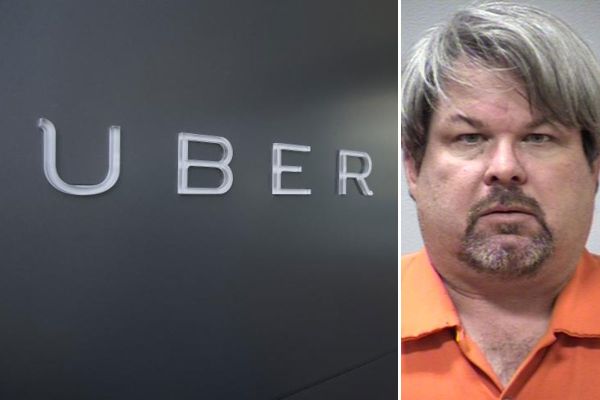
Uber is back in the news for yet another controversy concerning their drivers. The tech company recently settled a suit with customers who accused the company of less rigorous background checks than was advertised. Now their driver screening process is being scrutinized again as Jason Dalton, an Uber driver,  confessed to a Saturday shooting spree in Kalamazoo, Michigan while picking up customers.

Uber Chief Security Officer Joe Sullivan said that Mr. Dalton had no prior criminal background and no red flags that appeared during his background check that would have cause the company to be concerned. “No background check process would have flagged and anticipated this situation,” Sullivan said.

Until Saturday there were no complaints with Jason Dalton’s driving record with Uber. He had given more than 100 rides since starting with Uber at the end of January and had a rating of 4.73 out of 5. The only indications that he may be dangerous didn’t come until last Saturday, when several riders including one passenger complained of erratic driving. According to the Michigan police, Dalton then started a shooting rampage at 6pm where he wounded 9 people, killing 6. Michigan police state that Dalton started at 6pm by shooting a woman multiple times in a parking lot, and then drove around for hours randomly gunning down innocent bystanders. There have been no connections made between the driver and his victims.

One reason for the emphasis on Uber’s driver screenings is because they have missed criminals before, and they were able to use their job with the service to offend again. Houston is one of the few cities the requires Uber drivers to pass a FBI fingerprint check after an ex-con Uber driver allegedly raped one of his passengers. The city did not believe that Uber’s driver screenings and background checks were thorough enough, since the driver was able to pass Uber’s checks, although he had served 14 years in prison. Prosecutors in California have also questioned Uber’s driver screenings after a driver was found to have been convicted of murder, but Uber’s background check failed to reveal the criminal history.

Critics say that Uber would catch more of these criminals if they ran fingerprints in their background checks. The company currently runs the names of potential drivers through seven years of county and federal courthouse records, a multi-state criminal database, national sex offender registry, Social Security trace and motor vehicle records. Uber rejects anyone with a history of violent crimes, sexual offenses, gun-related violations or resisting arrest. But in light of the recent events, Uber seems to be leaning toward introducing fingerprint identification as part of their process.

Article via CNet, 22 February 2016

Photo via Newsday.com

Apple is being criticized by a British solider’s family for refusing to hack into an iPhone linked to December’s terrorist attack in San Bernardino, California.

Apple Chief Executive Tim Cook spoke out against the court order on Wednesday, calling the demand “chilling” and saying that compliance would be a major setback for online privacy. Many digital rights groups agree.  The federal government’s attempts to capture data from tech companies has been met with apprehension and fear. Just a few months ago, several tech companies started standing up to government data requests. But not everyone agrees with Apple’s stance on this issue.

Major tech companies like Facebook, Google, and Apple all want to protect their customers’ data by securing it at the highest levels. But, federal governments like the US and the UK want these companies to find ways to hack into customer hardware and accounts, arguing that privacy should not come at the expense of national security. This ongoing battle over encryption puts tech giants on one side, and law enforcement and intelligence on the other.

Fusilier Lee Rigby was off duty and walking down the street near his barracks in Woolwich, England, in May 2013 when he was the victim of a brutal attack by two men who told witnesses they were avenging the killing of Muslims by British soldiers.  Ray McClure, Rigby’s uncle, believes that Apple is doing nothing more than “protecting a murderer’s privacy at the cost of public safety.”

“Valuable evidence is on that smartphone and Apple is denying the FBI access to that information,” McClure said, arguing that a warrant to search a smartphone should be no different than a warrant used to search a property.

In the court order handed to Apple, the company was told it must assist the FBI in unlocking the iPhone linked to San Bernardino gunman Syed Rizwan Farook. In addition to unlocking the phone, The FBI wants Apple to build a new version of its iOS mobile software that would be able to bypass the iPhone’s security so that the agency could hack any device remotely. In an open letter published on Apple’s website, Tim Cook stated that Apple has been working with the FBI, providing data and advice on how to move forward. But the creation of software that would allow the FBI to bypass Apple’s security simply doesn’t exist. “The US government has asked us for something we simply do not have, and something we consider too dangerous to create,” said Apple CEO Time Cook.

Article via Cnet, 18 February 2016

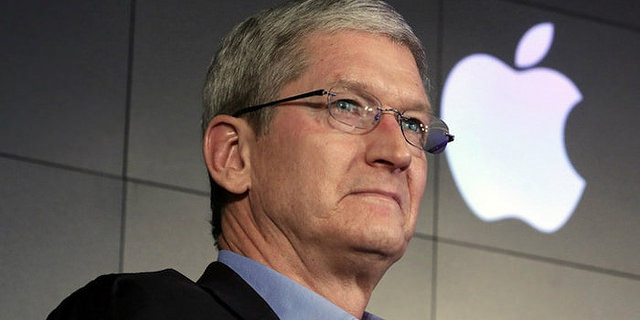
Photo: Apple CEO Tim Cook by Mike Deerkoski [Creative Commons Attribution-NonCommercial-NoDerivs]
Facebook’s CEO Mark Zuckerberg is trying to set things straight after tweets from board member Marc Andreessen put the company’s image in hot water. Andreessen reacted to the Indian telecom regulator’s ban on Facebook’s Free Basics service by bringing up India and colonialism.

Zuckerberg was quoted as saying, “I found the comments deeply upsetting, and they do not represent the way Facebook or I think at all.”

The comments that he refers to start with Andreessen’s tweet, “Another in a long line of economically suicidal decisions made by the Indian government against its own citizens,” referencing the Free Basics ban. He continues saying, “Denying world’s poorest free partial Internet connectivity when today they have none, for ideological reasons, strikes me as morally wrong.”

Indian entrepreneur Vivek Chachra reportedly tweeted in response that the Free Basics argument that some Internet is better than no Internet sounded like a “justification of Internet colonialism.” To which Andreessen responded, “Anti-colonialism has been economically catastrophic for the Indian people for decades. Why stop now?”

Zuckerberg wants to bring the Internet to the entire planet by 2020. India would be a major factor in making that goal come true. Andreessen’s comments make it appear as though Facebook may have other motives for expanding into India, and may jeopardize future growth in that market. Some say that Facebook should ask Andreessen to step down, and make an example out of him showing that this kind of behavior would not be tolerated.

In response, Zuckerberg has made statements of his own, via Facebook, to combat the controversy. India “has been personally important to me and Facebook….I’ve gained a deeper appreciation for the need to understand India’s history and culture” and “I look forward to strengthening my connection to the country.”

Facebook has withdrawn Free Basics from India and continues to weather the storm of this controversy.

Article via TechNewsWorld, 12 February 2016

Photo: facebook global by Global Panorama [Creative Commons Attribution-NonCommercial-NoDerivs]