In a recent ruling, the European Court of Justice struck down Safe Harbor, which dictated the rules for transatlantic data flow between the United States and the European Union. The invalidation of Safe Harbor carries significant consequence for American e-commerce firms who operate in Europe. Companies like Google and Facebook—as well as the U.S. administration—now must make high-profile decisions in response to the ruling.

Europe has broad legislation protecting the personal information of E.U. citizens from being exploited by businesses. The U.S., in contrast, only codifies privacy against government institutions and for certain high-sensitivity data (e.g. health records, etc.) Safe Harbor’s “principles” are more flexible extensions of the E.U.’s privacy laws; violations of Safe Harbor could result in sanctions from a self-regulatory organization or the Federal trade Commission.

When Europe’s highest court invalidated the agreement, it was under the premise that European citizens were being manipulated by U.S. tech companies as well as by the U.S. government. The ruling was a reflection of a recent decision made by an Irish court on Safe Harbor’s illegality. Any new agreement drafted will have to contain more stringent privacy rules, and will therefore create more limitations for U.S. firms.

Facebook and Google’s immediate options include continuing business practices in a time of legal uncertainty, shutting down their European operations (resulting in major loss), or changing the business model to include more data collection centers in Europe. The last alternative would require companies to keep European and American data completely separate, with the consequence of economic inefficiency.

Article via The Washington Post, 6 October 2015

Photo: Bandiera dell’Unione (EU Flag) via Giampaolo Squarcina [Creative Commons Attribution-NonCommercial-NoDerivs]

The United Nations has created 17 Sustainable Development Goals, an action plan to solve the globe’s most important issues by 2030. Nonprofit founders, entrepreneurs, and social innovators are advocating around the world to execute the UN’s #globalgoals. One of these activists is Hera Hussain, a facilitator of workshops for MakeSense, a worldwide consortium of social entrepreneurs, and founder of the advocacy group Chayn. Hera Hussain is one of many activist and technologists considered to be “Local Globalists” as they seek solutions for the UN’s specified global problems.

Chayn’s mission is to use technology to empower women against violence and oppression. In the past, Chayn has organized hackathons to create solutions to end sexual violence in conflict zones and offered online toolkits to domestic abuse survivors so that they may be able to prepare their own legal cases. On September 25, the organization hosted a hackathon in Beirut called #PeaceHackBEY, in which technologists and activists invented solutions to social problems in Lebanon today. The hackathon occurred at a pivotal time, as anti-government protests have consumed Beirut in the past few weeks due to deficiencies in public services and resources to support the million-plus Syrian refugees currently in Lebanon.

“Tech and society are always further ahead than governments and governments are playing catch up, but we’re slowly starting to see this change,” Hussain says. “By using tech to fill gaps in access to information and justice, we can either complement efforts that governments and NGOs are already doing, or point out where they are failing.”

Article via GOOD, 22 September 2015

Photo: Brighton Digital Festival Hackathon Sponsored by iCrossing UK via iCrossing [Creative Commons Attribution-NonCommercial-NoDerivs]

 

Google plans to equip 400 train station across India with high-speed Internet, as announced by the company’s CEO Sundar Pichai last Sunday. This announcement occurred at the same time that India’s Prime Minister Narendra Modi visited Google’s headquarters in Mountain View, California. Bringing high-speed WiFi to rural areas of India by 2019 is one of Modi’s goals as part of his Digital India Initiative.

Google is collaborating with Indian Railways and RailTel, an Internet service provider along railway lines. By the end of next year, 100 railway stations will have Internet. This will grant access for the 10 million people who use the stations every day.

India’s huge market will benefit Google greatly, as the company profits off advertising. However, India’s limited infrastructure will still prove an obstacle. Both Google and its competitor Facebook have experimented with drones and balloons to offer service to rural areas. Kevin Krewell, principal analyst at Tirias Research, commented on the difficulties of building in developing areas: “Power can be a problem. Running new wires is difficult — and keeping those wires from being stolen even more so.”

Article via TechNewsWorld, 29 September 2015

Photo: Train at Mahim Junction, Mumbai via Adam Cohn [Creative Commons Attribution-NonCommercial-NoDerivs]

Twitter

After keeping a relatively low profile since his exile to Moscow in 2013, Edward Snowden has made himself public on Twitter. His first post on Tuesday, “Can you hear me now?”, was a nod to his past whistleblowing as well as a subtle reference to a Verizon television commercial. Within two hours, Snowden had 300,000 followers.

Ben Wizner, one of Snowden’s lawyers, has confirmed that the account is authentic. The fugitive’s first tweet was welcomed by a response tweet—“Yes! Welcome to Twitter.”—from Twitter’s co-founder Jack Dorsey. Astrophysicist and cosmologist Neil deGrasse Tyson also acknowledged Snowden, and ended a Twitter back-and-forth with: “Ed @Snowden, after discussing everything from Chemistry to the Constitute on #StarTalk, you’re a patriot to me. Stay safe.”

Snowden follows only one account, belonging to the NSA.

Article via CNET, 29 September 2015

Photo: Edward Snowden Wired via Mike Motzart [Creative Commons Attribution-NonCommercial-NoDerivs]

Facebook and the United Nations are working together to provide Internet access to Syrian refugees as they seek resettlement. Web access in refugee camps will help those living there communicate with family and utilize support from aid communities, according to Facebook’s CEO Mark Zuckerberg.

Facebook is also constructing satellites and aircraft that will beam Internet connections to remote villages and towns, similar to Google’s project that accomplishes the same goal with high-altitude balloons. Critics to the program say that both companies are providing Internet access for selfish purposes, as both Facebook and Google profit from expanding their user base.

Facebook’s non-profit organization Internet.org is also under attack. Internet.org seeks to provide Internet access to developing countries, and was launched in India on Friday. Several Internet companies withdrew from the program because they saw the organization as a threat to Net neutrality, which guarantees that all websites are equally accessible.

Zuckerberg will be holding a town hall-style discussion with India’s prime minister this Sunday in defense of the non-profit. He says that by expanding Internet access, companies like Facebook and Google can create 140 million new jobs.

Article via CNETSeptember 26, 2015

Photo: Relief Effort for Syrian Refugees via IHH Humanitarian Relief Foundation [Creative Commons Attribution-NonCommercial-NoDerivs]
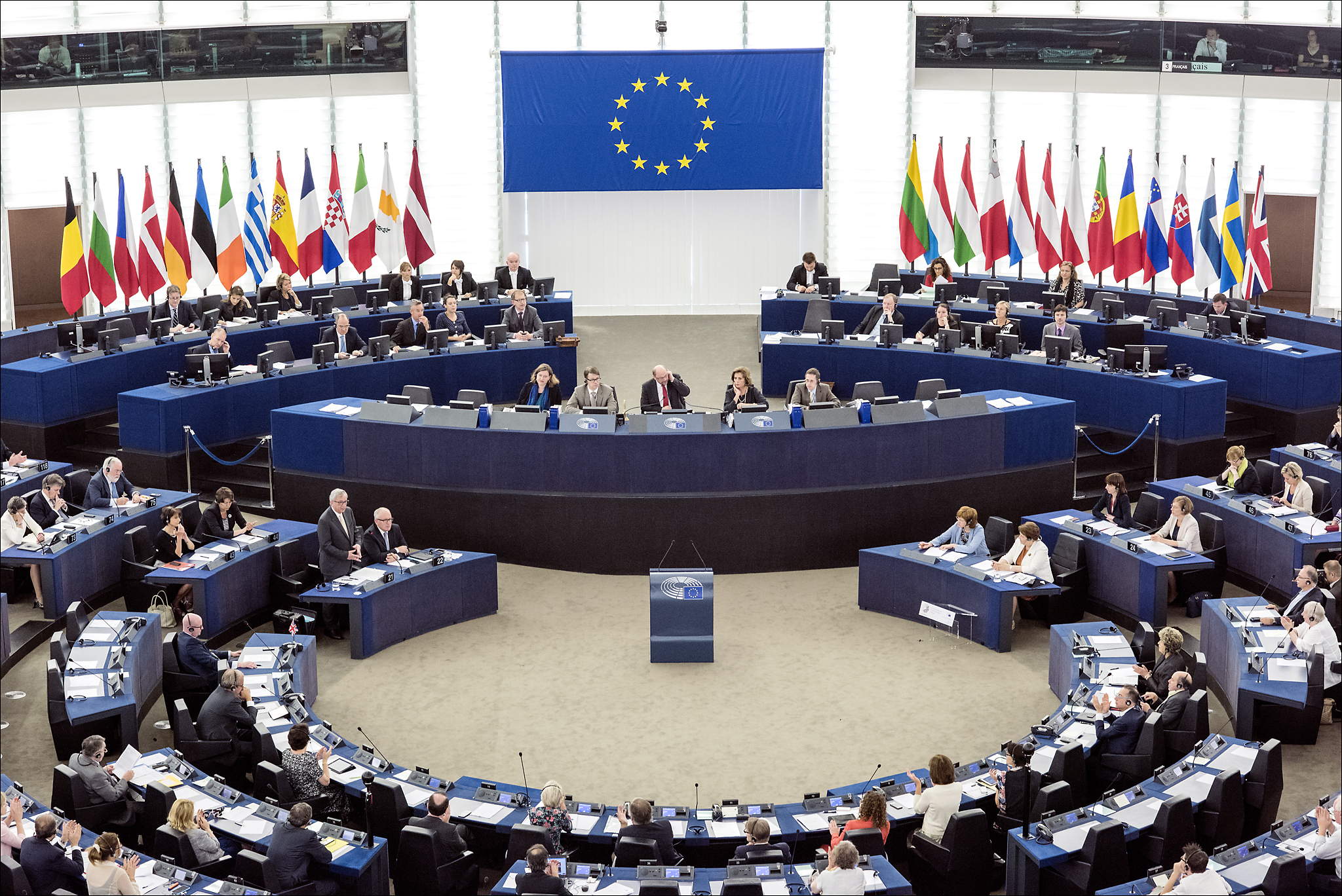
Google appealed EU’s “right to be forgotten” law that allows citizens to apply for the removal of false or damaging information indexed by search engines. Although the company is willing to comply by the law for European domains, like Google.fr, France’s data regulation authority (CNIL) ordered Google to comply by the law for its international domain, Google.com.

If Google refuses, the company may suffer significant fines or sanctions. Google officials argue that applying the EU’s “right to be forgotten” rule to its international server is both time and resource consuming, and may result in widespread censorship. Google does not have the right to appeal again until it has been fined for violating the CNIL order. After that, however, the company will be given the chance to refute the fines in France’s Supreme Court. The EU’s recent regulatory fine structure could charge Google for up to 5 percent of the company’s international operation cost, which would amount to roughly € 3 billion.

Google’s global privacy officer Peter Fleischer released a statement: “We believe that no country should have the authority to control what content someone in a second country can access.”

Article via Legaltech NewsSeptember 22, 2015

Photo: Review of the Latvian Presidency via European Parliament [Creative Commons Attribution-NonCommercial-NoDerivs]