
The International Center for Transitional Justiceor ICTJ, for short, is a an international nonprofit focusing on transitional justice. Transitional justice is defined as a “set of judicial and non-judicial measures that have been implemented by different countries in order to redress the legacies of massive human rights abuses” according to the ICTJ. In order to work towards accomplishing transitional justice, the ICTJ provides policymakers at all levels with technical expertise and advice based upon previous endeavors to undo systemic human rights violations. They also collaborate with those seeking transitional justice, helping everything from criminal proceedings to reparations in countries like Tunisia and Argentina. In addition to working directly to enact transitional justice, the ICTJ researches and reports on efforts to enact transitional justice around the world. In this way, the ICTJ can determine what the best practices are and pass them on to their contacts.

The ICTJ also has created content that allows individuals to learn about transitional justice and areas of the world that have been affected by human rights abuse. Their multimedia content contains photos, audio, videos, and interactive pages that allow users to learn about how individuals and groups of people have specifically been affected by transitional periods in their country’s history. They also regularly post news pertaining to issues of transitional justice around the world.

To learn more about the International Center for Transitional Justice’s work, visit their website.

Sources: “What is Transitional Justice?”The International Center for Transitional Justice

Photo: Peace via Steve Rotman [Creative Commons Attribution-NonCommercial-NoDerivs]

On Feb. 4, 2010 Maria Nucci sued Target for the injury she sustained while working at the store. However, when Target requested access to her social media account, Nucci objected. As a result, 36 photos were deleted two days later. However, the Fourth District Court of Appeals for the State of Florida granted Target’s motion with respect to all photographs on the Facebook page that included Nucci. She argued she had a right to privacy, but the judges used that very argument against her.

“Because ‘information that an individual shares through social networking websites like Facebook may be copied and disseminated by another,’ the expectation that such information is private, in the traditional sense of the word, is not a reasonable one,” the panel ruled, partially quoting another Florida case. It also added, “Before the right to privacy attaches, there must exist a legitimate expectation of privacy.”

Using social media in court cases continues to skyrocket. It has been used about 80% of the time. According to John Facciola, the information has to be collected. Second, they have to sorted out into what the attorney needs and does not need. Courts are still trying to figure out what to do with social media in discovery and the privacy rights of those whose profiles are in question. This past year, the arguing has centered on two main issues: authentication, and where the expectation of privacy stops.

Social media is notorious for one particular thing: you don’t have to be who you say you are online. This is demonstrated in parody Twitter accounts and multiple Linkedin profiles. State courts have different standards on the authentication of social media. For example, the Maryland standard is that “the judge had to be ‘convinced’ that a social media post wasn’t falsified or created by another user. On the other hand, the Texas approach stipulated that any evidence could be used “as long as the proponent of the evidence can demonstrate to the judge that a jury can reasonably find that evidence to be authentic.” In United States vs. Vayner, Aliaksandr Zhyltsou accused Vladyslav Timku of providing a forged birth certificate for an imaginary infant daughter to avoid compulsory military service in Ukraine. The key piece of evidence was in the defendant’s social media account. However, the federal agent could not provide authenticity. As a result, Maryland revisited their standard and deemed that the judge has to identify which evidence would be sufficient. In other words, the judge has to determine that “there is proof from which a reasonable juror could find that the evidence is what the proponent is claiming.”

Article via Legaltech News , November 2, 2015

Photo: Affiliated Network for Social Accountability- Arab World via World Bank Photo Collection [Creative Commons Attribution-NonCommercial-NoDerivs]

Collaboration and technology are both key to successful peacebuilding. TechChange effectively incorporates both into the classes they offer. Their classes range from Introduction to Excel for Data Visualization to Mapping for Social Good and Basics of Digital SafetyTheir learning platform, which all of their courses utilize, also encourages learning from other students by including live group discussions and chats with experts as part of their courses. Additionally, the average course features students from multiple countries around the world, ensuring that the discussions have a global perspective. For those who wish to share their expertise, TechChange also allows individuals to create their own course using their platform. Or, if the class you want is not among the twenty-four courses currently available, TechChange will accept suggestions for future courses. If you aren’t ready to commit to taking a course, their blog offers advice on peacebuilding, utilizing technology, and expanding peacebuilding efforts into global endeavors.

TechChange also recognizes the importance of monitoring professional growth and development. Students can choose to take multiple classes and work towards a diploma, which recognizes that they have taken several classes on using technology to understand and present data. Students working toward a diploma also get to attend workshops and TechChange’s annual conference to further enhance their skills.

To learn more about TechChange and everything they offer, visit their website.

Photo: Peace via Steve Rotman [Creative Commons Attribution-NonCommercial-NoDerivs]

International law experts are on track to publish a manual amending the current Geneva convention for cyberwar in late 2016. The Tallin Manual 2.0 – an update of the original Tallinn Manual on the International Law Applicable to Cyber Warfare—is backed by a NATO-run military think tank based in Estonia.

Military strategists deem cyberspace the fifth dimension of warfare, the others being land, air, sea and space. An example of an “armed attack” in cyberspace is the Stuxnet worm, an Israeli-U.S. programmed computer virus that caused severe disruptions to Iran’s nuclear plants. By the original manual, similar attacks in the future would legally validate proportional retaliation, considered in this case to be self-defense.

The Tallinn Manual 2.0 will discuss peacetime international law, including human rights law in regards to cyberspace. The current question begin argued is whether international human rights norms apply to different widely practiced cyber activities, such as the collection of metadata by national governments.

“If the answer is yes, we then have to examine whether the state has actually violated the individual’s rights. For instance, assuming the collection of metadata implicates human rights norms, under what circumstances is a state authorized to engage in such activities?” asks Liis Vihul, managing editor of the Tallinn Manual and legal researcher at the NATO Cooperative Cyber Defence Centre of Excellence.

Additionally, the updated manual will include sections on diplomatic law, the responsibilities of international organizations, global telecommunications law, and peace operations.

Article via The Register, October 12, 2015

Photo: Satsop Nuclear Plant via Michael B. [Creative Commons Attribution-NonCommercial-NoDerivs]
Bloomberg Bureau of National Affairs (Bloomberg BNA) hosted Big Law Business Diversity and Inclusion Conferences in New York City and San Francisco throughout the past two weeks. The events helped facilitate the collaboration of some of the most prominent in-house and law firm leaders, in addition to human resource specialists, to create solutions to diversity problems in law firms and corporate legal groups.

The Chief Legal Officers of around 500 major corporations signed a pledge in 1999 to improve the diversity of their teams. Sixteen years later, only minimal progress has been made. Though one third of the U.S. population and one fifth of law school graduates belong to a minority group, less than 7 percent of law firm partners and 9 percent of general counsels of large corporations are black, Latino, Asian American, or Native American.

As Bloomberg BNA states below one of its released videos from the conference, “It is common knowledge that the legal community remains one of the least diverse.” Though law firms have made some improvements in thinking about diversity during the hiring process, “[r]etaining and developing those individuals and leveraging the diverse perspectives they convey is where the true challenge lies.”

Bloomberg BNA has posted videos from the conference, one of the most popular being “Inclusion Strategies: Retain and Promote” for those who could not attend the events.

Article via Above the Law, November 6, 2015

Photo: Scania Executive Board 2010 via Scania Group [Creative Commons Attribution-NonCommercial-NoDerivs]

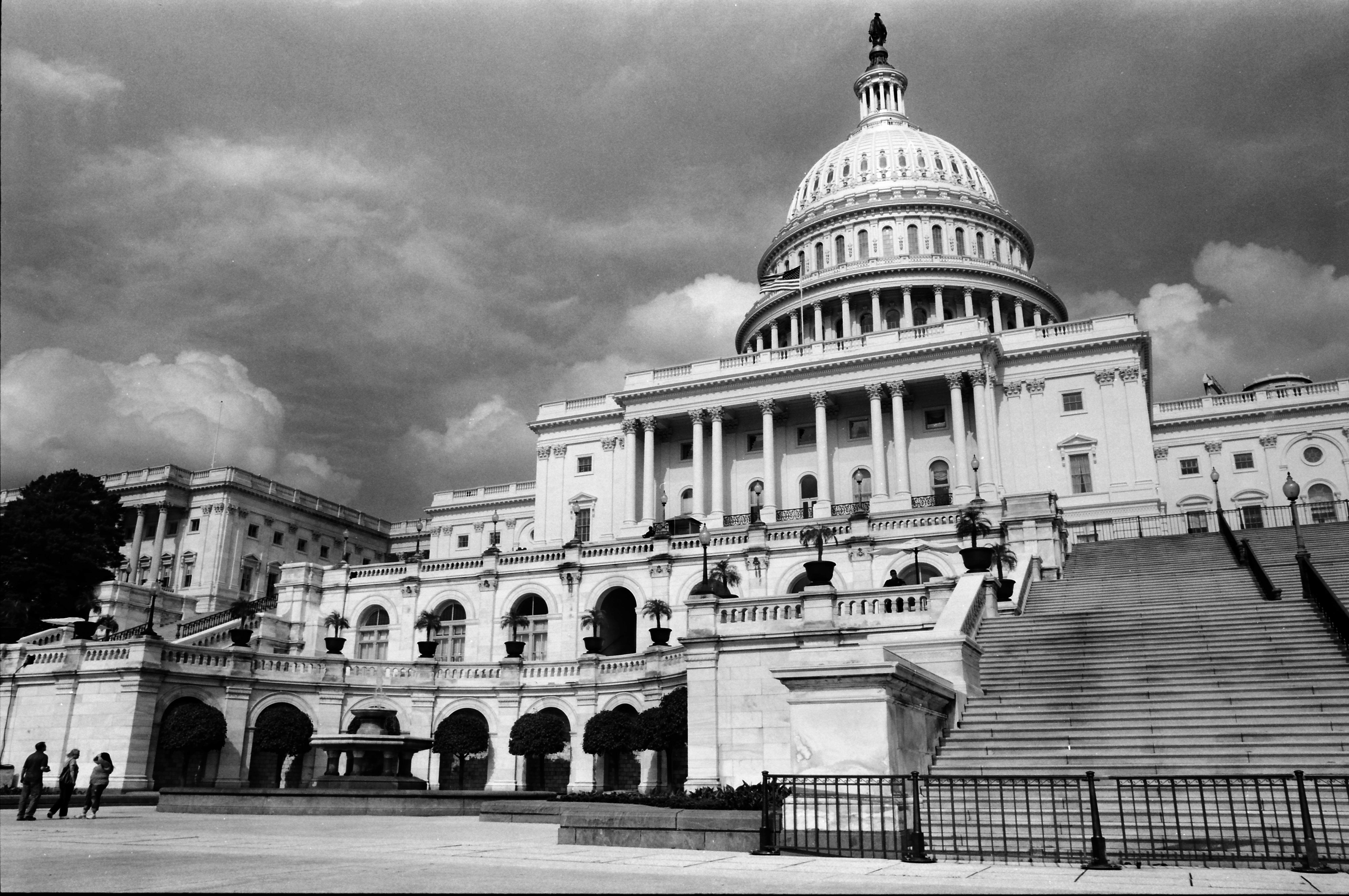
The US Senate voted this past Tuesday to pass the Cybersecurity Information Sharing Act (CISA), which allows companies to share evidence of cyberattacks with the US government, even if that data includes the personal information of individuals.

Those in favor of the bill argue that CISA will help the government protect companies. Most big tech companies comprise the opposition, and say that the new act is another loophole that allows the US government to snoop on citizens. President Obama supports CISA.

Al Franken, a senator from Minnesota and one of 21 who voted against the bill, said in a statement following CISA’s passing, “There is a pressing need for meaningful, effective cybersecurity legislation that balances privacy and security. This bill doesn’t do that.”

Companies are supposed to remove personal information about customers—such as emails and text messages—before sending data to the government. Currently, however, no accountability system exists to ensure that personal identifiers are in fact deleted before reaching government databases.

CISA was most likely passed in response to recent high-profile hackings, such as those committed against Sony Pictures, Ashley Madison, and United Airlines.

“With security breaches like T-Mobile, Target, and [the US government’s Office of Personnel Management] becoming the norm, Congress knows it needs to do something about cybersecurity,” said Mark Jaycox, Legislative Analyst of the Electronic Frontier Foundation. “It chose to do the wrong thing.”

Article via CNET, October 27, 2015

Photo: The Capitol, in Washington, D.C. US Senate and The House of Representatives via DeusXFlorida [Creative Commons Attribution-NonCommercial-NoDerivs]