
Hera Hussain is the founder of Chayn: an advocacy group that leverages technology to empower women against violence and oppression so they can live much better lives. One of the main themes of this group is to use the power of technology to help people most overlooked by society. Hussain says it is usually women, especially women of color that are affected. One of their projects included a hackathon to create solutions to end sexual violence in high conflict zones. Another was an online toolkit for domestic abuse survivors to build their own legal case.

A particular hackathon held more than a month ago called #PeaceHackBEY helped to resolve the issue of integrating women into the picture of solving societal challenges. In partnership with the global NGO International Alert, Chayn brought together a variety of technologists, activists, thinkers, and engaged citizens aiming to create solutions to some of the major social problems facing Lebanon today.  Before, there were two extremes in civil society: events that focus solely on women and the latter dominated by men. In events leading up to the Hackathon, anti-government protests swept the city over issues like public services and the lack of resources and support for the Syrian refugees that entered Lebanon to escape turmoil.

“Civic tech is a term that emerged because there was demand for citizens to create solutions when the response from government was slow and people wanted to make change on their own,” Hussain says. “This hackathon felt like it was the right thing because it was tackling issues that Lebanese society faces as a whole—access to services, resources, and information—but which tend to affect women most because they’re disenfranchised.”

Chayn is headquartered in London, but Hussain is originally from Pakistan and heads a team of volunteers from all over the world. Hussain hopes the organization acts as facilitators, active in working with stakeholders and finding sustainable solutions to build peace. “We believe in a ‘build with, not for’ approach—that’s all about working with people you’re building solutions for, rather than building it for them without including them as part of the design process,” she says.

Article via Good Magazine, September 22, 2015

Photo: Globe in Purple via Norm Hoekstra [Creative Commons Attribution-NonCommercial-NoDerivs]

Ushahidi‘s name means “testimony”, which is fitting. The peacebuilding organization creates software that allows individuals to share their “testimonies” about events in order that other people may become better informed. These “testimonies” can be used to keep track of outbreaks of violence, as was the case after the election in Kenya in 2008. They can also be used to map where relief efforts are needed, such as after the earthquake in Nepal earlier this year. So far, Ushahidi has received over 6.5 million “testimonies” through their programs. In this way, Ushahidi is accomplishing their goal of “creating technology that solves global problems.”

Ushahidi’s crowdsourcing software is applicable to many industries, only one of which is peacebuilding. These industries include human rights, environmental activism, humanitarian aid, and development on the international level, among others. Their software contains multiple features, including collecting and managing the “testimonies”, or data, presenting the data in a visual format, and alerting users to changes in the data. The open source code software also allows users to create their own branding. In addition to creating the software, Ushahidi will also work with users to train them and provides technical support.

In addition to their crowdsourcing software, Ushahidi has several other products. For example, RollCall allows members of team to contact each other on any and make sure that each member is okay, which is particularly useful in crisis situations. CrisisNet, on the other hand, allows people who have collected data on crisis situations an easy way to format and analyze their data. This allows journalists, analysts, and others to get the information they need from the data more quickly. In turn, this allows them to spread information about the crisis in a more time-efficient manner. To learn more about Ushahidi, their crowdsourcing software, and their other products, visit their website.

Sources: QuakeMap Cast Study; Ushahidi

Photo: Peace via Steve Rotman [Creative Commons Attribution-NonCommercial-NoDerivs]

Access to technology provides people with power. This is the idea behind the peacebuilding organization PeaceGeeks. PeaceGeeks focuses on connecting peacemakers to the technology necessary to communicate their ideas to the rest of the world. By providing small, grassroots organizations with not only technology but also management and communication skills, PeaceGeeks helps make small, grassroots peacebuilding organizations have a larger impact.

PeaceGeeks was established in 2010, and since then has grown to over 700 tech-savvy volunteers. Even though it is relatively young, PeaceGeeks has already partnered with 26 non-profit organizations to share their stories. PeaceGeeks operates through two different programs—Public Engagement and Tech Capacities Projects. Tech Capacities works with the peacebuilding organizations PeaceGeeks supports to provide training, design branding, and help structure a plan for integrating technological solutions into the organization. The Tech Capacities program also works to identify and solve technological problems even after the process has been completed. On the other side, the Public Engagement program, while also sponsoring and creating events to raise awareness about peacebuilding, regularly hosts PeaceTalks. PeaceTalks allow experts in the area of peacebuilding and human rights to educate others, facilitate discussion, and help bring awareness to peacebuilding projects around the world. In addition to their programs, PeaceGeeks has developed open source software that allows the organizations they partner with to set up a website with relative ease. PeaceGeeks has also developed a web app called Service Advisor specifically for Syrian refugees to find information about services for refugees more easily.

If you are interested in learning more about PeaceGeeks, check out their website.

Source: PeaceGeeks

Photo: Peace via Steve Rotman [Creative Commons Attribution-NonCommercial-NoDerivs]
The Harvard library is where one may find shelves of books unearthed with valuable resources that include nearly every territorial and tribal judicial decision since colonial times. It provides priceless information for everyone from legal scholars to defense lawyers trying to challenge a criminal conviction. Now, Harvard librarians are taking off the spines of all but rarities and running them through a high-speed scanner. This would allow a complete searchable database of American case law available on the Web. Retrieval of these vital records were once usually paid for. Now they will be completely free.

“Improving access to justice is a priority. We feel an obligation and an opportunity here to open up our resources to the public.” said Martha Minow, dean of Harvard Law school.

Though the primary documents can be found in the public domain, it’s not in a convenient format, if at all. Legal groups spend approximately thousands to millions of dollars a year depending on the size of the office to find cases and trace doctrinal strands. Harvard’s “Free the Law” project can offer a floor of crucial information and offer sophisticated techniques for visualizing relations among cases and searching for themes.

“Complete results will become publicly available this fall for CA and NY, and the entire library will be online in 2017,” said Daniel Lewis, chief executive and co-founder of Ravel Law, a commercial start-up in California that has teamed up with Harvard Law for this project. The cases will be available at www.ravellaw.com. Ravel is paying millions of dollars to support the scanning project. The cases will be accessible in a searchable format and will be presented with visual maps developed by the company. It hopes to make money by offering more advanced analytical tools still being developed, like how judges responded to different motions in the past all for a fee.

Legal aid lawyers and public criminal defenders called the Harvard project a welcome development that may save them money and make the law more accessible to struggling lawyers, students and even inmates who try to mount appeals from barren prison libraries.

Alex Gulotta, executive director of Bay Area Legal Aid in Oakland, CA, called the project “brilliant” and put it in a broader context of making government information more readily available. “Knowledge is power. People will always need lawyers, but having resources available for self-help is important.”

Article via NY Times, October 28, 2015

Photo: Law books 2 via Eric E. Johnson [Creative Commons Attribution-NonCommercial-NoDerivs]

The Alliance for Peacebuilding, a global peacebuilding organization, boasts a membership of over 100 peacebuilding organizations and 15,000 individuals, allowing for stronger connections among peace organizations and opportunities to collaborate on projects that would be too large for any one organization to tackle alone. The organization’s main goals are to develop new peacebuilding practices, influence policymakers in Congress, the military, and other US departments, and build relationships between peacebuilders and other leaders to encourage the sharing of knowledge and new ideas.

With this in mind, the Alliance for Peacebuilding hosts events such as workshops on topics including advocacy and the power of dialogue. The organization also brings people together by supporting affinity groups focusing on topics like Education and Training or Women and Peacebuilding. Affinity groups meet at least once a year during the Alliance for Peacebuilding Conference, which is held annually. Next year’s conference will focus on the newest innovations in peacebuilding and look ahead to potential solutions that are still in development. The event also allows many individuals involved with peace and security to meet and collaborate. To learn more about the Alliance for Peacebuilding and their work, check out their website.

Sources: Selected Definitions of Peacebuilding, August 12, 2013; Alliance for Peacebuilding

Photo: Peace via Steve Rotman [Creative Commons Attribution-NonCommercial-NoDerivs]

Inneract Project, an organization established by Yahoo designer Maurice Woods in 2004, will be holding a panel discussion next month titled “Valuing Diversity in Design and Technology” in San Francisco. The panel will include a variety of leaders in technology that focus on sharing their skills with young people in minority populations.

Woods founded Inneract Project with the intention of helping underrepresented students learn about design in technology. Based in San Francisco, the organization offers three free programs: Youth Design Academy, an eight-week course for middle-school students, Learning Labs, one-day educational events for students and parents alike, and Designed, a video series that follows designers.

Design is vital in the implementation of any technology being used by a broad consumer base, and as a result, designers today are in high demand.

“Technology needs to be considerate of empathy, of how people learn and how people use devices, and that’s design,” said Woods. “That’s what designers do. Without that, it’s hard for the consumer to be able to digest and understand that technology.”

Maurice Woods also speaks about using “cultural context”—the idea that kids learn based on their surroundings outside of school—when planning programs for students. He states that minority students are familiar with music and sports, which is why Inneract Project will soon introduce a basketball program in which kids can design jerseys and logos, thus learning design in a context they’re familiar with.

Each of Inneract Project’s programs contributes to Woods’ mission to “see kids succeed and get into design and tech fields.”

Article via TechCrunch, November 1, 2015

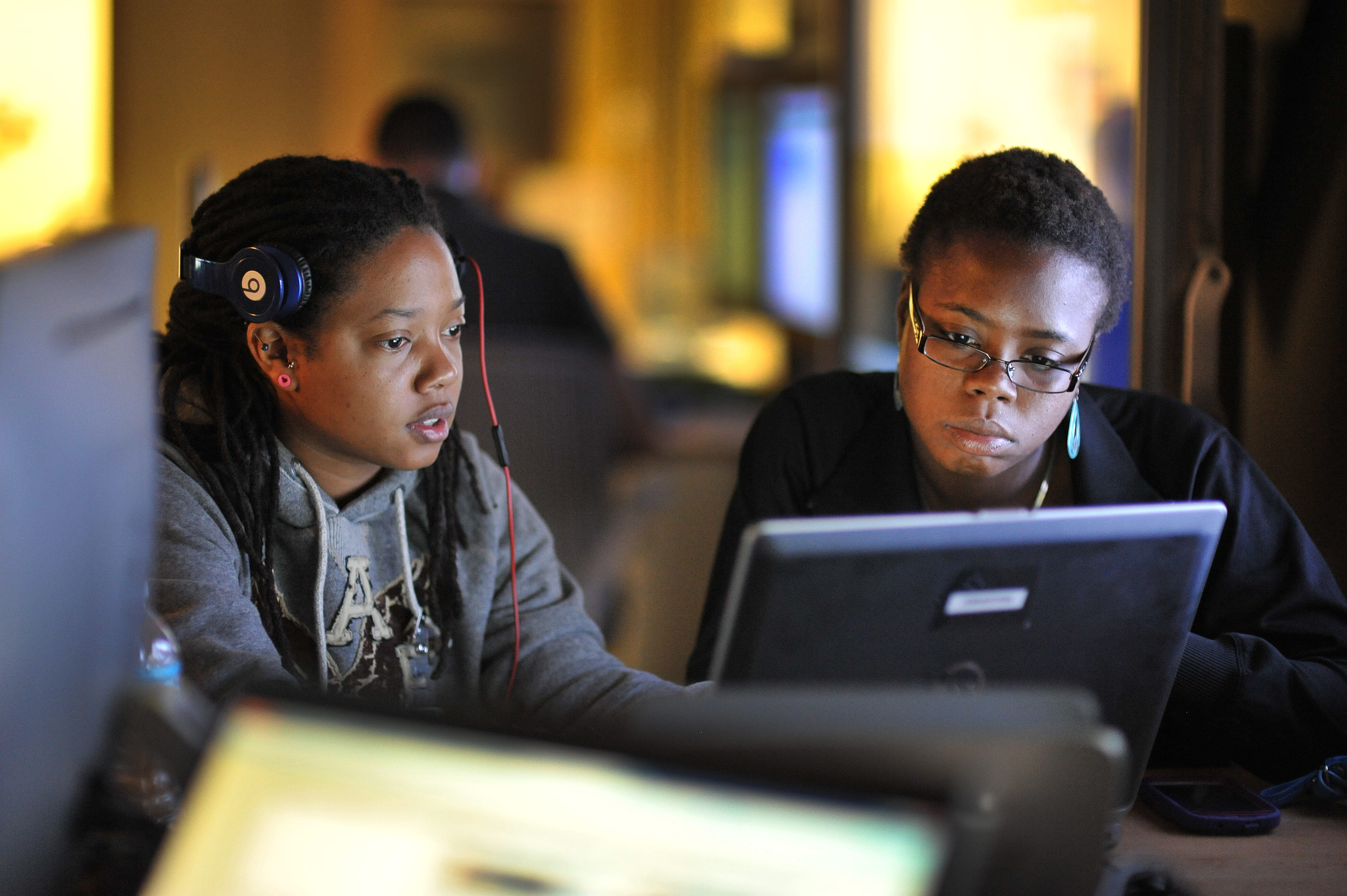
Photo: Minority Serving Institute Partnership Program via Sandia Labs [Creative Commons Attribution-NonCommercial-NoDerivs]