Want to attend a hackathon that not only needs your talents, but fits your mindset?  Maybe you are actually thinking of hosting your own event, but don’t know when to begin?

If this describes you, check out our Hackathon Resources page.

There you’ll find resources to help manage everything from organizing and planning your hackathon (like Hacker League), to finding Silicon Valley investors(such as Angel Hack) that want to connect with hackers. Resources like Hackathon.io   and HackWeekends help you find  hackathons to attend as well as connecting you to a user community.

Photo: Olathe Human Resources via City of Olathe [Creative Commons Attribution-NonCommercial-NoDerivs]

Once thought to only be useful for engineers and computer geeks, coding is rapidly becoming not only commonplace but also necessary for many professions. This is even true for lawyers, as law firms are looking for lawyers who have experience with cybersecurity and patent lawyers aren’t knowledgeable enough about the software industry to fully understand potential lawsuits. Education focusing on computer science is even being implemented in grade schools, and for good reason. An article by the Huffington Post explains that if learning code is relegated to a small portion of the population, especially if that portion does not include individuals knowledgeable about the law, hackers will find it very easy to outmaneuver lawyers. It is becoming more imperative every day that people educate themselves about coding. Even if you don’t think you’ll be using your new coding skills in your day to day life, the logical reasoning and problem solving that coding requires can be applied to many situations.

Thankfully, one can learn to code at any age, and there are lots of resources available online. Coursera provides free online classes taught by computer science professors at well-known universities around the country such as Rice University and Stanford University. If “going back to school” isn’t your thing, Khan Academy features videos on a multitude of subjects including coding. Pamela Fox, one of the coding instructors for Khan Academy, describes the videos she creates as “five minutes that will work for pretty much everybody”. Codecademy, another great resource, lets you choose how you want to learn coding, whether that be through concentrating on projects or taking a course. Steve Schwartz, who praises Codecademy for allowing anyone to start with the very basics of computer science, also draws parallels between the logical reasoning required for the LSAT and for coding. Even if you’re years away from practicing law, learning to code can still be extremely useful.

I’ve highlighted just a few options for starting to learn code, but there are hundreds of resources online, with focuses ranging from women in coding to underrepresented groups in STEM. To see some great options, check out Free Coding Courses under the Courses tab.

Articles via The Center for Innovative Justice and Technology, August 24, 2015; The Atlantic, March 23, 2012; Huffington Post, August 25, 2015; Business Insider, November 5, 2014;  and LSAT Blog, December 19, 2013

Photo: Matrix Code via David.Asch [Creative Commons Attribution-NonCommercial-NoDerivs]

China has censored the internet again after adopting a new national cyber security law that seeks to make data, IT infrastructure and systems, and the internet  in certain areas “secure and controllable,” according to the National People’s Congress website.

Reporters were told by Zheng Shuna, of the NPC’s Legislative Affairs Commission, that cyberspace sovereignty is “the embodiment and extension of national sovereignty” and an important part of national infrastructure (according to Xinhua, a state-owned news agency).

Article via Above The Law, 10 July 2015

Photo:China Flag via Bryan Jones [Creative Commons Attribution-NonCommercial-NoDerivs]

Casetext,a free legal research website that uses crowdsourcing to annotate cases, has introduced a brand new tool that publishes attorney’s commentary and connects them to cases they cite. Users of the new LegalPad app can write articles and share them with particular interest groups in the Casetext community

Attorneys who publish articles on the site can create a reputation in their specific areas, according to Casetext.

“Legal writing is exceptionally hard. You feel constantly buried in dozens of sources, trying to keep quotes and citations straight,” according to Jake Heller, Casetext founder. “We crafted technology to help writers focus on what matters most: developing their message.”

Article via ABA Journal, 2 July 2015

Photo: A Writer’s Morning via Gene Wilburn [Creative Commons Attribution-NonCommercial-NoDerivs]

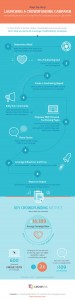
Crowdfunding can be an incredible campaigning tool, especially for a good cause. Finances can be a problem when starting a nonprofit, but crowdfunding has the ability to reach millions of people who would back your cause through donations, via the Internet.

A crowdfunding platform for nonprofits and social good projects, CauseVox explains how to make crowdfunding work for your cause in the infographic below.

social-good-crowdfunding-causevox


Article via Mashable, 22 June 2015

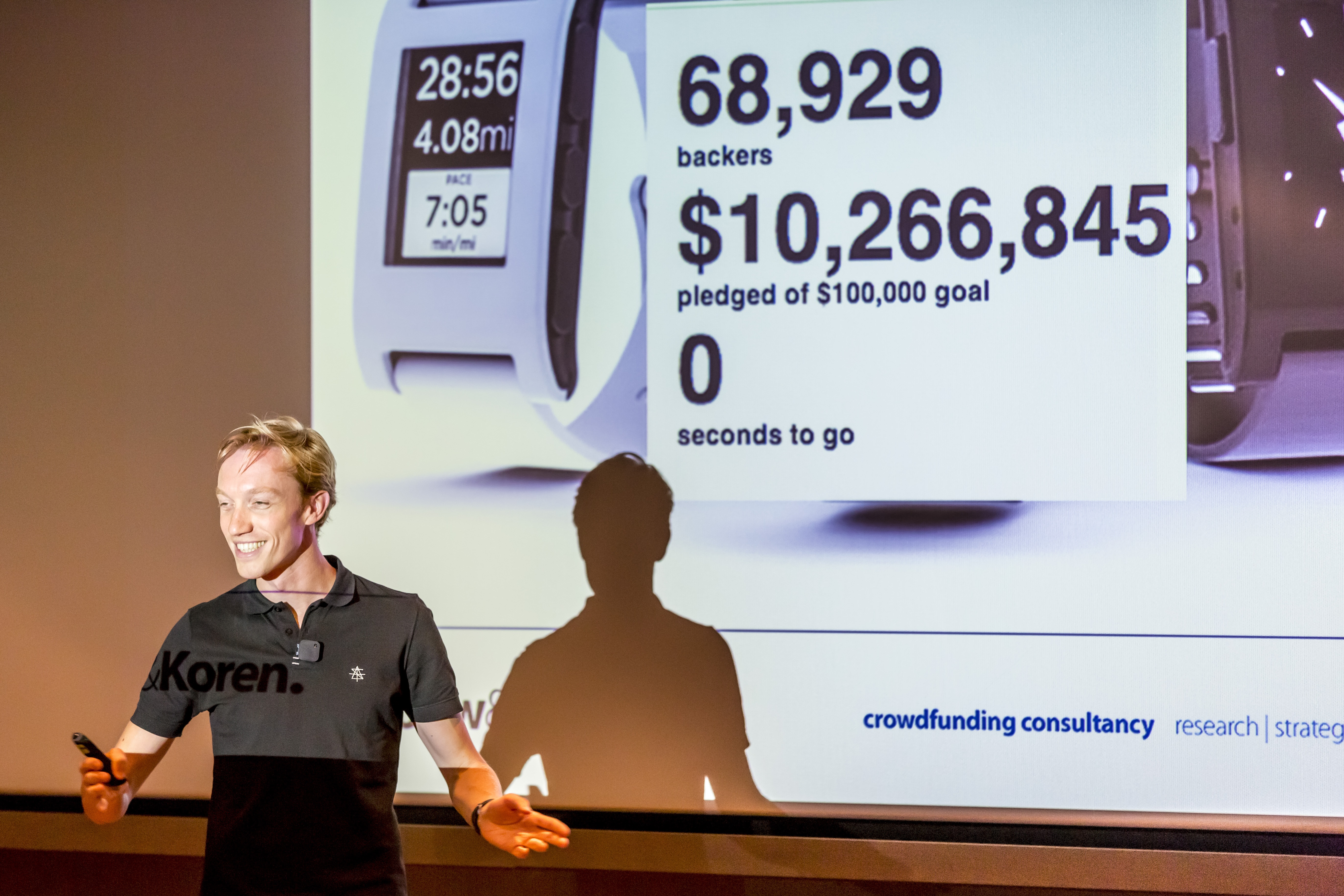
Photo: Interactief seminar Crowdsourcing door Gijsbert Koren van Douw&Koren via Mediawijzer.net [Creative Commons Attribution-NonCommercial-NoDerivs]

California’s labor commission has decided that one of Uber’s drivers is an employee and not an independent contractor. Uber, a ride-hailing service and popular app, may have to change its business model in the state. While the ruling was made in March, it has now become public due to Uber filing an appeal.

Classifying the drivers as contractors has allowed Uber to avoid paying for Social Security tax, paid sick days, health insurance, car maintenance and gas along with other expenses. Uber will be obligated to pay for these expenses if their drivers are defined as employees, and the effects could be felt by customers as well as set a precedent for future lawsuits.

Article via CNET, 17 June 2015

Photo: GREAT experience with @Uber via Anne Ruthmann  [Creative Commons Attribution-NonCommercial-NoDerivs]