Domestic workers do the work that make all other work possible. They are the nannies that take care of children, and the house keepers that keep homes clean while their owners are working. They are often working for less than $13 and hour and without benefits like health insurance or social security payments. 95% of these workers are women according to the National Domestic Workers Alliance site.

Ai-jen Poo is trying to change that. She is the director for The National Domestic Workers Alliance, an organization that works for the respect, recognition and inclusion in labor protections for domestic workers. “The future really needs the leadership of women…”, Poo says in the video explaining the organization and their work. “Domestic workers…[are] caring for our children, our aging loved ones, our homes…the most precious elements of our lives”.

The MacArthur Foundation agreed, and awarded Poo a Genius grant for her work with The National Domestic Workers Alliance in 2014. The grant will allow for the Alliance to continue to shed light on the plight of domestic workers, whose work is often hidden from public view. Much of this kind of work was done by family members in the past, and never afforded the protections of labor laws. That means that domestic workers are not only working for little pay, but with no sick time or vacation. No protection against discrimination or harassment. No retirement plan or health insurance plan.

Poo has stated that the biggest change that she is hoping to make is respect and recognition for the value of this work. “We as a country need more care than we ever have before”, says Poo. “Yet, this work is so undervalued in society. It is almost taken for granted or invisible”.


Video via Mashable, 18 September 2015

Photo: Filipino Domestic Worker via ILO in Asia and the Pacific[Creative Commons Attribution-NonCommercial-NoDerivs]

The startup Kickstarter has reorganized into a public benefit corporation, a legal move that states that the startup intends to have “a positive impact upon society”. Now, the company famous for funding new and upcoming projects is legally obligated  to take into account public benefit when making decisions. Additionally, Kickstarter will be required to disclose information on its social impact. This choice to start moving away from overbearing investors and shareholders is a growing trend among startups. Derrick Feldman, President of Achieve, a company that deals with online fundraising strategies,  states that more technology companies may follow in Kickstarter’s footsteps. He explains that public benefit corporations are useful for startups that “may have wrestled with the way companies have been formed and established in the past.”

Kickstarter, on their part, considers their reorganization another step towards transparency, which they have not always been associated with in the past. In 2012, concerns were raised over where money raised for projects that don’t come to fruition goes. Kickstarter has clarified that concern in their terms of use, and they has taken measures to become more  accountable to the public. Before becoming a public benefit corporation, they were already voluntarily designated a B Corporation and was required to follow exhaustive social and environmental responsibilities. Not many companies have chosen to become a public benefit corporation, but Kickstarter has joined companies such as Patagonia and This American Life in this decision. The co-founders of Kickstarter believe that the number of public benefit corporations will join them in the future, choosing to disregard “business as usual, and the pursuit of profit above all”.

Article via CNETSeptember 21, 2015

Photo: Kickstarter HQ Look via Scott Beale [Creative Commons Attribution-NonCommercial-NoDerivs]


John Oliver is the host of HBO’s Last Week Tonight with John OliverThe show is a satirical take on the news of the week and lasts about 30 minutes.  Prior to Last Week Tonight, John Oliver was was correspondent on The Daily Show with Jon Stewartstand up comedian, and and Emmy award winning writer. Now that Oliver is squarely in the spotlight with his own show, he has used it as a platform to talk about social justice and civil rights concerns.

His show has touched on many of the hot issues of the day like the use of torture by the US Government and LGBT Rights. He has also shed light on less know concerns, such as the misuse of farmers by companies associated with chicken in the US. He devotes a lot of air time on his show to discuss these topics which results in an audience that not only becomes aware of the issues, but becomes engaged. You can see the effect in the blogosphere and search traffic directly after his show airings.

His effect is reaching all the way to the halls of congress. Marcy Kaptur, a congresswoman from Ohio, started working on legislation related to the story Oliver did on farmers. Her recent victory in this battle has secured new protections for farmers. Another congresswoman from Maine stated the Oliver’s coverage on the subject helped to support the legislative action.

John Oliver’s gift seems to be bringing new interest to those fighting in the trenches for change. His show provides a voice for topics big and small and aids the fight for social justice.


Article via Mashable, 5 September 2015

Photo:John Oliver on the NSA Recording Your Phone and E-Mail via:  KAZ Vorpal[Creative Commons Attribution-NonCommercial-NoDerivs]

The concepts of justice and equality were once determined only by judges and lawyers, but over time that has changed as technology has made it possible to connect individuals to important issues. PeaceTones, another project founded by the Internet Bar Organization in addition to The Center, works to make those issues even more accessible—by assisting musicians in releasing their music to the world in the hopes it will inspire global change and vitalization of their communities.

This could seem over ambitious. After all, many people listen to music to relax or relieve stress. Would people be receptive to music that connects people to issues or walks of life that are different from theirs? Are people interested in social problems around the world? Can music even have a profound effect? These are important questions, but I would argue that the actions of the general public have already answered them with a resounding yes.

Recently justice has taken on new definitions as individuals share information and opinions on Facebook, Twitter, Tumblr, and other popular online platforms. According to a New York Times article from 2009, “Social media can’t ensure social justice. But it can affect the invisibility that is the first barrier to achieving it.” Social media, already a large part of how people interact with their friends and family, has also become extremely important in shaping public opinion about certain issues. An article in the Astana Times explains, “Social media has established new ways of communicating and creating perceptions between businesses and consumers, organizations and their audiences, political offices and their electorate.” So if something that was once primarily used for catching up with friends or sharing funny cat videos can have such a large effect on one’s views, why not music?

An article published by NY Daily News argues that “music has always been a tuneful force for political change“. PeaceTones’ goal is not new or radical, but simply an organized effort to assist talented musicians in the work they are already accomplishing. PeaceTones seeks to provide musicians with the legal, business, and technological skills they need to create and release their music, become leaders within their communities, and share their stories with the rest of the world. Not only does PeaceTones provide mentors and training for budding musicians, the majority of the profits go back to the creators and into projects they choose to help their communities.  The arts have long been used to facilitate change and introduce new ideas, and the nonprofit explains in their mission statement that music especially has the ability to “transcend socio-political and economic divides and speak the universal languages of peace and justice.” Simply put, music is for everyone, despite their connection or background, and provides common ground for people to meet and learn from each other.

If you are interested in learning more about PeaceTones and some of their projects or would like to get involved, please visit their website.

Articles: New York Times, August 13, 2009; Astana Times, February 20, 2015;  NY Daily News, October 10, 2009;

Photo: RED HOT MUSIC- No Shallow thoughts via S Vikek [Creative Commons Attribution-NonCommercial-NoDerivs]

Former technician Katherine Moussouris sued Microsoft this Wednesday for gender discrimination. She alleges that Microsoft paid and promoted female employees less than male coworkers, and that women in the company were also ranked consistently below men. Moussouri proposed the class action lawsuit after working at Microsoft between 2007 and 2014.

The lawsuit states that the tech company’s practices and policies “systematically violate female technical employees’ rights and result in unchecked gender bias that pervades its corporate culture.”

This suit occurs as other tech giants, recently Twitter and Facebook, also battle gender discrimination lawsuits. Public interest in women’s role in the workplace has increased since Ellen Pao filed a high-profile lawsuit against the Silicon Valley venture capital firm Kleiner Perkins Caufield & Byers for unequal treatment on the basis of gender.

Microsoft released a statement in response to Moussouri’s allegations: “We’re committed to a diverse workforce, and to a workplace where all employees have the chance to succeed.”


Article via CNET, 16 September 2015

Photo: Microsoft via Thomas Hawk [Creative Commons Attribution-NonCommercial-NoDerivs]
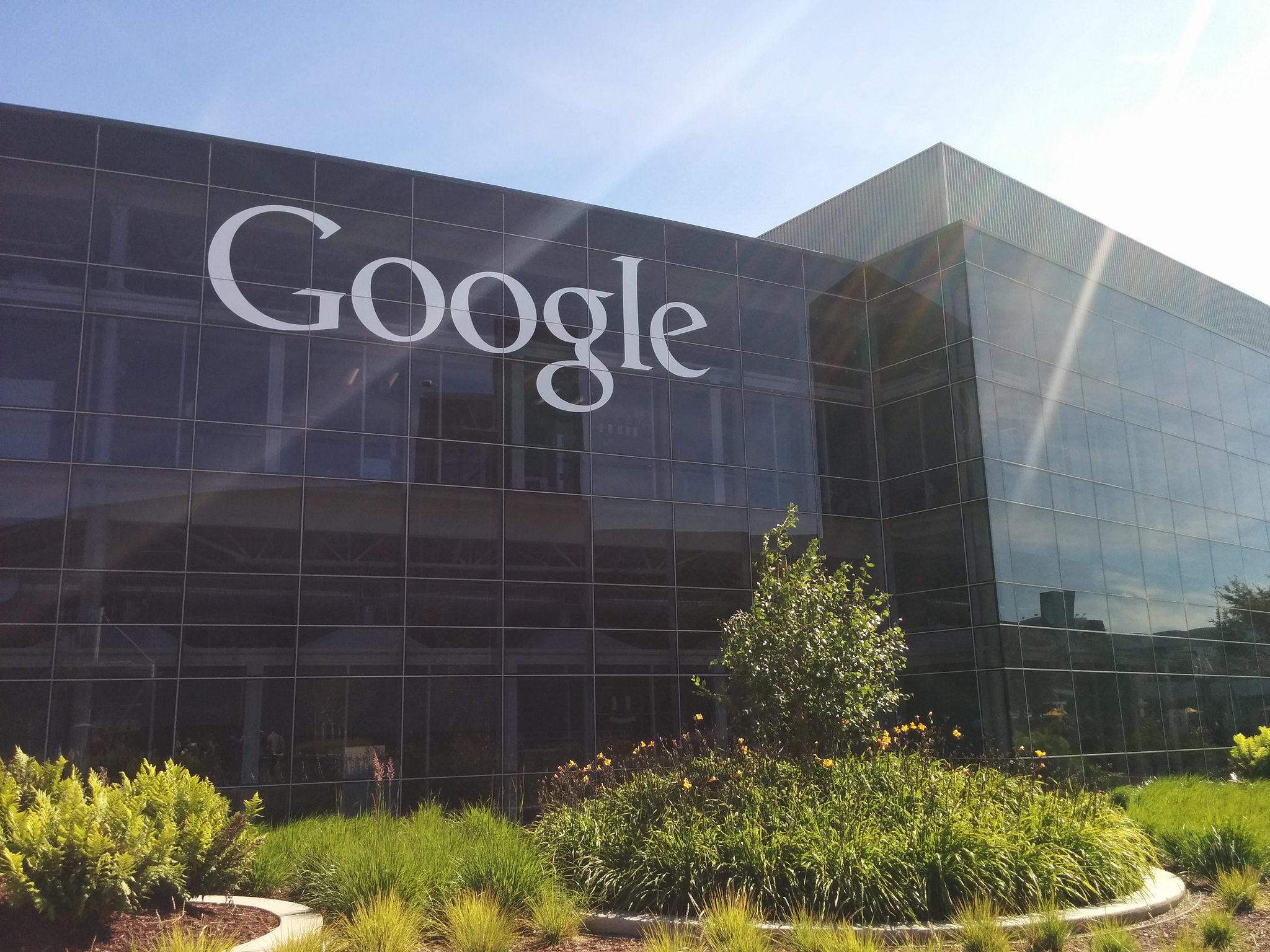
Antipoaching, the act of refusing to hire employees from a rival company, may not seem like the best business strategy for large tech companies like Google or Apple who are always capitalizing on the “next big thing”. However, a civil law suit was filed against several companies including Google, Apple, Adobe, and Intel for antipoaching and is now recently being settled for $415 million after movie studios Pixar and Lucasfilm and financial software company Intuit settled previously. The companies involved in the lawsuit were accused of agreeing to not hire certain employees from each other which allowed each company to retain employees they would rather not lose. While antipoaching does sometimes serve the best interests of the company as a whole, some employees looking to earn a higher salary or explore other opportunities outside their place of work feel that the antipoaching agreement hindered their abilities to move up in their fields. Earlier versions of the lawsuit also included allegations that the antipoaching agreement allowed companies to artificially keep salaries low.

Even though all of the companies involved in the lawsuit chose to settle, many of the companies continued to state that they believed they had done nothing wrong. A statement released to CNET from Adobe by one of their spokespeople explained that, “Adobe firmly believes that our recruiting policies have in no way diminished competition for talent in the marketplace…Nevertheless, we elected to settle this matter in order to avoid the uncertainties, cost, and distraction of litigation.” A similar statement was released by Intel back in January when the settlement was originally proposed.

Article via CNET, September 3, 2015

Photo: Google Headquarters – Mt View via Servizi Multimediali [Creative Commons Attribution-NonCommercial-NoDerivs]