Edward Snowden fled the US in 2013 after leaking classified documents to reporters. These documents revealed domestic surveillance by the NSA on United States citizens and ignited outrage and debate about security and surveillance. To escape arrest, Snowden left the country and resides in Russia, where he has been since 2013. Now he wants to come back home.

In an interview that aired Monday with the BBC, Snowden says that he has offered to go to jail in exchange for coming home, but has not received a response from the government. He stated, “I’ve volunteered to go to prison with the government many times”. He continues saying that “what I won’t do is I won’t serve as a deterrent to people trying to do the right thing in difficult situations.” This echoes a sentiment that he expressed in a Wired interview in 2014 where he said that he wouldn’t mind going to jail as long as his sentence “serves the right purpose.”

Snowden has been charged with 3 felonies in accordance to the Espionage act that  carry a sentence of over 30 years. His lawyers have objected to Snowden returning to the US because they believe that a trial with charges under the espionage act would not be fair. “The Espionage Act finds anyone guilty who provides any information to the public, regardless of whether it is right or wrong,” Snowden told the BBC. “You aren’t even allowed to explain to a jury what your motivations were for revealing this information. It is simply a question of, ‘Did you reveal information?’ If yes, you go to prison for the rest of your life.”

There continues to be ongoing debate as to whether Snowden is a patriot or a traitor. Those who see his actions as an act of patriotism have called for President Obama to grant Snowden a full pardon. But, when Secretary of State John Kerry visited Moscow in 2013 he called Snowden a traitor and a coward. Former Attorney General Eric Holder has indicated that a plea deal could be possible that can met the request of both the government and Snowden.

In the meantime, Snowden continues to use his status to speak out about issues of security and surveillance.

Article via TechCrunch, 6 October 2015

Photo: snowden via duluoz cats[Creative Commons Attribution-NonCommercial-NoDerivs]
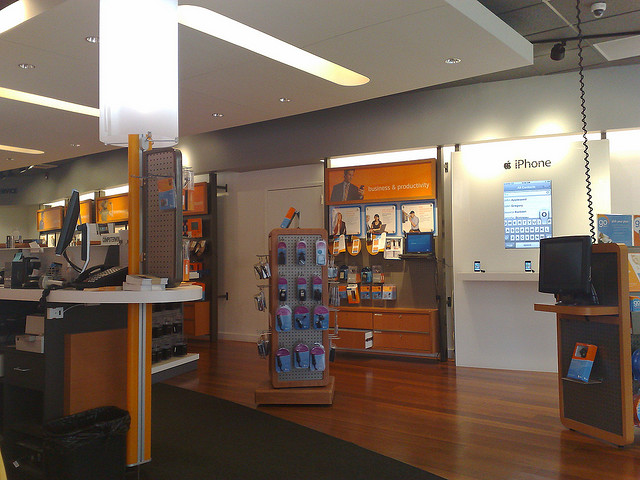
A southern California company and former AT&T sales reps are being sued by AT&T Mobility. They are accused of uploading malicious software to unlock phones so that the phones can be used by any wireless network without a contract. It is likely that the sales reps were hoping to exploit the resale market for cell phones.

Lawyers for AT&T Mobility stated that schemes like this are not uncommon. The lawsuit names SwiftUnlocks, as the southern California company referenced above. This is a company that unlocks cell phones for a fee. The lawsuit goes on to describe a scheme that involves the former sales reps profiting from using SwiftUnlocks to unlock phones in milliseconds. It was precisely the act of unlocking many phones so quickly, that drew attention to these sales reps, eventually promoting an investigation.

It is alleged that the former reps earned between $10,000 and $20,000 from Swift Unlocks before tipping off their bosses with their questionable behavior.

Although the suit does not mention criminal fraud, it could still prove expensive for Swift Unlocks and the former sales reps. It is expected that the damages would include lost profit as well as factoring in the revenue that the sales reps made during their alleged scheme.

Article via CNET, 19 September 2015

Photo: This trip to the at&t store is taking longer than I expected via Keith Lam [Creative Commons Attribution-NonCommercial-NoDerivs]

According to Manhattan’s District Attorney, smartphone data encryption hinders criminal investigations in state courts. Cyrus R. Vance, Jr. testified to the Senate Judiciary Committee on July 8, 2015 in an effort to advocate legislation allowing law enforcement officials to access private phone data with judicial authorization.

Vance, Jr. cites that 71% of phone evidence in his office comes from Apple or Android devices. As a result, Apple and Google’s move to fully integrate data encryption in their next devices will significantly affect prosecution processes in state courts.

State courts adjudicate over 90% of all criminal cases annually, which means over 100,000 cases for Vance’s office alone.

“To investigate these 100,000 cases without smartphone data is to fight crime with one hand tied behind our backs,” he asserts.

Vance does not support bulk data collection or surveillance without authorization. Civil liberty and privacy advocates are still wary, however, and endorse data encryption overall. This sentiment is in relative accordance with statements from Deputy Attorney General Sally Yates and FBI Director James Comey. They say that the Obama administration has no current plans to mandate companies to provide federal agents encryption keys for their products, but they also recognize that companies should not make their devices “warrant-free zones” that impede law enforcement’s authorized access to criminal evidence.

Article via Legaltech NewsAugust 10, 2015

Photo: IPhone via Jorge Quinteros [Creative Commons Attribution-NonCommercial-NoDerivs]

Legislation was passed last spring that allows police in North Dakota to utilize drones not only for surveillance but also as non-lethal weapons. The bill, which was originally introduced by Representative Rick Becker, did not permit the use of any kind of weaponry to be used, but lobbyists advocated for the bill to be amended to allow non-lethal weapons in order to win the support of law enforcement. There are restrictions incorporated into the law that limit the scenarios in which drones can be used by police, though. For example, a drone may only be used for surveillance if the data will be used in investigating a felony, and law enforcement must obtain a warrant to use the drone which includes very specific details on how, when and where it will be used. There are also limits on how personal information that the drone uncovers may be dealt with. Even with some restrictions within the legislature limiting the use of drones, some say that the drones are providing law enforcement with too much power.

Jay Stanley from the American Civil Liberties Union states that even non-lethal weapons can still have lethal results. Tasers, though non-lethal, still lead to approximately fifty deaths a year. Additionally, using drones may lead to detachment between the person operating the drone and the suspect on the other side, which could lead to regrettable choices. Jim McGregor disagrees, explaining that police officers out in the field may have a harder time making the right call than someone operating a drone in an offsite location with less to distract them. He likens drones to other methods, including SWAT teams and snipers, to show that drones are not so different from well-known choices for dealing with dangerous situations.

Whether non-lethal drones are a positive or negative development in law enforcement technology, Representative Becker intends to propose a  new law that will make non-lethal as well as lethal weaponry on drones illegal.

Article via TechNewsWorld, August 28, 2015

Photo: Drone via ninfaj [Creative Commons Attribution-NonCommercial-NoDerivs]

Recent incidences of police brutality have sparked public outrage, and as a result, the use of police dashboard and body cameras has increased. However, footage released to the public could be altered. Sandra Bland’s arrest video, for example, loops several times in the 52 minute span. Journalists have accused police departments of editing the videos; the Texas Department of Public Safety denies any tampering of the footage.

Police camera footage is stored unaltered on police department software systems. This is because the Axon body cam dominates the police camera industry, and it records footage in a way that is nearly impossible to corrupt. The only way an officer could impede a video is by physically pushing the off-button for five seconds, an unlikely occurrence during a high-intensity event. Additionally, the officer’s name is attached to the video for as long as it exists in the software system.

Although raw footage can’t be edited, there’s no way to regulate what edits are made to the footage released to the public. In fact, almost all videos that the media releases are edited—bystanders’ faces are blurred, and sections of video with no action are removed. The Freedom of Information Act has no provisions that require police departments to release raw footage. However, several incidences recorded on police cameras have led to the indictment of guilty officers, and no allegations that videos are tampered have been confirmed.

It’s evident that police body and dashboard cams will continue to rise to prominence, whether the accusations of video tampering are true or not. The Obama administration has proposed a $75 million program to provide 50,000 cameras to agencies, and the Department of Justice is allocating $20 million for police body cameras.

Article via The Huffington Post, August 28, 2015

Photo:  via Whoop Whoop that’s the Sound of the Police via AshtonPal [Creative Commons Attribution-NonCommercial-NoDerivs]

Over one hundred million dollars were obtained illegally by the largest cybercrime collaboration between rogue members of Wall Street and hackers to date. In order to obtain crucial information about publicly traded companies before it became public knowledge, these stock traders living in Pennsylvania, Georgia, and New York would email hackers located in the Ukraine with a list of news releases concerning certain companies that they wished to have. The hackers would respond with recorded instructions on how to obtain the stolen articles. By having advance access to news  containing earnings and other details, the stock traders were able to make favorable trades before anyone else knew about the information. For their skills, the hackers were paid a portion of the profits from the illegal trades or a flat fee.

This is not the first time hackers and stock traders have colluded to commit cybercrime. A similar case in 2005 involved stock traders in Estonia hacking into Business Wire in order to make well-informed trades. Cases such as these show that cybercrime goes far beyond identity theft, stealing bank information, or obtaining sensitive personal information. Additionally, some stock brokers in Manhattan were charged last month with illegally obtaining millions of email addresses and planning to spam them in order to try to manipulate the worth of certain stocks, and another hacker group tried to steal information from emails in the pharmaceutical industry to gain access to deals that could affect the stock market. In all of these cases, cybercrime is centered around market-altering information. As former Manhattan prosecutor Matthew L. Schwartz states, “hackers can obtain access to all sorts of valuable information and can and will profit off of it in every way imaginable.”

Article via New York Times, August 11, 2015

Photo: Frankfurt Stock Exchange via Tobias Leeger [Creative Commons Attribution-NonCommercial-NoDerivs]