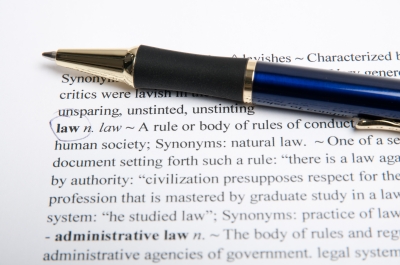
British intelligence spies on lawyer-client communications, government admits (GigaOM, 6 Nov 2014) – After the Snowden leaks, British lawyers expressed fears that the government’s mass surveillance efforts could undermine the confidentiality of their conversations with clients, particularly when those clients were engaged in legal battles with the state. Those fears were well-founded. On Thursday the legal charity Reprieve, which provides assistance to people accused of terrorism, U.S. death row prisoners and so on, said it had succeeded in getting the U.K. government to admit that spy agencies tell their staff they may target and use lawyer-client communications “just like any other item of intelligence.” This is despite the fact that both English common law and the European Court of Human Rights protect legal professional privilege as a fundamental principle of justice. Reprieve noted that the government had previously claimed three times that it could not disclose the information it has now disclosed (PDF) in heavily redacted form. According to that information, the acceptability of spying on lawyer-client communications is largely backed up by the Regulation of Investigatory Powers Act (RIPA), which was recently revised to allow surveillance of all sorts of online channels , as well as of phone calls and emails.


Provided by MIRLN.

Image courtesy of FreeDigitalPhotos.net/renjithkrishnan

ABA launches website to aid unaccompanied minors (VOXXI, 14 Nov 2014) – Child advocates have for months voiced concerns about unaccompanied minors not having an attorney by their side in immigration court, and now the American Bar Association is stepping in to help. The group launched a website this week as a resource for attorneys who want to volunteer their time to help unaccompanied minors navigate through the immigration system. The goal is to get more attorneys to provide unaccompanied minors with legal representation on a pro bono basis. “The ABA steps up when justice is at stake,” American Bar Association President William C. Hubbard said in a statement. “We support legal representation for unaccompanied children in the U.S. immigration court system. We are acting not only out of concern for the welfare of these children, but also because all parties benefit when vulnerable children are competently represented by counsel in adversarial proceedings.” The website is dubbed the Immigrant Child Advocacy Network . It was put together by the American Bar Association’s working group on unaccompanied minors in collaboration with partner organizations, like Kids in Need of Defense and the American Immigration Lawyers Association. The website provides links to resources and training materials on issues related to legal representation of children. It also provides a calendar of ongoing pro bono training opportunities and a list of legal providers who are looking for volunteers to assist children.


Provided by MIRLN.

Image courtesy of FreeDigitalPhotos.net/JeroenVanOostrom

New crowdsourced law site is part of larger project to ‘annotate the world’ (Law Sites, 17 Nov 2014) – There is something very fitting in the fact that a site that started out deciphering rap lyrics is now turning its attention to making sense of the law. The site, Law Genius , is the newest member of the larger Geniusnetwork of crowdsourced community sites, all of which grew out of the original site, Rap Genius , which was started in 2009 for the purpose of listing and annotating rap lyrics. Soon, users started using the site to annotate all sorts of other stuff, from the collected works of Shakespeare to the roster of the 1986 New York Mets to the warnings on the back of a Tylenol bottle . Last July, the site officially relaunched as Genius, becoming a hub for a range of communities devoted to topics such as rock, literature, history, sports, screen and tech. All are united by the site’s overarching goal, “to annotate the world.” Genius breaks down text with line-by-line annotations, added and edited by anyone in the world. It’s your interactive guide to human culture.Now law is the latest addition to this ambitious effort at global annotation. It is an effort to crowdsource statutes, case law and other legal news. At the helm of the project, as executive editor of Law Genius, is Christine Clarke, a 2010 graduate of Yale Law School who practiced plaintiff-side employment law in Manhattan before joining Law Genius full time. At Law Genius, any registered user can add text and annotate any text. Other users can vote up or down on annotations, or add their own suggestions to the annotations. As you view text, any portion that is highlighted has an annotation. Click on the highlighted text to view the annotation. To add your own annotation, just highlight a selection of text.


Provided by MIRLN.

Image courtesy of FreeDigitalPhotos.net/JeroenVanOostrom


Who’s minding best practices: A look at what it takes to secure a network (InsideCounsel, 4 Nov 2014) – Most organizations have good intentions to follow “cybersecurity best practices,” but the sticking point comes when deciding what these practices are and how they relate to individual businesses. While lawyers have an ethical duty to protect information under Rule 1.6: Confidentiality of Information and businesses that accept credit cards must comply with the Payment Card Industry Data Security Standard (PCI DSS) requirements , there is much more to securing a network than following best practices and requirements. Certainly following these practices is important, but following their intent is what makes the difference between protecting a business and performing perfunctory duties. Before the recent spate of breaches on some big-name retailers, you may have thought that with all the rules and regulatory requirements retailers are subject to under the Payment Card Industry Data Security Standards (PCI DSS) that their networks would be secure. However, the problem often lies with what these companies are not doing rather than what they are doing. While these companies may have “followed best practices,” they may not have done what would have been best, either because of a lack on their end or on their adviser’s end.


Provided by MIRLN.

Image courtesy of FreeDigitalPhotos.net/StuartMiles

Cybersecurity: Not just for biglaw and its clients (WSJ, 27 Oct 2014) – Cybersecurity is an increasingly big priority for law firms with big financial institution clients. But it can be a matter of life and death for lawyers doing pro bono work with clients in troubled countries who are battling human trafficking, terrorism and other human rights violations. The interception of sensitive documents by criminals or unfriendly governments can compromise the safety of in-country clients, and in some cases the attorneys with whom they work. “Human rights really is cloak-and-dagger,” Christina Storm, a lawyer and founder of the non-profit group Lawyers Without Borders , told Law Blog. “Lawyers put themselves at risk, and every person in-country who reaches out to us puts themselves at risk.” Ms. Storm’s group focuses on strengthening the rule of law around the world. The organization works with law firms big and small as well as solo practitioners on cases that range from electoral reform to strengthening protections for gay, bisexual and transgender people in African countries. Such work isn’t always popular. In some places, government surveillance might involve keyloggers that track communications between dissidents and their lawyers. Confidential documents that fall into the wrong hands can expose both sides to danger, Ms. Storm said, adding, “Their safety is important to us.” Lawyers Without Borders takes some of its security cues from the big law firms it works with, such as Reed Smith LLP and Linklaters, whose corporate and financial clients requirement myriad steps to prevent hackers from accessing confidential information. At one point the organization tried using encrypted email, but the program was so cumbersome that people abandoned it because it was hard to use. Another document management system ended up being accessed by authorities in an unfriendly country, and the whole thing had to be scrapped.


Provided by MIRLN.

Image courtesy of FreeDigitalPhotos.net/sumetho

Would a new crime of “willful refusal to comply with a decryption order” be the best answer to the device decryption puzzle? (Orin Kerr, 17 Oct 2014) – FBI Director James Comey spoke Thursday at Brookings about the FBI’s concerns with how encryption can frustrate search warrants in lawful investigations. The scope of Comey’s remarks goes beyond Apple’s new iOS8 operating system design, but much of it focused on the question of device encryption raised by Apple’s new policy. I wanted to focus on one aspect of Comey’s remarks, the question of whether the government can get access to the contents of encrypted devices directly from a suspect in a criminal case. Here’s Comey : “Finally, a reasonable person might also ask, “Can’t you just compel the owner of the phone to produce the password?” Likely, no. And even if we could compel them as a legal matter, if we had a child predator in custody, and he could choose to sit quietly through a 30-day contempt sentence for refusing to comply with a court order to produce his password, or he could risk a 30-year sentence for production and distribution of child pornography, which do you think he would choose?” I think Comey is wrong that the Fifth Amendment is a “likely” barrier in the cell phone context, because in most of the typical cases, when the government knows who is the owner of the phone, the Fifth Amendment shouldn’t be a problem. But let me put that issue aside for now and focus instead on the rest of Comey’s comment, and specifically his concern that the punishment for refusing to comply with a court order to produce a password would be so low that the bad guys will just make a rational decision to take the lesser contempt punishment. * * *


Provided by MIRLN.

Image courtesy of FreeDigitalPhotos.net/basketman