The ability to connect attorneys with potential clients in drunken driving cases, potentially before they are ticketed, is now possible due to the new smartphone app, the Duey Dialer. According to developer Daniel Delgado, the application allows a driver to trigger a traffic stop audio recording with the touch of a button and even contacts a lawyer with expertise in drunken driving cases automatically if not turned off within 45 minutes. The information sent includes the audio recording, location, identity, home address and contact information of the client. The attorneys pay for the app, which is available for Android use only and is currently used in six states.

Article via ABA Journal, 26 May 2015

Photo: Police Lights via J J  [Creative Commons Attribution-NonCommercial-NoDerivs]


Facebook, Google, Apple and Twitter, along with more than 75 companies and cyber security experts, sent a letter to President Obama on Tuesday, asking him to reject government proposals that would grant law enforcement access to their user’s encrypted data. The letter said that providing law enforcement access to their user’s data will leave them vulnerable to attacks and compromise their products, and asked Obama to reject proposals to force a “back door” into their operating systems. The efforts from several major tech companies to make data more secure precedes the open letter. They also requested that the White House focus on creating policies that advocate strong encryption technology and thus cyber security, human rights and economic growth. Law enforcement does not seem to agree however. Google and Apple were criticized for making their smartphone encryption too difficult for law enforcement to crack, and one official doesn’t understand why businesses market devices to purposefully allow users to escape the law’s reach.

Article via Mashable, 19 May 2015

Photo: Campaigning with a smile (Barack Obama in Austin #3) via Jack Thielepape/jmtimages [Creative Commons Attribution-NonCommercial-NoDerivs]


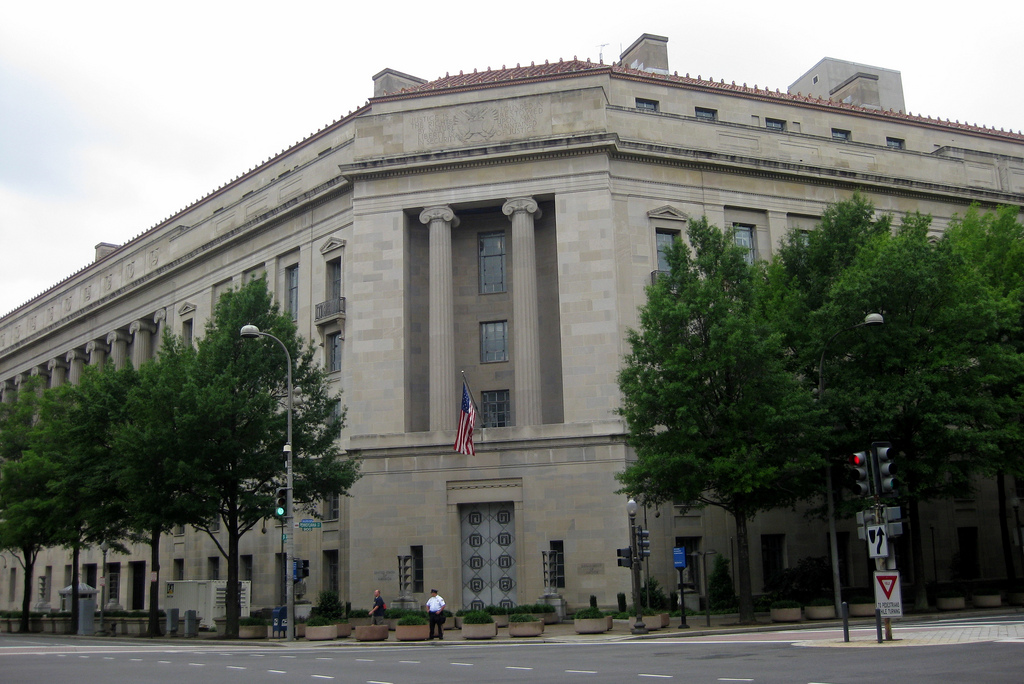
On Wednesday, April 29, the US Department of Justice released guidance titled “Best Practices for Victim Response and Reporting of Cyber Incidents.” The guidance outlines steps companies should take before, during, and after an incident, and includes a summary checklist. The guidance also states the Justice Department’s positions on the legal permissibility of a number of monitoring techniques and the impermissibility of many forms of so-called “hacking back.”


[Guidelines are here .]

Source: Department of Justice issues best practices guidance on cyber incidents (WilmerHale, 1 May 2015) via MIRLN (miscellaneous IT related law news)

Photo: Washington DC – Federal Triangle: Robert F. Kennedy Department of Justice Building via Wally Gobetz [Creative Commons Attribution-NonCommercial-NoDerivs]

Having lived in Korea for the past 2 and a half years, I can say that I love this place. It is an amazing culture and a truly amazing country. It also helps that I am an internet junkie, and the service here is unbelievable. I pay 41,000 won per month (around $39.00) for 100mb internet service with no contract. This is truly a place where connectivity is king.

However, I have consistently had one major issue, and that is with online shopping and banking. When I want to go to my bank website, I have to download at least 5 security programs, including keylogging pretection software. These are all designed to keep you safe, and your information secure. Funny, that the only time my information was compromised was when it had nothing to do with e-commerce. These programs also degrade the performance of your computer.

One of the biggest issues I have is that most online shopping websites use ActiveX security from Microsoft. ActiveX is outdated, and really only works well with Internet Explorer. While I have nothing against IE, I do have issue with this,as it inherently limits browser choice. In fact, until about 2 years ago, my (soon-to-be) wife thought Internet Explorer WAS the Internet…

After searching, I found out that Korea passed a law in 1999 to protect consumers that required the use of ActiveX security. I see serious issues with laws such as these, and that is due to the inherent difference in pace between law and technology. The world has moved beyond ActiveX, and South Korea is for once, lagging behind, and this is due to enshrining ActiveX into law. However this will be changing soon.

This April, after months of rumors, the Government has finally announced plans to fix things!! This is wonderful news, however I fear that it has come too late in the game. I wonder if this had any effect on ticket sales for the Incheon Asian games(I had to have my wife order them, because the payment system was exclusively in Korean)?

All I can say is that I am glad that things are moving in the right direction, and that Korean consumers will finally have a choice in browsers.

CIJT: Do you think that it is beneficial to enshrine specific technologies into law? Any ideas on how to have law keep pace with technology?


Source article: BusinessKorea

Photo: ClipDealer GmbH

A representative from Texas has proposed a very interesting way to try to combat NSA surveillance. Jonathan Stickland has proposed a state law (H.RB. No. 3916), which aims to combat NSA surveillance at a San Antonio site by cutting the cord so to speak. The bill would cut access to electricity and water utilities to any federal agency that “is involved in the routine surveillance or collection and storage of bulk telephone or e-mail records or related metadata concerning any citizen of the United States”.


Read the full BBC article here.

By Hustvedt (Own work) [GFDL or CC BY-SA 3.0], via Wikimedia Commons

People of the CIJT, What do you think?

Facebook and Google privacy heads disagreed on Wednesday April 23, 2015, with White House claims that the government needs ways around encryption of consumer data. Cryptography experts claim that a system designed to allow the U.S. government cirvumvent encryption could be exploited. Google’s chief privacy officer, Keith Enright, said the ability to access encrypted data could also decrease law enforcement’s accountability in data search and access.

Read full article via MIT Technology Review here.

System Code” by Yuri Samoilov is licensed under CC BY 2.0