Federal administration officials collaborated with senior executives from several large tech firms at last week’s summit on terrorist communication via social media. General Loretta Lynch, FBI Director James Comey and Assistant Attorney General for National Security John Carlin represented the Department of Justice at the conference. Facebook, Google, Twitter, Apple, and other large Silicon Valley companies attended. The meeting was part of President Obama’s overall mission as announced last week to combat violent extremism both internationally and domestically.

“Today’s developments reflect President Obama’s commitment to take every possible action to confront and interdict terrorist activities wherever they occur, including online,” said National Security Council representative Ned Price.

Multiple tech firms discussed their goals to prevent communication between terrorists on their social media outlets. “We explained our policies and how we enforce them—Facebook does not tolerate terrorists or terror propaganda and we work aggressively to remove it as soon as we become aware of it,” said a Facebook spokesperson.

The summit came after the Department of Homeland Security’s and the Department of Justice’s announcement of the Countering Violent Extremism Task Force, an amalgamation of different agencies given the task of “discourage[ing] violent extremism and undercut[ting] terrorist narratives” with an additional goal to “build relationships and promote trust” with certain communities across the country, said Secretary of Homeland Security Jeh Johnson.

Article via TechNewsWorld, 13 January 2016

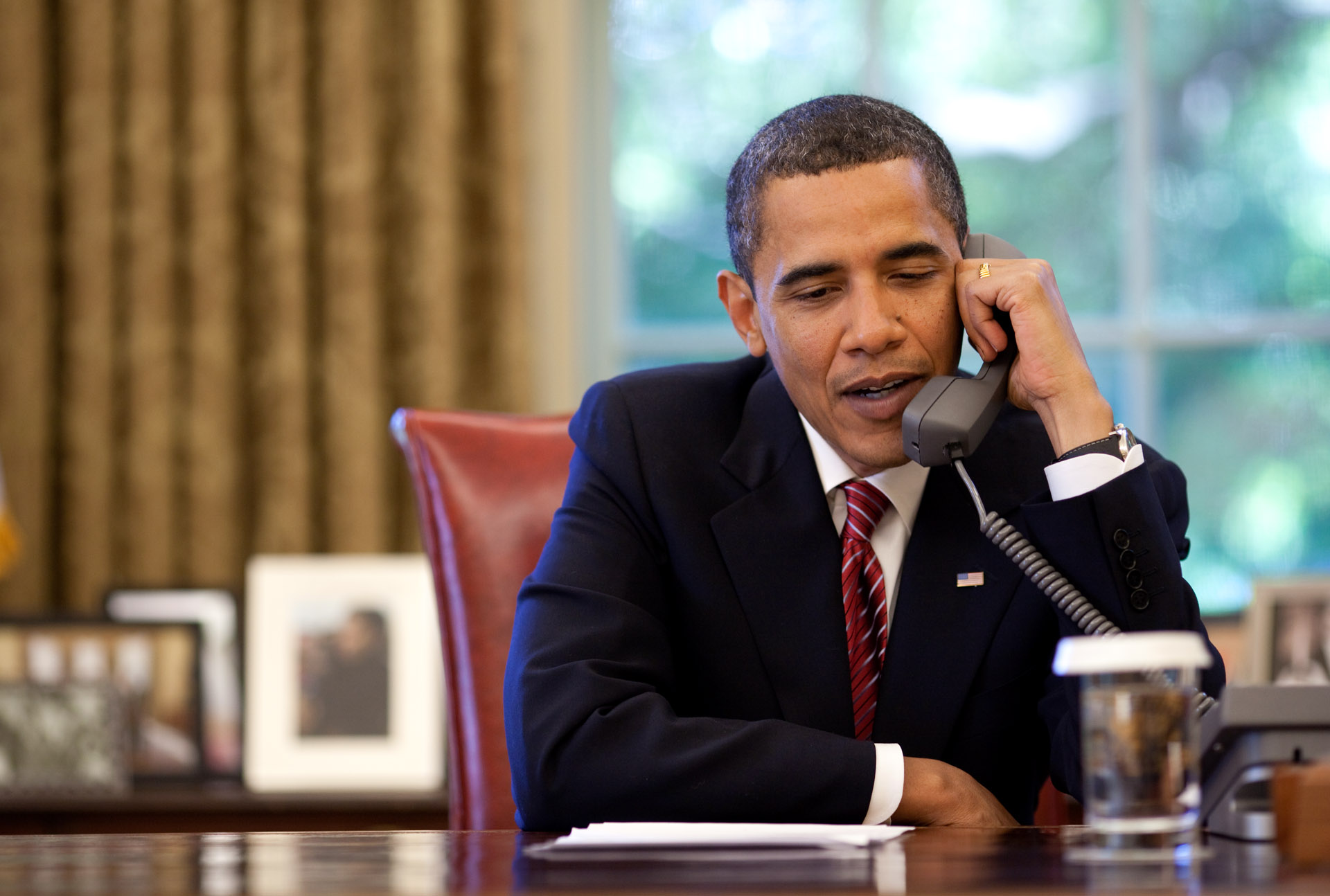
Photo: President Obama Talks to the Crew of Atlantis (P052009PS-0698) by NASA HQ PHOTO. [Creative Commons Attribution-NonCommercial-NoDerivs]

President Obama submitted a memorandum on Monday in which he ordered the departments of Defense, Justice and Homeland Security to develop smart gun technology.  This technology includes fingerprint and radio-frequency identification, which serve to track guns and prevent accidental shootings. The president made a deadline of 90 days for the agencies to create a list of recommendations.

According to a statement by President Obama,  gun sales rocketed following the San Bernardino shooting. In a more recent memorandum, Obama spoke about executive actions he took to curb gun violence and urged the nation to have a “sense of urgency” about the issue.

In reference to the 2012 shooting at Sandy Hook Elementary School that killed 20 students and six teachers, Obama said, “Every time I think about those kids, it gets me mad. And by the way, it happens on the streets of Chicago every day.”

Obama’s initiatives intend to end the “gun show loophole” that allows gun dealers and hobbyists to sell at gun shows and online without verifying background checks. Guns rights groups will most likely resist the expansion of background checks and the new effort to develop smart gun technology. Many of these groups claim that smart technology is a means by which the government could track firearms, which would eventually lead to a ban on weapons.

In a statement on Tuesday, the Executive Director of the National Rifle Association Chris Cox said that the NRA would now let “law-abiding gun owners to become scapegoats for President Obama’s failed policies.”

In his memorandum, Obama referenced a 2013 Department of Justice report that discussed how to effectively use gun safety technologies, which included a required owner fingerprint scan before the gun could discharge.

“In its report, the (DOJ) made clear that technology advancement in this area could help reduce accidental deaths and the use of stolen guns in criminal activities,” he said.

Article via CNET, 4 January 2016

Photo: Mauser 1934 by PRO Keary O.

[Creative Commons Attribution-NonCommercial-NoDerivs]

A new Federal Communications Commission report states that around 10 percent of Americans have no access to broadband, translating to around 34 million people without the ability to use high-speed Internet. The FCC defines “broadband” as Internet service that facilitates download speeds of 25 Mbps and upload speeds of 3 Mbps.

This year’s definition is controversial because of its new, higher standards. Last year the FCC classified broadband as Internet that enabled 10 Mbps for downloads and 1 Mbps for uploads. Critics argue that the FCC will create stricter requirements for Internet providers, who have already released statements saying that the new report on American access to high-speed Internet “lacks credibility.”

The United States Telecom Association, a trade group that represents telecommunications-based organizations in the U.S., states that the FCC is using the report as an excuse to extend its influence on Internet providers. “This annual process has become a cynical exercise, one that… is patently intended to reach a predetermined conclusion that will justify a continuing expansion of the agency’s own regulatory reach,” said US Telecom on Friday.

However, the FCC’s role is not limited to the chastisement of big-business Internet providers. The government will be taking several actions to increase access to high-speed Internet throughout the country, including the reformation of a low-income telephone subsidy program and the allocation of millions of federal dollars to Internet providers’ construction projects.

“Advanced telecommunications capability is not being deployed in a reasonable and timely fashion to all Americans,” stated an FCC factsheet.

Article via The Washington Post, 8 January 2016

Photo via country road by Remko Tanis

Facebook’s initiative to provide Internet to developing parts of the world, Free Basics, has been met with substantial criticism from those who believe that the service violates Net Neutrality. This Monday, Facebook CEO Mark Zuckerberg defended the service in an opinion article in the Times of India.

Zuckerberg’s effort to offer free Internet throughout India was obstructed by the country’s Telecom Regulatory Authority’s request that Facebook discontinue the program. India has 132 million active Facebook users, the second largest population of Facebook users behind the Unite States’ 193 million users.

Critics argue that Free Basics, the website that offers Internet services, provides more content from Facebook than from other sources. When Zuckerberg visited India in October, however, he implied that the Facebook service did not breach Net Neutrality when he said that all traffic on the Internet should be treated equally.

“Instead of wanting to give people access to some basic Internet services for free, critics of the program continue to spread false claims—even if that means leaving behind a billion people,” Zuckerberg said. “Who could possibly be against this? Choose facts over false claims. Everyone deserves access to the Internet.”

Article via CNET, December 28, 2015

Photo: Mark Zuckerberg via Mathieu Thouvenin [Creative Commons Attribution-NonCommercial-NoDerivs]

The website CRSReports.com is leading an initiative to create a public archive of 33,000 research papers on policy issues that have long been contained in the confidential files of Senators and Representatives. The Congressional Research Service—Congress’s in-house think tank—has provided nonpartisan research studies to lawmakers for 101 years, most of which are never made available to the public.

“What we’re doing is simply accessing publicly available websites and downloading what we think are CRS documents,” said Antoine McGrath, who previously worked for a free digital library called the Internet Archive. He is now teaming up with two other software programmers to scan around 100 sites for CRS metadata.

CRSReports.com has given itself the title of the Internet’s “largest free and public collection of Congressional Research Service reports.” However, CRS releases thousands of studies on all topics to lawmakers every year, and thus the public collections of reports—from CRSReports.com and its two major competitors, the Federation of American Scientists and the University of North Texas—are still missing countless papers.

The small number of reports that Congress does release are not compiled in one location, with the exception of CRS.gov, which is only available to lawmakers. CRSReports.com and its competitors therefore have to scan the Internet to find CRS studies in scattered locations, from academic sites to news released by embassies.

This has forced programmers like McGrath to design code that can scan a broad range of publicly available websites. To search out CRS documents, he says, “We’re casting a wide net.”

Article via The Washington Post, December 14, 2015

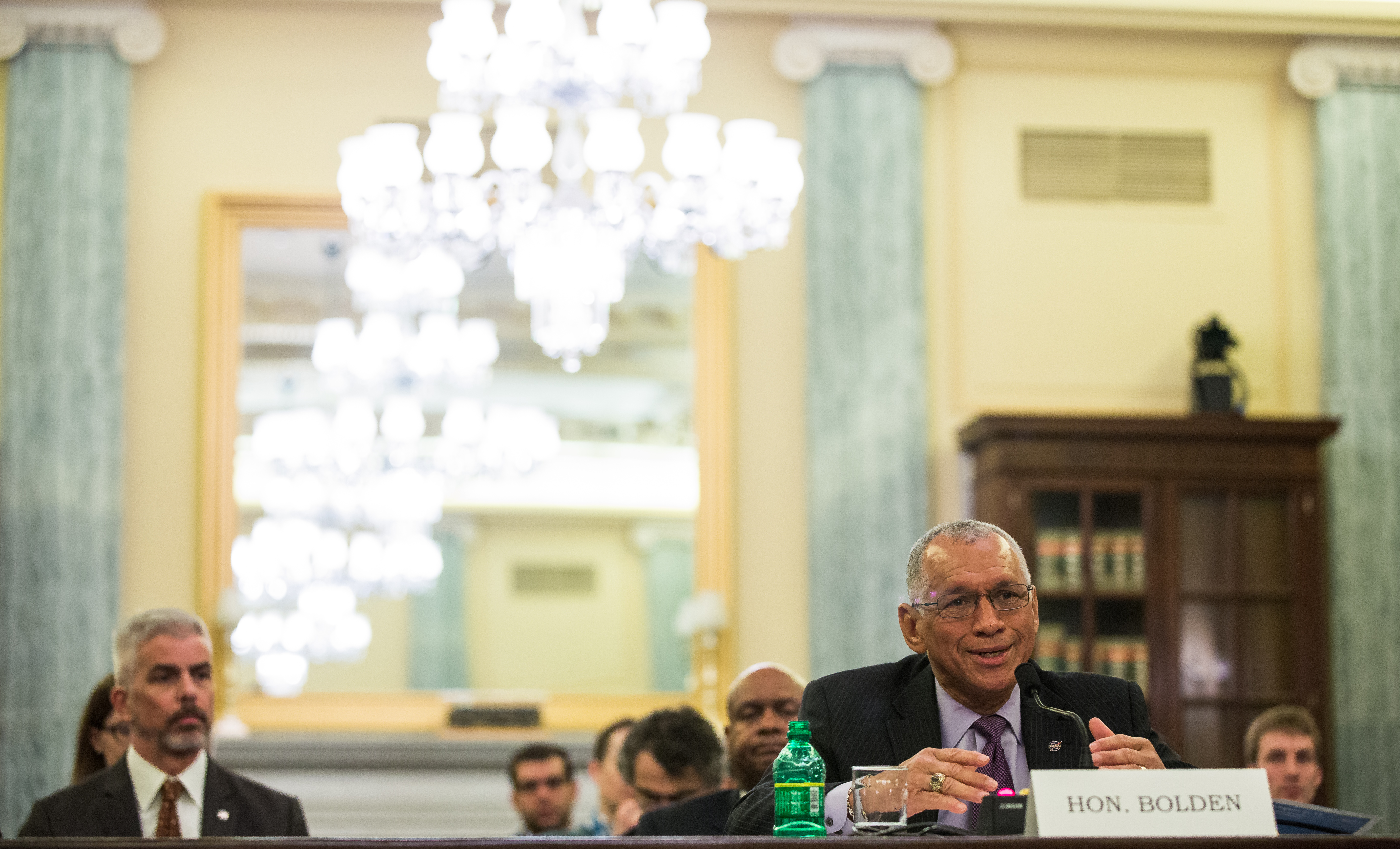
Photo: Senate Subcommittee on Space, Science, and Competitiveness Hearing (201503120003HQ) via NASA HQ PHOTO [Creative Commons Attribution-NonCommercial-NoDerivs]
In June of 2012, the European Council approved the European Union’s General Data Protection Regulation draft. The soon-to-be-approved final law is an updated version of the EU’s 1995 data protection rules, intended to bolster online privacy rights. The EU’s effort to consolidate privacy laws stands in contrast to the U.S.’s consistent battles with mass data collection by big business and government agencies.

Privacy—a broad and nebulous term—is treated differently in the European Union than it is in the U.S. According to Brian Kudowitz, commercial product director for privacy and data security at Bloomberg Law, privacy is “essentially a human right” in the EU. Whereas the EU has comprehensive law protecting privacy in all its forms—especially with the GDPR initiative—the U.S. deals with the protection of information in a series of laws that regulate different sectors.

The EU’s focus on privacy can be explained in historical terms, Kudowitz added. “You go back to all of the different things that have occurred in Europe over the last 70 years, it’s very easy to see how that perspective developed.”

In a recent Eurobarometer survey, 67 percent of Europeans said they were concerned about not having control over what information was provided about them on the Internet, and 70 percent expressed concern about how companies used their information.

Beyond what everyday citizens think of privacy, businesses and government agencies operate differently in the U.S. than in the EU as well. Organizations protect data proactively in the EU, whereas breaches of privacy are dealt with retroactively in the U.S.

According to Phil Lee, a representative at the multinational law firm Fieldfisher, “[t]his is partially because class action regimes aren’t well developed in the EU. EU countries don’t have a concept of punitive damages in the same way that you do in the U.S.”

Article via Legaltech News, December 22, 2015

Photo: Croatia welcomed to the EU via European Parliament [Creative Commons Attribution-NonCommercial-NoDerivs]