Global security company Northrop Grumman is collaborating with the University of Maryland Baltimore County to analyze health data as part of a five-year program, as announced earlier this year. The program’s goal is to utilize health trends found in large populations to create specific and effective treatments for those suffering from widespread ailments such as diabetes, obesity, and cardiovascular disease.

The National Science Foundation, which funds big data-analytics science and technology projects, is offering $600,000 in grants to the project. Northrop and UMBC already have a cybersecurity partnership; the tools previously used to investigate cyberthreats will now be used to study decades’ worth of medical information stored on electronic health records.

Yelena Yesha, the leader of the project and a professor of computer science at the university, says that information will be pulled from both public and private databases. Records will be used to help doctors practice precision medicine, which is the treatment of people based on their specific genetic makeups. In order to gather such large quantities of genetic data, the project will use a Google-designed cloud-computing platform. Both Northrop and the defense contractor Lockheed Martin foresee precision medicine to be widely practiced in the future.

Article via The Washington Post, April 14, 2015

Photo: Over 500 doctors have completed a three year specialization in family medicine via World Bank Photo Collection [Creative Commons Attribution-NonCommercial-NoDerivs]

Brazil’s government recently banned the Facebook-owned communication service Whatsapp for 48 hours after the company refused to hand over user data to authorities. Whatsapp is used by 100 million Brazilians, many who prefer the app to standard texting and calling. As a result, the ban was met with outrage. Some called for the impeachment of Brazil’s president Dilma Rousseff; others immediately switched to an alternative messaging service, Telegram.

Law enforcement has been in conflict with Whatsapp for months due to Facebook’s refusal to hand over user data from a suspected drug user. The irony, however, is that Brazil condemned the NSA in 2013 after Edward Snowden exposed the surveillance agency’s data collection practices.

In a 2013 speech to the U.N., President Rousseff asserted, “My government will do everything within its reach to defend the human rights of all Brazilians, and to protect the fruits borne from the ingenuity of our workers and our companies.”

Following Snowden’s leak, Brazil even committed to a $185 million project to construct a fiber optic cable transporting data to and from Portugal while bypassing the United States, so that U.S. authorities could not intercept information. U.S. businesses were prohibited from participating in the project.

In response to the suspension of Whatsapp, Facebook CEO Mark Zuckerberg said: “I am stunned that our efforts to protect people’s data would result in such an extreme decision by a single judge to punish every person in Brazil who uses WhatsApp.”

Article via Washington Post, December 17, 2015

Photo: Visita de Dilma Rousseff via La Moncloa Gobierno de Espana

[Creative Commons Attribution-NonCommercial-NoDerivs]

After introducing the accelerator program Cofound Harlem three months ago, 22-year-old John Henry has just announced his plans to launch Harlem’s first venture capital fund. Cofound Ventures, as the VC fund is called, has a goal to raise $8 million in order to run the accelerator program and fund Harlem startups.

Currently, all of New York City’s venture capital firms are located below Central Park, with most operating in midtown Manhattan. Cofound Ventures plans to establish itself in East Harlem on 5th Ave and East 118th St.

“Harlem has never had a fund,” said Henry. “It’s a very special town. There’s a lot of recent development with Columbia expanding, and it’s the perfect time to put up the first fund.”

Cofound Ventures will provide up to $100,000 in additional funding to each company that uses Cofound Harlem’s accelerator. The accelerator program already provides startups initial stipends of $50,000, free office space and mentorship. Instead of taking equity from the startups operating under it, Cofound Harlem requires that each startup operate for its four years in Harlem.

Harlem’s unemployment rate is twice the national average. Through the funding and mentorship of startups, Henry estimates to create 800 high-paying jobs in the next four years. Startups will be also be required to host workshops to the community, free of charge, during their nine month use of Cofound Harlem’s office space.

In Cofound Harlem’s first round of startups, 75 percent of the founders are minorities.

“In terms of what we’re looking for going forward, there is no, say, direct criteria that you have to be underrepresented to be admitted, although we definitely have it in mind,” Henry said. “My goal is to keep this 75 percent for the duration of the cohort. If you consider for a moment that everyone who went through the program was white, I don’t think it would have a meaningful impact.”

Article via TechCrunch, 4 December 2015

Photo: Harlem via Ian Freimuth [Creative Commons Attribution-NonCommercial-NoDerivs]
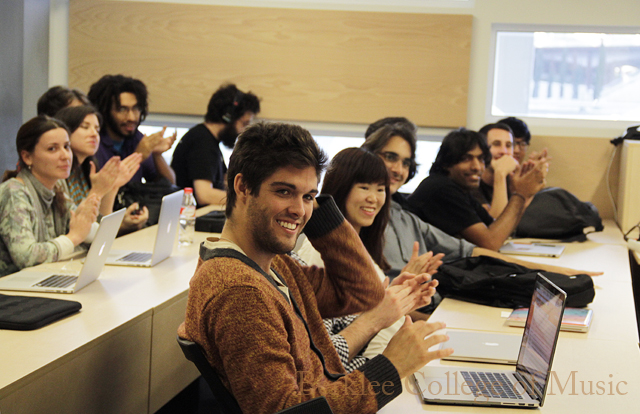
The United Nations is launching an “ideathon” for college students in an effort to address the issue of violence against women and LGBTQ people on university campuses. All of today, students are meeting in two to six hour long “physical brainstorming sessions” with the intention of addressing a key question: “How would you create a culture of transparency on college campuses to end gender-based violence?”

The event is part of the UN’s 16 Days of Activism initiative, under the umbrella campaign of HeForShe, which seeks to incorporate men into the movement for gender equality. HeForShe is providing students participating in the ideathon with a list of realistic suggestions in order to facilitate conversation about implementable changes in campus policies.

According to the UN, one in three women have experienced physical and sexual violence, and one in four are sexually assaulted in college. Moreover, LGBTQ people face double the risk of experiencing gender-based violence in college than their heterosexual peers.

HeForShe advertised the event in a video featuring a college student espousing his school pride: “We can make it somewhere we all feel safe—proud of how we got here, what we learned. We can speak out and never be a bystander.”

Article via Mashable, 3 December 2015

Photo: Visiting Artist: Robert Kraft via Berklee Valencia Campus [Creative Commons Attribution-NonCommercial-NoDerivs]

Many of the 770,000 refugees who have migrated to Europe since January are from middle-class backgrounds, and are therefore educated and tech-savvy. As a result, most use smartphones for GPS navigation and communicate with family through Facebook, Viber, WhatsApp, and Line apps.

With the understanding that smartphones are invaluable tools to refugees, tech companies and aid groups have directed their efforts to creating tech-focused ways to help refugees communicate and travel safely. For example, Google, the International Rescue Committee (IRC) and Mercy Corps collectively launched refugeeinfo.eu last month. The website explains the registration process, locations to eat and sleep, medical help, and traveling to Athens for those who land on the beaches of Greece.

Rey Rodrigues, IRC’s technology coordinator, describes the intentions of refugeeinfo.eu: “We wanted to create a roadmap. You see a lot of refugees walking with their smartphones and power cords and extra batteries. This lets them be self-sufficient.”

It is not uncommon for a refugee to walk up to 10 hours to register with Greek authorities at the southern part of the island, when buses are available for free. The roadmap’s goal is to provide valuable information like this to refugees, especially when translators are not available to convey the information.

Refugeeinfo.eu is one of many tech resources available to refugees. Disaster Tech Lab recently supplied Wi-Fi access to two refugee camps in Lesbos. InfoAid, an android app built by a Hungarian couple, helps refugees access train tickets, medical care and water. First-contact.org provides contact to local NGOs and offers specific information on how to survive on the Greek islands of Lesbos and Samos.

Article via Mashable, November 8, 2015

Photo: Liqaa with her daughter Limar born on August 3, 2013 via Oxfam International [Creative Commons Attribution-NonCommercial-NoDerivs]

Five years ago, companies like Ancestry.com and 23andMe provided the option of genealogy tracing and medical diagnostic tests for customers who submitted DNA samples. At the time, privacy advocates warned of the potential risks of letting businesses collect genetic databases.

Privacy advocate Jeremy Gruber summed it up in 2010 when he said that genetic material “has serious information about you and your family.” This information, if used beyond the purposes of genealogy tracing, has big implications in law enforcement and government tracking. Wired magazine cautioned, “Your relative’s DNA could turn you into a suspect.”

Currently, the FBI keeps a national genetic database of the DNA of convicts and arrestees. Both companies’ privacy policies state that upon court order, DNA information will be given to law enforcement. Yet, as Wired implicated, people have been wrongly accused of crimes for DNA near-matches in the past.

23andMe recently launched a transparency report, similar to other major tech companies that receive government requests for consumer information, within the next month.

“In the event we are required by law to make a disclosure, we will notify the affected customer through the contact information provided to us, unless doing so would violate the law or a court order,” said the company’s first privacy officer Kate Black.

Ancestry.com will not state explicitly how many government data requests the company has recieved.

“On occasion when required by law to do so… we have cooperated with law enforcement and the courts to provide only the specific information requested,” said a spokesperson.

Article via Fusion, October 16, 2015

Photo: DNA isolation 5 via Patrick Alexander [Creative Commons Attribution-NonCommercial-NoDerivs]