
Now, in addition to common domain names such as .com or .net, lawyers with the appropriate qualifications can differentiate themselves with a domain name specific to the legal community. As Lou Andreozzi, the CEO of .law explains, this new domain name can be useful in several ways to interested attorneys. For example, it opens up names that may already be registered to a .com or .net address to be used. Additionally, since there are specifications that individuals must meet to purchase a .law domain name, namely being a licensed lawyer, websites with .law may appear more creditable than those with a domain name that can be purchased by anyone, such as .com. While .law is the first domain name available specifically for those in legal professions, other such as .attorney or .esq may also become available soon.

Some prominent law firms are already beginning to take advantage of the new domain name. Though the domain name will not be available to the legal community at large until October, firms that have registered their trademarks with the Internet Corporation for Assigned Names and Numbers have had early access to ordering from the owner of .law, Minds + Machines.

Article via ABA Journal, August 10, 2015

Photo: The letters of the law via laura.bell [Creative Commons Attribution-NonCommercial-NoDerivs]
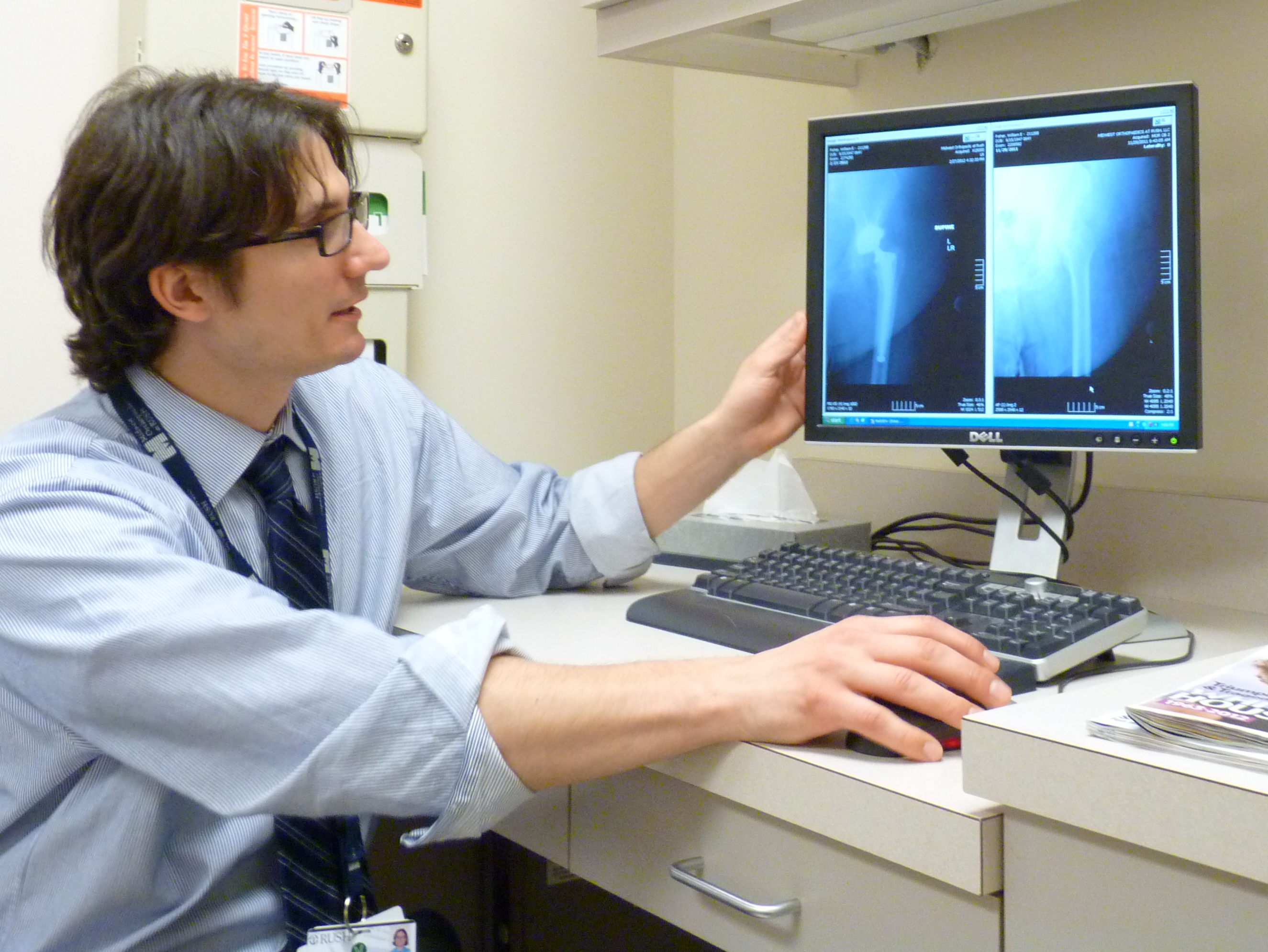
The National Institute of Standards and Technology (NIST) released a practice guide on how health care providers can share patient information securely through mobile devices. The guide is the first in a series dedicated to the development of advanced cybersecurity for all organizations.

Tablets and smartphones are already integrated in the health professions, as 87% of physicians report using a tablet or smartphone in the workplace. Physicians can exchange patient information, submit medical claims, access electronic records, and e-prescribe through mobile devices. In general, the use of mobile devices for these tasks is efficient and less susceptible to error.

However, the use of tablets and smart phones for secure health information carries significant risk. Vital patient information could be leaked if the device were lost or stolen, or if a patient sent data through insecure cellular networks. Without developed authentication or data encryption, patients face the threat of “medical identity theft,” disastrous for both their own health and the success of their provider.

NIST guide seeks to mitigate risks through explicit instructions and hypothetical scenarios. The guide will take comments from the public until Sept. 25, 2015.

Article via Ice Miller Strategies LLC, August 6, 2015

Photo: Man at work–physician assistant via yooperann [Creative Commons Attribution-NonCommercial-NoDerivs]

Legislation was passed last spring that allows police in North Dakota to utilize drones not only for surveillance but also as non-lethal weapons. The bill, which was originally introduced by Representative Rick Becker, did not permit the use of any kind of weaponry to be used, but lobbyists advocated for the bill to be amended to allow non-lethal weapons in order to win the support of law enforcement. There are restrictions incorporated into the law that limit the scenarios in which drones can be used by police, though. For example, a drone may only be used for surveillance if the data will be used in investigating a felony, and law enforcement must obtain a warrant to use the drone which includes very specific details on how, when and where it will be used. There are also limits on how personal information that the drone uncovers may be dealt with. Even with some restrictions within the legislature limiting the use of drones, some say that the drones are providing law enforcement with too much power.

Jay Stanley from the American Civil Liberties Union states that even non-lethal weapons can still have lethal results. Tasers, though non-lethal, still lead to approximately fifty deaths a year. Additionally, using drones may lead to detachment between the person operating the drone and the suspect on the other side, which could lead to regrettable choices. Jim McGregor disagrees, explaining that police officers out in the field may have a harder time making the right call than someone operating a drone in an offsite location with less to distract them. He likens drones to other methods, including SWAT teams and snipers, to show that drones are not so different from well-known choices for dealing with dangerous situations.

Whether non-lethal drones are a positive or negative development in law enforcement technology, Representative Becker intends to propose a  new law that will make non-lethal as well as lethal weaponry on drones illegal.

Article via TechNewsWorld, August 28, 2015

Photo: Drone via ninfaj [Creative Commons Attribution-NonCommercial-NoDerivs]

Recent incidences of police brutality have sparked public outrage, and as a result, the use of police dashboard and body cameras has increased. However, footage released to the public could be altered. Sandra Bland’s arrest video, for example, loops several times in the 52 minute span. Journalists have accused police departments of editing the videos; the Texas Department of Public Safety denies any tampering of the footage.

Police camera footage is stored unaltered on police department software systems. This is because the Axon body cam dominates the police camera industry, and it records footage in a way that is nearly impossible to corrupt. The only way an officer could impede a video is by physically pushing the off-button for five seconds, an unlikely occurrence during a high-intensity event. Additionally, the officer’s name is attached to the video for as long as it exists in the software system.

Although raw footage can’t be edited, there’s no way to regulate what edits are made to the footage released to the public. In fact, almost all videos that the media releases are edited—bystanders’ faces are blurred, and sections of video with no action are removed. The Freedom of Information Act has no provisions that require police departments to release raw footage. However, several incidences recorded on police cameras have led to the indictment of guilty officers, and no allegations that videos are tampered have been confirmed.

It’s evident that police body and dashboard cams will continue to rise to prominence, whether the accusations of video tampering are true or not. The Obama administration has proposed a $75 million program to provide 50,000 cameras to agencies, and the Department of Justice is allocating $20 million for police body cameras.

Article via The Huffington Post, August 28, 2015

Photo:  via Whoop Whoop that’s the Sound of the Police via AshtonPal [Creative Commons Attribution-NonCommercial-NoDerivs]

Over one hundred million dollars were obtained illegally by the largest cybercrime collaboration between rogue members of Wall Street and hackers to date. In order to obtain crucial information about publicly traded companies before it became public knowledge, these stock traders living in Pennsylvania, Georgia, and New York would email hackers located in the Ukraine with a list of news releases concerning certain companies that they wished to have. The hackers would respond with recorded instructions on how to obtain the stolen articles. By having advance access to news  containing earnings and other details, the stock traders were able to make favorable trades before anyone else knew about the information. For their skills, the hackers were paid a portion of the profits from the illegal trades or a flat fee.

This is not the first time hackers and stock traders have colluded to commit cybercrime. A similar case in 2005 involved stock traders in Estonia hacking into Business Wire in order to make well-informed trades. Cases such as these show that cybercrime goes far beyond identity theft, stealing bank information, or obtaining sensitive personal information. Additionally, some stock brokers in Manhattan were charged last month with illegally obtaining millions of email addresses and planning to spam them in order to try to manipulate the worth of certain stocks, and another hacker group tried to steal information from emails in the pharmaceutical industry to gain access to deals that could affect the stock market. In all of these cases, cybercrime is centered around market-altering information. As former Manhattan prosecutor Matthew L. Schwartz states, “hackers can obtain access to all sorts of valuable information and can and will profit off of it in every way imaginable.”

Article via New York Times, August 11, 2015

Photo: Frankfurt Stock Exchange via Tobias Leeger [Creative Commons Attribution-NonCommercial-NoDerivs]
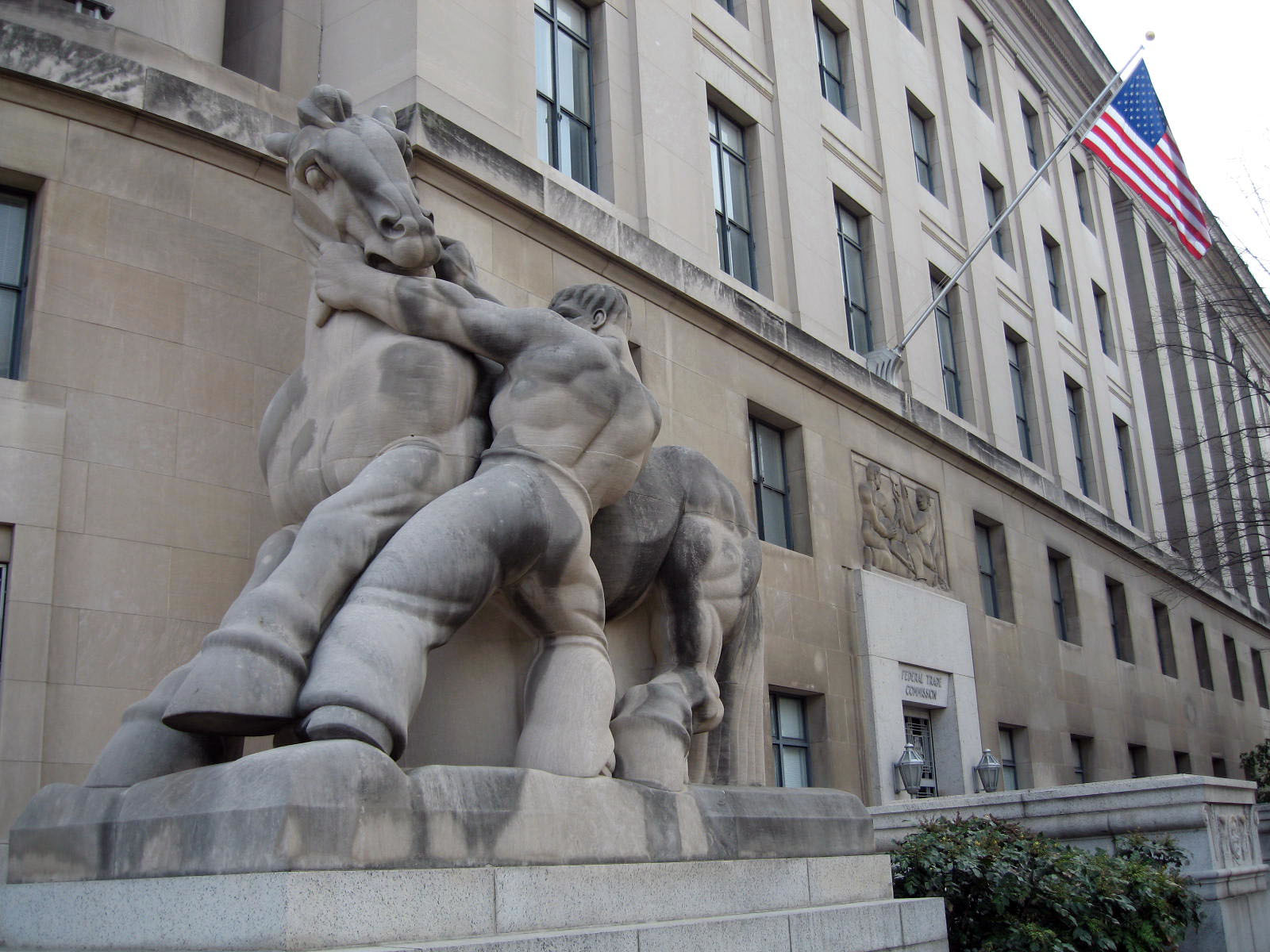
In a ruling by the US Court of Appeals on Aug. 24, the Federal Trade Commission (FTC) has the authority to prosecute corporations that have insufficient cybersecurity to protect customers against hackers.

The Third Circuit ruled in favor of the FTC, which litigated the international hotel company Wyndham Worldwide Corporation for failing to prevent the theft of 619,000 customer’s personal and financial information by hackers. The hacking resulted in over $10.6 million in counterfeit charges.

Wyndham attempted to counter the Commission’s lawsuit in the US Court of Appeals, but the recent ruling declared the FTC’s actions legal.

The FTC will be expected “to increase its regulatory activity in this area now that its authority has been upheld,” says Michael Hindelang, head of the data security/privacy litigation and e-discovery/information management practice groups at Honigman Miller Schwartz and Cohn.


Article via Legaltech News, August 26, 2015

Photo: statue at Federal Trade Commission via sha in LA [Creative Commons Attribution-NonCommercial-NoDerivs]