Many of the 770,000 refugees who have migrated to Europe since January are from middle-class backgrounds, and are therefore educated and tech-savvy. As a result, most use smartphones for GPS navigation and communicate with family through Facebook, Viber, WhatsApp, and Line apps.

With the understanding that smartphones are invaluable tools to refugees, tech companies and aid groups have directed their efforts to creating tech-focused ways to help refugees communicate and travel safely. For example, Google, the International Rescue Committee (IRC) and Mercy Corps collectively launched refugeeinfo.eu last month. The website explains the registration process, locations to eat and sleep, medical help, and traveling to Athens for those who land on the beaches of Greece.

Rey Rodrigues, IRC’s technology coordinator, describes the intentions of refugeeinfo.eu: “We wanted to create a roadmap. You see a lot of refugees walking with their smartphones and power cords and extra batteries. This lets them be self-sufficient.”

It is not uncommon for a refugee to walk up to 10 hours to register with Greek authorities at the southern part of the island, when buses are available for free. The roadmap’s goal is to provide valuable information like this to refugees, especially when translators are not available to convey the information.

Refugeeinfo.eu is one of many tech resources available to refugees. Disaster Tech Lab recently supplied Wi-Fi access to two refugee camps in Lesbos. InfoAid, an android app built by a Hungarian couple, helps refugees access train tickets, medical care and water. First-contact.org provides contact to local NGOs and offers specific information on how to survive on the Greek islands of Lesbos and Samos.

Article via Mashable, November 8, 2015

Photo: Liqaa with her daughter Limar born on August 3, 2013 via Oxfam International [Creative Commons Attribution-NonCommercial-NoDerivs]

If you haven’t heard of TED yet, it’s a nonprofit organization devoted to Ideas Worth Spreading. The main conference is held in California and was started 25 years ago, and it’s influence has been growing exponentially since then. All other TED events are called TEDx and are independently organized TED-like events with the same mission. These events often discuss science, technology, education and communication and have been known to spark innovation and social change by  providing the opportunity to shed light on less known facts and causes that are happening at a  local level.

I had the pleasure of attending the TEDxHouston 2015 event this year, where there were several talks  highlighting themes of social change, innovation and technology.

Teresa O’Donnell, Founder of  Plant It Forward  , spoke of her professional life as an entrepreneur. In an effort to do more community work through her company, she studied and became more informed on the plight of refugees coming to America.  For those who seek refuge in this country, it takes a minimum of 5 years to achieve that status. A refugee must prove that conditions in their  home country are incredibly difficult (persecution and war)and that it  has become impossible for them to return home without fearing for their lives. Houston, Texas in particular has received a large number of these refugees. Once the refugees arrive in the United States, they face the confounding problem of not speaking the dominant language, as well as not having transferable work skills.

To solve this problem, Plant It Forward partners with social and church groups to provide land and tools to refugees who settle in Houston with few other skills besides farming. Houston now has a growing community of organic gardens that sell  fresh fruit farmed by refugees at local farmers markets. Through Plant It Forward farms, refugees have the opportunity to build a life for themselves and their family while enriching the city with their farming skills.

Enriching the city was a theme that arose continually throughout the day. Susan Rogers focused on  community development and city planning; she works as a designer, professor and director of the Community Design Resource Center (CDRC) in Houston. The CDRC’s  goal is to use design to enhance change in the community and are focused on serving the public interest by improving the development of all communities. She spoke specifically about the economic disparities existing between the eastern and western half of the city, and how this is reflected in the design and therefore service of the communities. By preserving the culture and uniqueness of all neighborhoods, it improves other public services that cater to their residents, thereby raising the standard of life for all.

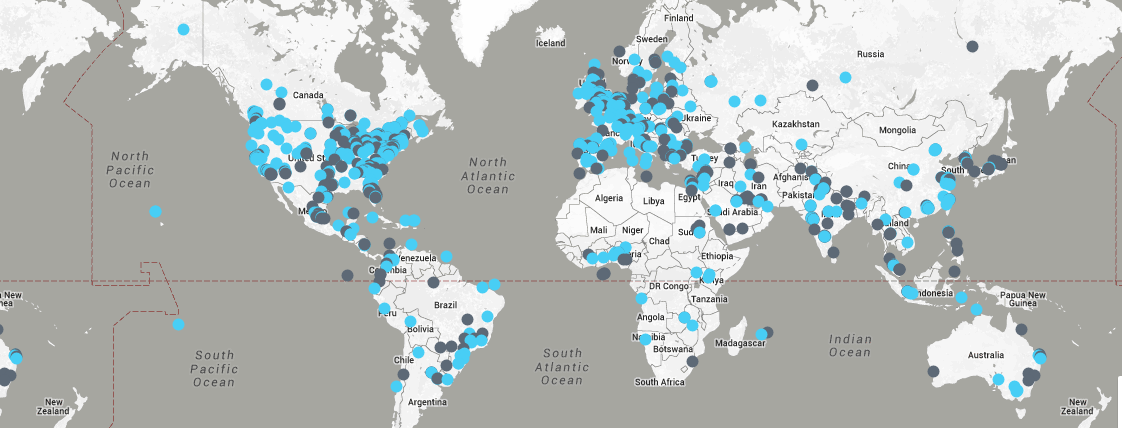
Talks like these are not just  happening in the United States, they happen all over the world. In 2015 there are over 3000 Ted events scheduled with talks about everything from education, to medicine, to life and career.

TED around the world

If you don’t have time to attend a TED event, you can easily watch a recording which is  available for free at TED.com. Talks are even arranged by topic and influence in convenient playlists.

The true power of TED comes from the opportunity to see the world through someone else’s eyes, and become aware of possibilities that you may not have known existed. TED provides a platform to bring to light issues that are too often not discussed and gives insight into the wonder of the human spirit,  reminding us how truly amazing it is to reimagine the world the way that we believe it should be.

Photo via: Ted.com

The Harvard library is where one may find shelves of books unearthed with valuable resources that include nearly every territorial and tribal judicial decision since colonial times. It provides priceless information for everyone from legal scholars to defense lawyers trying to challenge a criminal conviction. Now, Harvard librarians are taking off the spines of all but rarities and running them through a high-speed scanner. This would allow a complete searchable database of American case law available on the Web. Retrieval of these vital records were once usually paid for. Now they will be completely free.

“Improving access to justice is a priority. We feel an obligation and an opportunity here to open up our resources to the public.” said Martha Minow, dean of Harvard Law school.

Though the primary documents can be found in the public domain, it’s not in a convenient format, if at all. Legal groups spend approximately thousands to millions of dollars a year depending on the size of the office to find cases and trace doctrinal strands. Harvard’s “Free the Law” project can offer a floor of crucial information and offer sophisticated techniques for visualizing relations among cases and searching for themes.

“Complete results will become publicly available this fall for CA and NY, and the entire library will be online in 2017,” said Daniel Lewis, chief executive and co-founder of Ravel Law, a commercial start-up in California that has teamed up with Harvard Law for this project. The cases will be available at www.ravellaw.com. Ravel is paying millions of dollars to support the scanning project. The cases will be accessible in a searchable format and will be presented with visual maps developed by the company. It hopes to make money by offering more advanced analytical tools still being developed, like how judges responded to different motions in the past all for a fee.

Legal aid lawyers and public criminal defenders called the Harvard project a welcome development that may save them money and make the law more accessible to struggling lawyers, students and even inmates who try to mount appeals from barren prison libraries.

Alex Gulotta, executive director of Bay Area Legal Aid in Oakland, CA, called the project “brilliant” and put it in a broader context of making government information more readily available. “Knowledge is power. People will always need lawyers, but having resources available for self-help is important.”

Article via NY Times, October 28, 2015

Photo: Law books 2 via Eric E. Johnson [Creative Commons Attribution-NonCommercial-NoDerivs]

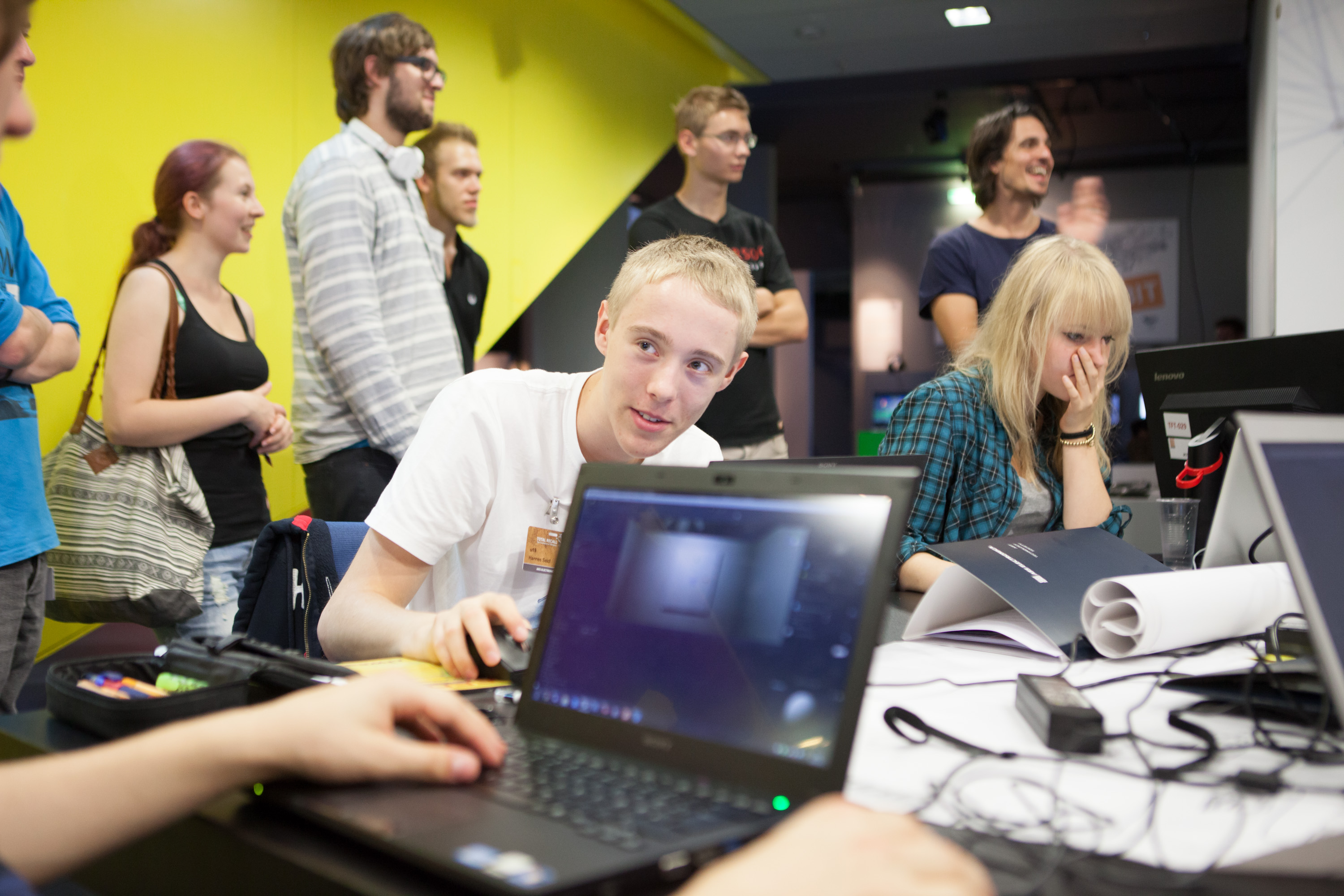
Fifteen teenagers from across the country convened in New York City to participate in DoSomething.org and Coca-Cola’s co-sponsored Happiness Hackathon, designed to invent creative solutions to cyberbullying. The one-day event took place on October 3rd.

According to DoSomething.org, just under 50 percent of young people have been cyberbullied. Equally alarming is the estimate that 90 percent of teens who witness online bullying do nothing to address it.

Out of several hundred teenagers who submitted proposals to reduce cyberbullying, the fifteen chosen were from diverse backgrounds and generally had personal experiences with bullying.

“We wanted 15 different perspectives, different ideas, different ways of tackling the problem,” said Aria Finger, DoSomething.org’s Chief Operations Officer.

The teens were broken up into groups of three, and each team was provided a mentor to help develop their ideas. Among the proposed solutions, one team thought of an app that let users compliment others; another group designed a program that required teenagers suspended from social media for cyberbullying to take an online anti-bullying seminar before reactivating their accounts.

Finger awarded the teams for different accomplishments, such as “Best Use of Tech” and “Most Unique Idea.”

“We’re absolutely committed to being in touch with the teens and advocating for them and their ideas,” Finger said. “We are committed to this long term.”

Article via Mashable, October 28, 2015

Photo: GameLab Exhibit via Ars Electronica [Creative Commons Attribution-NonCommercial-NoDerivs]
On Tuesday, October 27, the US Senate voted to pass the Cybersecurity Information Sharing Act.

This bill allows companies to share evidence of cyber-attacks to the US government even if it violates a person’s privacy. Supporters say this act will make it easier for the government to monitor threats and responses across companies. Others like Apple and other top tech companies argued that this bill could give government more liberty to spy on US citizens.

US Chamber of Commerce President and CEO Thomas Donohue said this legislation is a “positive step toward enhancing our nation’s cybersecurity.”

21 Senators voted against the act. Among them was Minnesota Democrat Al Franken who believes there is a need for “effective legislation that balances security and privacy” and “the CISA does not do that.”

Just last year, the CISA was first introduced and passed by the House but it did not go through the Senate. High profile cyberattacks on companies like Sony Pictures, United Airlines, and Ashley Madison may have prompted the Senate to approve it this time around.

The issue at hand is that personal identifiers such as text messages and e-mails may slip through when sending information to law enforcement and intelligence agencies, even though companies are supposed to delete that information.

US Department of Homeland Security acknowledged that the bill does raise “privacy and civil liberty concerns.”

CISA is now going to a Congressional Conference whose members must match the passed Senate and House bills before sending it to President Obama.

Article via CNET Security News , October 27, 2015

Photo: Washington DC – Capitol Hill: United States Capitol via Wally Gobetz [Creative Commons Attribution-NonCommercial-NoDerivs]

The elections for Mayor and City Controller are underway. Candidates have been working hard campaigning and talking to voters. At a technology forum held on October 8 located at the Houston Technology Center, candidates for City Controller voiced their opinions on the growing use of technology in the city and how they would utilize it. All 6 of the candidates came from reputable backgrounds. Using that to each of their advantage, candidates spoke about how technology can transform the City of Houston.

Jew Don Boney, Jr is a former city council member and worked as a Texas Staff Legislature for many years. He was appointed as Associate Director for the Mickey Leland Center of Peace at Texas Southern University. When asked about integrating the city’s IT infrastructure with the current staff and IT infrastructure, Boney disagreed with combining the two. “When I served on city council, I was so unimpressed with the city’s infrastructure and IT but I brought in own people so we built and maintained our own for the entire 6 years that I served as a member of city council.” As a result, he claimed to have had the most advanced IT infrastructure in the city.

Chris Brown is currently Deputy City Controller and has managed money in the private sector as well as city hall. When asked what plans he has to put the checkbook online, he answered “I feel like that was our first trick question because I feel like all of our candidates know and agree that our checkbook is online and I know for certain because I put it online. In 2011, I led the project team to put all of our payments and checks online.” Continuing on with making the checkbook viewing by date, vendor, and amount he said “I think in my 12 years of experience I can say this whole-heartedly. We don’t have money to do these projects right now. We’re facing huge financial challenges in the city… technology is going to be the vehicle that we create efficiencies to go forward but we have to take the cost of that into effect.”

Bill Frazer has been a CPA since 1975 and worked as an auditor for Ernst and Young for 5 years. He served as controller for several companies. When questioned about how he would educate the public on the collection and analysis of data, he answered “I’m a CPA and I was the past president of the Houston CPA Society and during my tenure I also chaired the technology committee which was responsible for continuing education to over 15,000 CPAs in the area, 1,000s of hours of continuing education including technology at the user level. Not Excel, not Word, just simple applications that can be used by all to serve the clients.”  

Dwight Jefferson became a judge in 1995. From 2010 until 2015 he was appointed to the METRO board by Mayor Parker. When asked about transparency, he brought up a solution he came up with at METRO. “One thing that we did at Metro that was very helpful, both from the standpoint of transparency and getting input from the public in our processes was placing all of our board meetings online [in a] live stream.” He plans to implement this because the public would be able to go back to it later and see if they find things that are not properly addressed.

MJ Khan has an MBA from Rice University and served on the city council in the past. When asked about making the finances more transparent, he spoke from experience about how one aspect was not being reported. “When I was in the council, one of the things I noticed was that we have this huge unfunded liability that retirees have in 3.5 million dollars. And we were not even reporting that. So I asked why is that not part of the report? Luckily, I was able to convince my colleagues and it became part of it. So I think information sharing on a real time basis is crucial for citizens can see what is going on in our financial area.”

Carroll Robinson is an Associate Professor at the Barbara Jordan-Mickey Leland School of Public Affairs at Texas Southern University. He has served as the Houston Community College trustee and served on city council. He also voiced his opinion on increasing transparency. “Well one of the things I did with the available data is I ran a 10 year revenue forecast out on my Facebook, but I think the controller should do it not on an annual basis but on a monthly basis so we would avoid these situations …when you approve spending in one year and the compounding effect generates deficit problems. The careful controller ought to be for a different purpose than just releasing it at the end of the year.”

All the candidates used each of their previous experiences to their advantage. Early voting started on October 19, 2015 and will continue until the Mayoral election on November 3, 2015.

Photo: Houston Sunrise via telwink [Creative Commons Attribution-NonCommercial-NoDerivs]