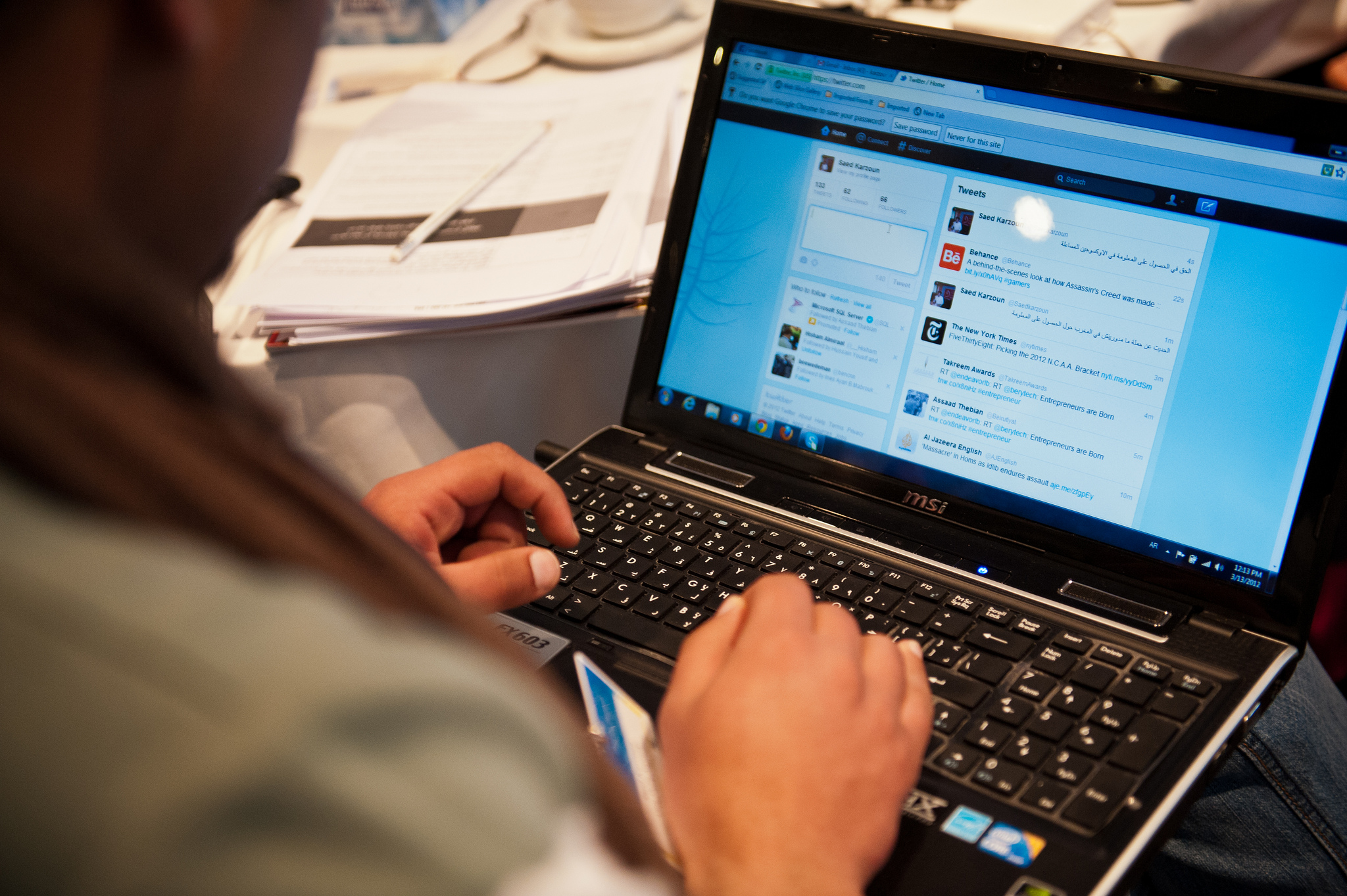
On Feb. 4, 2010 Maria Nucci sued Target for the injury she sustained while working at the store. However, when Target requested access to her social media account, Nucci objected. As a result, 36 photos were deleted two days later. However, the Fourth District Court of Appeals for the State of Florida granted Target’s motion with respect to all photographs on the Facebook page that included Nucci. She argued she had a right to privacy, but the judges used that very argument against her.

“Because ‘information that an individual shares through social networking websites like Facebook may be copied and disseminated by another,’ the expectation that such information is private, in the traditional sense of the word, is not a reasonable one,” the panel ruled, partially quoting another Florida case. It also added, “Before the right to privacy attaches, there must exist a legitimate expectation of privacy.”

Using social media in court cases continues to skyrocket. It has been used about 80% of the time. According to John Facciola, the information has to be collected. Second, they have to sorted out into what the attorney needs and does not need. Courts are still trying to figure out what to do with social media in discovery and the privacy rights of those whose profiles are in question. This past year, the arguing has centered on two main issues: authentication, and where the expectation of privacy stops.

Social media is notorious for one particular thing: you don’t have to be who you say you are online. This is demonstrated in parody Twitter accounts and multiple Linkedin profiles. State courts have different standards on the authentication of social media. For example, the Maryland standard is that “the judge had to be ‘convinced’ that a social media post wasn’t falsified or created by another user. On the other hand, the Texas approach stipulated that any evidence could be used “as long as the proponent of the evidence can demonstrate to the judge that a jury can reasonably find that evidence to be authentic.” In United States vs. Vayner, Aliaksandr Zhyltsou accused Vladyslav Timku of providing a forged birth certificate for an imaginary infant daughter to avoid compulsory military service in Ukraine. The key piece of evidence was in the defendant’s social media account. However, the federal agent could not provide authenticity. As a result, Maryland revisited their standard and deemed that the judge has to identify which evidence would be sufficient. In other words, the judge has to determine that “there is proof from which a reasonable juror could find that the evidence is what the proponent is claiming.”

Article via Legaltech News , November 2, 2015

Photo: Affiliated Network for Social Accountability- Arab World via World Bank Photo Collection [Creative Commons Attribution-NonCommercial-NoDerivs]

Lawyers, like everyone else, have been quick to adapt to use of smartphones for business use. Having a little computer in your  pocket that is attached to the internet makes it easy for lawyers to reach and respond to clients and keep up with industry news. Law firms have become dependent on this technology and as a result smartphones have become a ubiquitous device. Since the time of the reign of blackberry, lawyers have been handed smartphones for company use on a regular basis.

But what is happening to these phones once the firms are done with them? More specifically, what is happening to all the client data that is collected on these phones while they were in use? Large firms usually have an enterprise solution for handling old smartphones. But it is less likely that the same is the case with smaller firms.

A recent study by the Blanco Technology Group revealed that data is sometimes left behind on second hand devices. They found that one-third of discarded smartphones had residual data left on them. Of the mobile devices with residual data, over half was left there after an attempted deletion. This means that even for those who were trying to protect their data by deleting it, they were unsuccessful and did not realize it.

For lawyers, this type of liability can make the stakes much higher. Possibly leaving confidential client information on a device can be extremely detrimental. This means that law firms, large and small, will need to take extra steps to make sure that their mobile devices are wiped clean. This includes not just smartphones, but also tablets and hard drives as well.

Lawyers will need to upgrade their tech savvy to make sure that their data and their clients stay safe.

Article via Above The Law, 8 October 2015

Photo: The iphone 4 via Jorge Quinteros [Creative Commons Attribution-NonCommercial-NoDerivs]
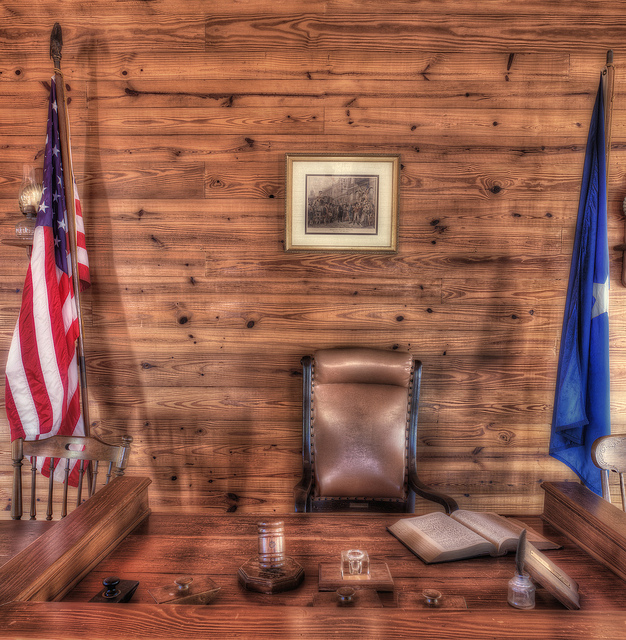
A disbarred New Mexico Judge is refusing to step down after being disbarred.

Corrales Municipal Judge Luis Quintana was disbarred on July 1st by the New Mexico supreme court. The disbarment was for failing to turn over a settlement check to a client from a workers compensation case. The complaint was filed by Maria Ramos, one of the Judge’s former clients. A committee found that he used the money to pay debts that he owed to other clients instead of paying Ms. Ramos. The Judge contends that his disbarment has nothing to do with his job, therefore he has no intention of resigning.

Judge Quintana told the Albuquerque Journal that the case that resulted in the courts decision to disbar him happened before he was elected. Because of this, Quintana states that he is fully able to carry out his term, which ends in 2016. Despite his claims, the Judge is facing pressure to resign.

“People like myself who are lawyers or retired lawyers are quite alarmed, not only that it happened, but that it’s taken several months for it to become public knowledge…”, says Mayor Phil Gasteyer.  Mayor Gasteyer raised the issue of the disbarred Judge at a recent meeting of the village council. Since Quintana was elected to his position as Judge, he cannot be forced to vacate it. The Mayor plans to ask Judge Quintana for his resignation.

In response to the controversy Quintana stated, “Are people going to be disappointed? Sure. I’m disappointed, too. I’m disappointed because I didn’t serve Ms. Ramos as great as I should have, you know. But that was one instance in 30 years.”


Article via ABAJournal, 7 October 2015

Photo: Judges Desk Partial Desat via Matthew Paulson[Creative Commons Attribution-NonCommercial-NoDerivs]

Volkswagon has been in the news lately because of a scandal involving software used to trick emissions tests on diesel vehicles.  The software was rigged to allow their diesel vehicles to pass their emissions test even though the emissions from the vehicles are well above the standard. Immediately following the news, the US has issued a recall for the vehicles, as well as a federal probe to find out what the company knew and when. In the meantime, lawsuits are being filed all around the country.

Robert Clifford, a prominent plantiff lawyer, expects a consolidation of lawsuits in the near future. Clifford has held a number of leadership roles in the American Bar Association and filed a suit against Volkswagen. “No doubt about it, there will be an MDL [multi-district litigation] here,” said Clifford. An overview done by the Wall Street Journal further confirms that laywers are looking to consolidate the lawsuits against Volkswagon.

Amie Parsons, a real estate agent in Dallas, recently filed lawsuit against Volkswagon. Parsons states that Volkswagon’s dishonesty seriously affects her bottom line as a real estate agent. Her attorney, Charles “Trey” Branham, spoke to a newspaper on her behalf. He stated that his client drives people around everyday for her profession, and [the Volkswagon scandal] causes her a big problem. Branham goes on to say “…it is something that affects real people on a daily basis, and it is a problem for them, not to mention the problem of putting 40 times the legal limit of pollution into the air.”


Article via ABAJournal, 29 September 2015

Photo: VW Kombi via Long Road Photography [Creative Commons Attribution-NonCommercial-NoDerivs]
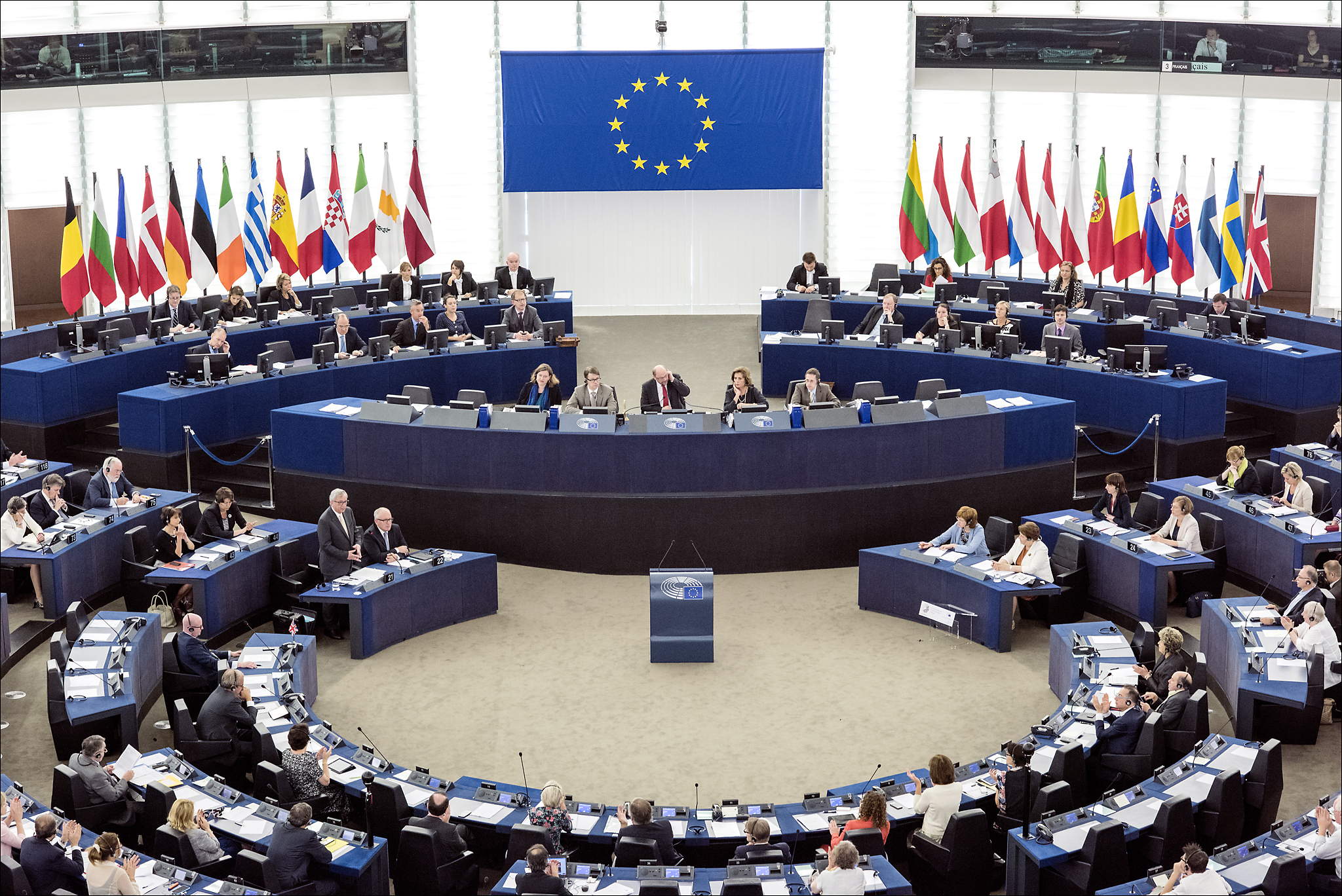
Google appealed EU’s “right to be forgotten” law that allows citizens to apply for the removal of false or damaging information indexed by search engines. Although the company is willing to comply by the law for European domains, like Google.fr, France’s data regulation authority (CNIL) ordered Google to comply by the law for its international domain, Google.com.

If Google refuses, the company may suffer significant fines or sanctions. Google officials argue that applying the EU’s “right to be forgotten” rule to its international server is both time and resource consuming, and may result in widespread censorship. Google does not have the right to appeal again until it has been fined for violating the CNIL order. After that, however, the company will be given the chance to refute the fines in France’s Supreme Court. The EU’s recent regulatory fine structure could charge Google for up to 5 percent of the company’s international operation cost, which would amount to roughly € 3 billion.

Google’s global privacy officer Peter Fleischer released a statement: “We believe that no country should have the authority to control what content someone in a second country can access.”

Article via Legaltech NewsSeptember 22, 2015

Photo: Review of the Latvian Presidency via European Parliament [Creative Commons Attribution-NonCommercial-NoDerivs]

Domestic workers do the work that make all other work possible. They are the nannies that take care of children, and the house keepers that keep homes clean while their owners are working. They are often working for less than $13 and hour and without benefits like health insurance or social security payments. 95% of these workers are women according to the National Domestic Workers Alliance site.

Ai-jen Poo is trying to change that. She is the director for The National Domestic Workers Alliance, an organization that works for the respect, recognition and inclusion in labor protections for domestic workers. “The future really needs the leadership of women…”, Poo says in the video explaining the organization and their work. “Domestic workers…[are] caring for our children, our aging loved ones, our homes…the most precious elements of our lives”.

The MacArthur Foundation agreed, and awarded Poo a Genius grant for her work with The National Domestic Workers Alliance in 2014. The grant will allow for the Alliance to continue to shed light on the plight of domestic workers, whose work is often hidden from public view. Much of this kind of work was done by family members in the past, and never afforded the protections of labor laws. That means that domestic workers are not only working for little pay, but with no sick time or vacation. No protection against discrimination or harassment. No retirement plan or health insurance plan.

Poo has stated that the biggest change that she is hoping to make is respect and recognition for the value of this work. “We as a country need more care than we ever have before”, says Poo. “Yet, this work is so undervalued in society. It is almost taken for granted or invisible”.


Video via Mashable, 18 September 2015

Photo: Filipino Domestic Worker via ILO in Asia and the Pacific[Creative Commons Attribution-NonCommercial-NoDerivs]