Lawyers, like everyone else, have been quick to adapt to use of smartphones for business use. Having a little computer in your  pocket that is attached to the internet makes it easy for lawyers to reach and respond to clients and keep up with industry news. Law firms have become dependent on this technology and as a result smartphones have become a ubiquitous device. Since the time of the reign of blackberry, lawyers have been handed smartphones for company use on a regular basis.

But what is happening to these phones once the firms are done with them? More specifically, what is happening to all the client data that is collected on these phones while they were in use? Large firms usually have an enterprise solution for handling old smartphones. But it is less likely that the same is the case with smaller firms.

A recent study by the Blanco Technology Group revealed that data is sometimes left behind on second hand devices. They found that one-third of discarded smartphones had residual data left on them. Of the mobile devices with residual data, over half was left there after an attempted deletion. This means that even for those who were trying to protect their data by deleting it, they were unsuccessful and did not realize it.

For lawyers, this type of liability can make the stakes much higher. Possibly leaving confidential client information on a device can be extremely detrimental. This means that law firms, large and small, will need to take extra steps to make sure that their mobile devices are wiped clean. This includes not just smartphones, but also tablets and hard drives as well.

Lawyers will need to upgrade their tech savvy to make sure that their data and their clients stay safe.

Article via Above The Law, 8 October 2015

Photo: The iphone 4 via Jorge Quinteros [Creative Commons Attribution-NonCommercial-NoDerivs]

Tunisia’s National Dialogue Quartet has been awarded the Nobel Peace Prize for their efforts in helping the country transition to democracy. The Nobel Committee said the quartet helped establish a political process when the country “was on the brink of civil war.” While countries like Syria, Libya, Egypt, and Yemen went back to authoritarian rule or descended into war, Tunisia managed a successful conversion.

The quartet is made up of mediators from four Tunisian organizations. These are the Tunisian General Labour Union, the Tunisian Confederation of Industry, Trade and Handicrafts, the Tunisian Human Rights League, and the Tunisian Order of Lawyers. It was created two years ago when the assassination of two important politicians and clashes between Islamists and secular parts of society threatened the country’s security.

Houcine Abassi, head of Tunisia’s General Labor Union, said the award was a “tribute to martyrs of a democratic Tunisia. This effort by our youth has allowed the country to turn the page on dictatorship.”  Abdessattar Ben Moussa of the Human Right League said the award “fills us with joy” at a time when Tunisia “is going through a period marked by political tensions and terrorist threats.” Tunisia’s president Beji Caid Esebbsi said the award recognized the country’s decision to choose the “path of consensus”.

The quartet was established to calm the tension between the Islam and secular side. There was a rise of political Islam in the country that disagreed with the traditional secular politics the country had been accustomed to for decades. Tunisia is still facing border problems, but many are celebrating the win today.

Article via BBC Click October 9, 2015

Photo: Night Tunis via Angelfire & me [Creative Commons Attribution-NonCommercial-NoDerivs]

In a recent ruling, the European Court of Justice struck down Safe Harbor, which dictated the rules for transatlantic data flow between the United States and the European Union. The invalidation of Safe Harbor carries significant consequence for American e-commerce firms who operate in Europe. Companies like Google and Facebook—as well as the U.S. administration—now must make high-profile decisions in response to the ruling.

Europe has broad legislation protecting the personal information of E.U. citizens from being exploited by businesses. The U.S., in contrast, only codifies privacy against government institutions and for certain high-sensitivity data (e.g. health records, etc.) Safe Harbor’s “principles” are more flexible extensions of the E.U.’s privacy laws; violations of Safe Harbor could result in sanctions from a self-regulatory organization or the Federal trade Commission.

When Europe’s highest court invalidated the agreement, it was under the premise that European citizens were being manipulated by U.S. tech companies as well as by the U.S. government. The ruling was a reflection of a recent decision made by an Irish court on Safe Harbor’s illegality. Any new agreement drafted will have to contain more stringent privacy rules, and will therefore create more limitations for U.S. firms.

Facebook and Google’s immediate options include continuing business practices in a time of legal uncertainty, shutting down their European operations (resulting in major loss), or changing the business model to include more data collection centers in Europe. The last alternative would require companies to keep European and American data completely separate, with the consequence of economic inefficiency.

Article via The Washington Post, 6 October 2015

Photo: Bandiera dell’Unione (EU Flag) via Giampaolo Squarcina [Creative Commons Attribution-NonCommercial-NoDerivs]

A disbarred New Mexico Judge is refusing to step down after being disbarred.

Corrales Municipal Judge Luis Quintana was disbarred on July 1st by the New Mexico supreme court. The disbarment was for failing to turn over a settlement check to a client from a workers compensation case. The complaint was filed by Maria Ramos, one of the Judge’s former clients. A committee found that he used the money to pay debts that he owed to other clients instead of paying Ms. Ramos. The Judge contends that his disbarment has nothing to do with his job, therefore he has no intention of resigning.

Judge Quintana told the Albuquerque Journal that the case that resulted in the courts decision to disbar him happened before he was elected. Because of this, Quintana states that he is fully able to carry out his term, which ends in 2016. Despite his claims, the Judge is facing pressure to resign.

“People like myself who are lawyers or retired lawyers are quite alarmed, not only that it happened, but that it’s taken several months for it to become public knowledge…”, says Mayor Phil Gasteyer.  Mayor Gasteyer raised the issue of the disbarred Judge at a recent meeting of the village council. Since Quintana was elected to his position as Judge, he cannot be forced to vacate it. The Mayor plans to ask Judge Quintana for his resignation.

In response to the controversy Quintana stated, “Are people going to be disappointed? Sure. I’m disappointed, too. I’m disappointed because I didn’t serve Ms. Ramos as great as I should have, you know. But that was one instance in 30 years.”


Article via ABAJournal, 7 October 2015

Photo: Judges Desk Partial Desat via Matthew Paulson[Creative Commons Attribution-NonCommercial-NoDerivs]
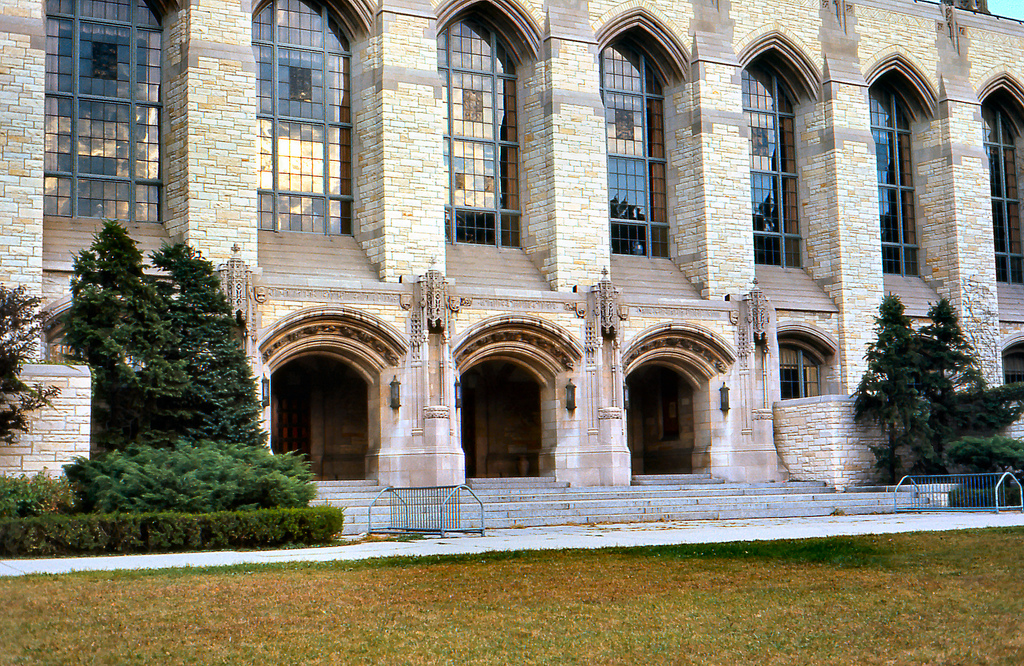
The much publicized accelerated J.D. program has been discontinued. Dean Daniel B. Rodriguez announced this decision via e-mail on Friday, Oct 2, 2015:

“I write to inform you that we are suspending indefinitely admissions recruitment for our Accelerated JD program. Consequently, we will not be enrolling a new class of AJD students this coming spring.

This decision was a difficult one — a conclusion I have reached after many months of deliberation and consultation with numerous individuals throughout our university and law school community, the legal academy, and our profession, and after a careful review of relevant internal and external data. In the end, I have determined that this course is the best one for the time being in order to advance the strategic priorities of our law school.”

The American Bar Association’s refusal to allow law schools to experiment with this sort of innovation factored in with this decision. Also, Northwestern didn’t want to charge students two years’ worth of tuition for two years of education so it killed the market for this program. Even though Rodriguez thinks people should choose to obtain a law degree within 2 or 3 years, he still wants to charge by the degree.

Benefits of the 2 year program included students saving a year of living expenses and finding a job more quickly. And because of that, some students disagreed with this decision:

“I would have never considered going to law school without the AJD program and I know the same is the case with many of my classmates. The AJD brought a unique and interesting group of students to the school. We were hardworking, successful and quite frankly paid the same as our three-year counterparts. In a landscape where traditional legal education seems antiquated and in desperate need of reform, I always looked with pride in Northwestern and the AJD as a front runner in legal education reform.”

Northwestern will support the program until the currently enrolled students graduate.

Article via Above the Law, October 5, 2015

Photo: Northwestern University 18 via Herb Nestler [Creative Commons Attribution-NonCommercial-NoDerivs]

Edward Snowden fled the US in 2013 after leaking classified documents to reporters. These documents revealed domestic surveillance by the NSA on United States citizens and ignited outrage and debate about security and surveillance. To escape arrest, Snowden left the country and resides in Russia, where he has been since 2013. Now he wants to come back home.

In an interview that aired Monday with the BBC, Snowden says that he has offered to go to jail in exchange for coming home, but has not received a response from the government. He stated, “I’ve volunteered to go to prison with the government many times”. He continues saying that “what I won’t do is I won’t serve as a deterrent to people trying to do the right thing in difficult situations.” This echoes a sentiment that he expressed in a Wired interview in 2014 where he said that he wouldn’t mind going to jail as long as his sentence “serves the right purpose.”

Snowden has been charged with 3 felonies in accordance to the Espionage act that  carry a sentence of over 30 years. His lawyers have objected to Snowden returning to the US because they believe that a trial with charges under the espionage act would not be fair. “The Espionage Act finds anyone guilty who provides any information to the public, regardless of whether it is right or wrong,” Snowden told the BBC. “You aren’t even allowed to explain to a jury what your motivations were for revealing this information. It is simply a question of, ‘Did you reveal information?’ If yes, you go to prison for the rest of your life.”

There continues to be ongoing debate as to whether Snowden is a patriot or a traitor. Those who see his actions as an act of patriotism have called for President Obama to grant Snowden a full pardon. But, when Secretary of State John Kerry visited Moscow in 2013 he called Snowden a traitor and a coward. Former Attorney General Eric Holder has indicated that a plea deal could be possible that can met the request of both the government and Snowden.

In the meantime, Snowden continues to use his status to speak out about issues of security and surveillance.

Article via TechCrunch, 6 October 2015

Photo: snowden via duluoz cats[Creative Commons Attribution-NonCommercial-NoDerivs]