In between Dec 20 and Jan 3, Apple said that customers purchased about $1.1 billion worth of app and in-app purchases which is a new record. Last year, Apple made about half a billion dollars in revenue. In 2015, customer spent a total of $20 billion on app purchases like Minecraft, Trivia Crack, as well as social networks such as Facebook Messenger and Snapchat. All in all, gaming and subscription apps did the best, like Clash of Clans and Hulu.

Not only has it been creating revenue, Apple has definitely seen growth in jobs. According to the new Progressive Policy Institute Report by Michael Mandel, Apple said it created 1.9 million jobs in the U.S., including 1.4 million through the App Store for developers, entrepreneurs, and some non-IT staff.

The App Store has consistently been the selling point for Apple products. This is a ray of hope because iPhone sales- the largest source of company profits- are expected to drop. Analysts do see revenue decreasing for 2016. Steve Koenig, a Consumer Technology Association market researcher, said that a number of factors, including a strong dollar and weak economies in parts of the world that had been driving new tech spending, indicate that 2016 will be a slower year for global tech spending overall.

The App Store will still continue to provide Apple with a distinguishable selling point because it helps keep customers coming back and gets them to buy more Apple products. Even more, Apple just launched a version of the App store for the Apple TV, expanding its presence to the family room.

Article via Washington Post, January 6, 2016

Photo: Apple. Tree. via Stuart Maxwell [Creative Commons Attribution-NonCommercial-NoDerivs]

Google has been famously testing out their version of a driverless car. The company wants to transform transportation by taking the driver out of the equation.

Driverless cars will be able to shuttle people from place to place while reducing the human error that is often the catalyst for road accidents.The California Department of Motor Vehicles recently made a proposal of rules for driverless cars. These new rules were presented for public commentary in mid December of 2015. The DMV wants to involve the public and will be hosting two workshops early in 2016, one in Sacramento and the other in Los Angeles.This proposal draft is the next step in allowing driverless cars on California roads. But Google is unhappy about one of the provisions.

The regulators are calling for the manufacturers of driverless cars to meet several safety and performance standards. These include things such as protecting the privacy of operators from the needless collection of user data and having a third party independently access performance. The rules also call for a licensed human driver, capable of taking over the steering wheel and pedals in the event of an emergency. The problem is that Google’s prototype for a driverless car does not have a steering wheel or pedals.

Google’s maintains that it wants to improve safety by equipping the car itself with protocols that surpass what a human could detect. For instance their cars have sensors that detect objects as far as two football fields away–in all directions. The state of California is looking at the broader aspect of autonomous cars, and remains more conservative on the issue. They  have warned Google in the past to add steering wheels and pedals. California legislators pushed The DMV to require that driverless cars contain wheels and people to steer them whenever they’re operated on public roads.

Google is disappointed that California legislators are limiting the potential of fully autonomous vehicles, the company said. Although the company is still in the prototyping phase where changes can easily be made, it is still a setback.


Article via TechNewsWorld, 18th December 2015

Photo:Auto che guidano da sole. Forse non le vedremo mai sulle nostre strade by Automobile Italia [Creative Commons Attribution-NonCommercial-NoDerivs]

Internet security is an important topic to address for anyone who surfs the web. Many of us want to be sure that our private data is being handled securely. The most popular way to protect our data online is through encryption. Encryption of data simply means that the information is encoded so that it can only be read by a key used to decode it. It sounds like super spy stuff, and in a way it is (that is a German enigma machine pictured above). In this article, we will discuss some of the ways that encryption is used to protect our data on the internet.

Computer encryption is based on cryptography, the practice and study of techniques to secure information. If you have ever heard of the Caesar cipher, that is a form of encryption. In our modern era, computers are generating complex algorithms that are used as the ciphers that crack the code.

There are two main modes of encryption: symmetric key and public key.

Symmetric key encryption

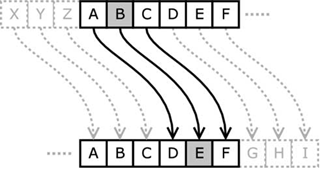
Caesar_Cipher
Caesar Cipher by prize Lerthirunvibul

The Caesar cipher is a great example of this. A letter is written to a friend, but all the words are spelled out by rotating the letter in the alphabet 4 spaces. This makes the letter nonsensical to anyone who intercepts it. But the friend it was written to knows the code (shift 4 spaces) and can therefore decode the letter.

The same happens in computing. Each computer has a secret code. The is a packet of information that is transported between the two computers. Once the transfer is complete the second computer decodes the encrypted packet.

Examples of this type of encryption: Hard drives, Private networks


Public key encryption

public key encryption
PublicKeyEncryption by Kalani Hausman

Sometimes this is called asymmetric key encryption. The main difference here is that each party does not have the same code to encrypt the message. Instead this method uses two different keys at once, a public key and a private key. The private key is know only to your computer. While, the public key is given to any computer that may want to communicate with it.

To decode a message a computer must use the public key (provided by the computer that it is communicating with) and it’s own private key.

In the example, Sally wants to send Bill a message. To do that, Sally needs to use Bill’s public key which is available to anyone. When Sally uses the public key it encrypts the message so that no one can read it. The only way that Bill will be able to see the message is when he uses his private key, the one that only he has (and is the only way to decode the encryption).

The message is available to anyone because all you need is the public key to pick it up. But, you won’t be able to read that message without a private key. The keys are a long string of numbers, and since they are based only on prime numbers, it makes this system very secure.

Examples of this type of encryption: Digital banking, Secure websites(https, SSL)

Photo Caesar Cipher by prize Lerthirunvibul

Photo PublicKeyEncryption by Kalani Hausman

Photo: WW2 Encryption: Enigma German Machine – cover off by Anthony Catalano [Creative Commons Attribution-NonCommercial-NoDerivs]
Facebook’s initiative to provide Internet to developing parts of the world, Free Basics, has been met with substantial criticism from those who believe that the service violates Net Neutrality. This Monday, Facebook CEO Mark Zuckerberg defended the service in an opinion article in the Times of India.

Zuckerberg’s effort to offer free Internet throughout India was obstructed by the country’s Telecom Regulatory Authority’s request that Facebook discontinue the program. India has 132 million active Facebook users, the second largest population of Facebook users behind the Unite States’ 193 million users.

Critics argue that Free Basics, the website that offers Internet services, provides more content from Facebook than from other sources. When Zuckerberg visited India in October, however, he implied that the Facebook service did not breach Net Neutrality when he said that all traffic on the Internet should be treated equally.

“Instead of wanting to give people access to some basic Internet services for free, critics of the program continue to spread false claims—even if that means leaving behind a billion people,” Zuckerberg said. “Who could possibly be against this? Choose facts over false claims. Everyone deserves access to the Internet.”

Article via CNET, December 28, 2015

Photo: Mark Zuckerberg via Mathieu Thouvenin [Creative Commons Attribution-NonCommercial-NoDerivs]

The website CRSReports.com is leading an initiative to create a public archive of 33,000 research papers on policy issues that have long been contained in the confidential files of Senators and Representatives. The Congressional Research Service—Congress’s in-house think tank—has provided nonpartisan research studies to lawmakers for 101 years, most of which are never made available to the public.

“What we’re doing is simply accessing publicly available websites and downloading what we think are CRS documents,” said Antoine McGrath, who previously worked for a free digital library called the Internet Archive. He is now teaming up with two other software programmers to scan around 100 sites for CRS metadata.

CRSReports.com has given itself the title of the Internet’s “largest free and public collection of Congressional Research Service reports.” However, CRS releases thousands of studies on all topics to lawmakers every year, and thus the public collections of reports—from CRSReports.com and its two major competitors, the Federation of American Scientists and the University of North Texas—are still missing countless papers.

The small number of reports that Congress does release are not compiled in one location, with the exception of CRS.gov, which is only available to lawmakers. CRSReports.com and its competitors therefore have to scan the Internet to find CRS studies in scattered locations, from academic sites to news released by embassies.

This has forced programmers like McGrath to design code that can scan a broad range of publicly available websites. To search out CRS documents, he says, “We’re casting a wide net.”

Article via The Washington Post, December 14, 2015

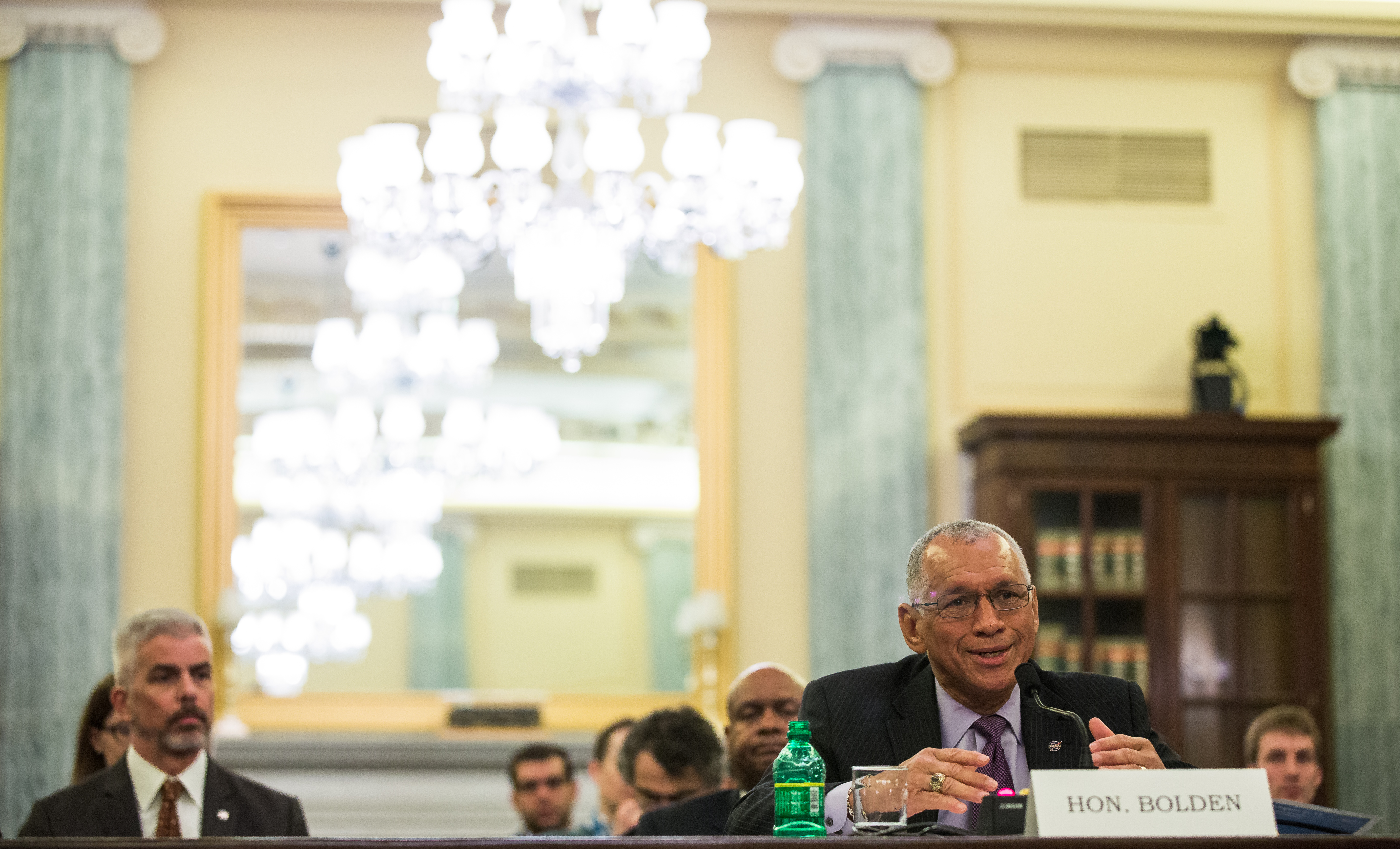
Photo: Senate Subcommittee on Space, Science, and Competitiveness Hearing (201503120003HQ) via NASA HQ PHOTO [Creative Commons Attribution-NonCommercial-NoDerivs]

In June of 2012, the European Council approved the European Union’s General Data Protection Regulation draft. The soon-to-be-approved final law is an updated version of the EU’s 1995 data protection rules, intended to bolster online privacy rights. The EU’s effort to consolidate privacy laws stands in contrast to the U.S.’s consistent battles with mass data collection by big business and government agencies.

Privacy—a broad and nebulous term—is treated differently in the European Union than it is in the U.S. According to Brian Kudowitz, commercial product director for privacy and data security at Bloomberg Law, privacy is “essentially a human right” in the EU. Whereas the EU has comprehensive law protecting privacy in all its forms—especially with the GDPR initiative—the U.S. deals with the protection of information in a series of laws that regulate different sectors.

The EU’s focus on privacy can be explained in historical terms, Kudowitz added. “You go back to all of the different things that have occurred in Europe over the last 70 years, it’s very easy to see how that perspective developed.”

In a recent Eurobarometer survey, 67 percent of Europeans said they were concerned about not having control over what information was provided about them on the Internet, and 70 percent expressed concern about how companies used their information.

Beyond what everyday citizens think of privacy, businesses and government agencies operate differently in the U.S. than in the EU as well. Organizations protect data proactively in the EU, whereas breaches of privacy are dealt with retroactively in the U.S.

According to Phil Lee, a representative at the multinational law firm Fieldfisher, “[t]his is partially because class action regimes aren’t well developed in the EU. EU countries don’t have a concept of punitive damages in the same way that you do in the U.S.”

Article via Legaltech News, December 22, 2015

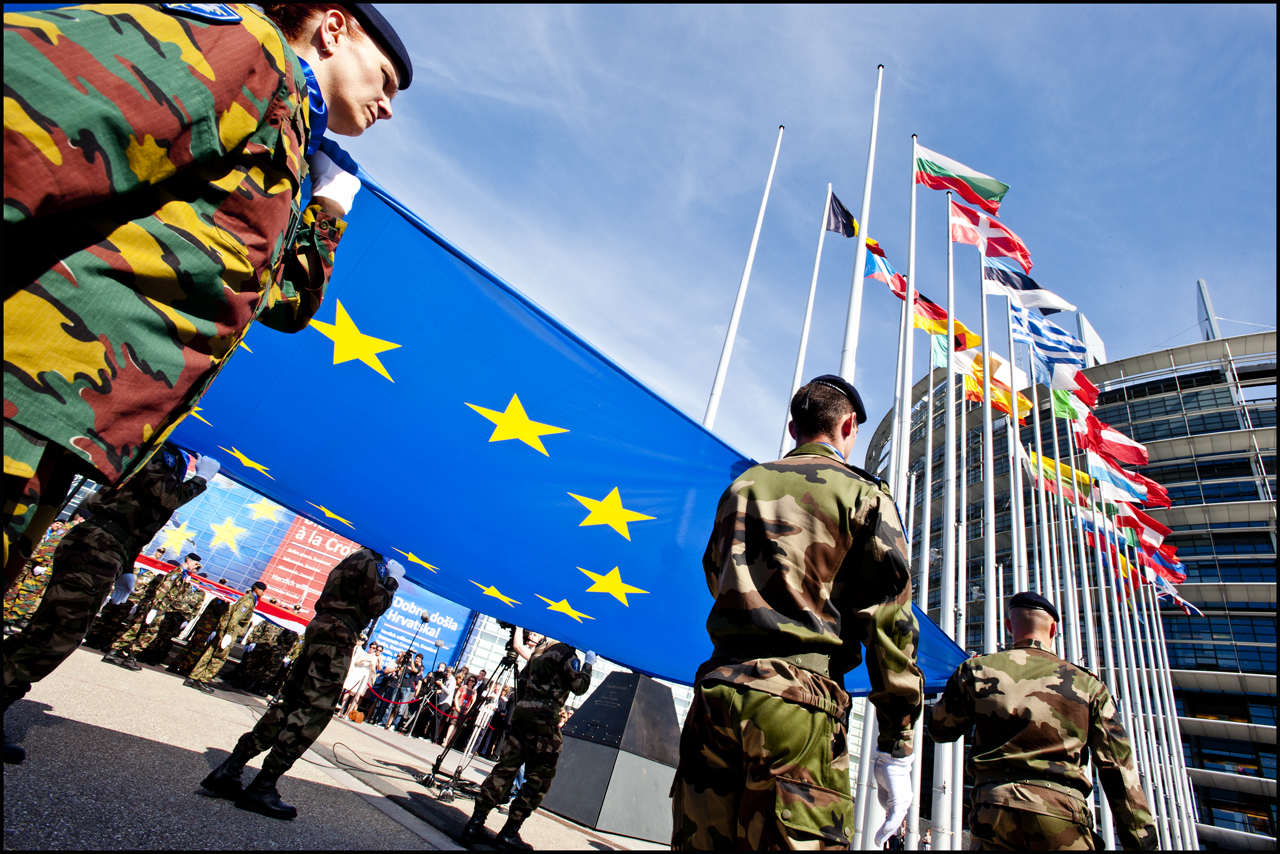
Photo: Croatia welcomed to the EU via European Parliament [Creative Commons Attribution-NonCommercial-NoDerivs]