Every day, more and more digitally-connected devices are being integrated into our daily lives. In fact, researchers predict that there will be more than 40 billion devices wirelessly connected to the internet by the year 2020. This surge in the number of devices we use has led us into an era known as the Internet of Things, or IoT. Although there are many advantages to being able to utilize the internet in so many different ways, the more devices one has, the more paths a hacker can take to steal information. Recently, reports have come to light that internet-enabled cars could be turned off remotely by a hacker, and certain baby monitors could be hacked to monitor individuals without their knowledge. And as the medical field release technology that fits into the Internet of Things, the potential problems only become more worrisome; hackers could potentially have control over someone’s health or even their life.

Thankfully, companies are trying to find solutions to make their Internet of Things devices safer to use. For example, digital security companies such as Gemalto are offering their experience to car manufacturers, and Microsoft has promised to add extra encryption and security software to their new Windows 10 IoT, their operating system for all of the Internet of Things devices Microsoft produces. Additionally, multiple tech firms have come together to form the Internet of Things Security Foundation, which will review devices that connect to the internet and offer support and advice to tech companies. In time, manufacturers of Internet of Things devices will need to determine how to make sure each device that an individual owns is continually updated and protected from hackers.

Article: TechCrunchOctober 24, 2015

Photo: Internet of Things World Forum via Schneider Electric España [Creative Commons Attribution-NonCommercial-NoDerivs]


A collaboration between the American Bar Association and Rocket Lawyer had led to a new program being launched that allows small business owners to get access to legal advice more easily. The program, called ABA Law Connect, has begun testing in Illinois, Pennsylvania, and California. It uses Rocket Lawyer’s cloud-computing software to create a program that allows business owners to post a legal question for a small fee. The question, and a follow-up question, if desired, are answered by lawyers who members of the American Bar Association in good standing. Then, if the small business owner is pleased with the responses, they can establish a working relationship with the lawyer that answered their questions. In this way, both sides are benefited: lawyers have access to larger number of potential clients, and small business owners can receive legal advice promptly and cheaply.

This is simply one example of the ways that the American Bar Association is trying to make legal services more accessible, a goal that Rocket Lawyer also shares. The CEO and founder of Rocket Lawyer, Charley Moore, explains that he wanted his company to “leverage technology in order to bring quality and affordable legal services to small businesses”. Though ABA Law Connect is still a pilot program, hopefully it will made more widely available in the future.

Article via ABA JournalOctober 1, 2015

Photo: Heine Brothers Coffee via Independent We Stand [Creative Commons Attribution-NonCommercial-NoDerivs]

“There are incredible entrepreneurs building useful new legal technology products, but adoption is often slow and painful”, explains Jules Miller, the entrepreneur behind Hire an EsquireLawyers are, on the whole, very skeptical. While this may be beneficial for their clients, it also means that lawyers are slow to accept change or utilize new technology. But that doesn’t mean that the rest of society isn’t changing. With the rise of Uber and the “on-demand economy”, the legal profession’s staffing firm model is somewhat out of date. Miller describes that she and her friend Julia Shapiro, a former attorney, “realized that the on-demand economy already existed in the legal industry,” and created Hire an Esquire as a result. This legal staffing platform uses technology to help modernize and streamline the process of connecting attorneys to clients. With the rise of legaltech like Hire an Esquire, the legal industry can become more efficient and more fulfilling for everyone involved. But with lawyers being slow on the uptake, legaltech is not progressing very quickly.

In response, Miller has recently launched Evolve Law“to accelerate the adoption of new ideas and technologies in the legal industry”. After all, most legaltech is still being developed and tested, but to create effective products, companies need data and feedback from users. This means that lawyers will have to let go of some of their natural skepticism and embrace new technology. However, many lawyers are simply not being informed about the legaltech available to them. Miller cites that she often meets attorneys who have never heard of Hire an Esquire, even though it has been operating for four years. Evolve Law plans to change that by providing a platform to inform lawyers about new innovations in legaltech.

Article via Above the Law, October 19, 2015

Photo: limited time only by Ben Kilgust [Creative Commons Attribution-NonCommercial-NoDerivs]

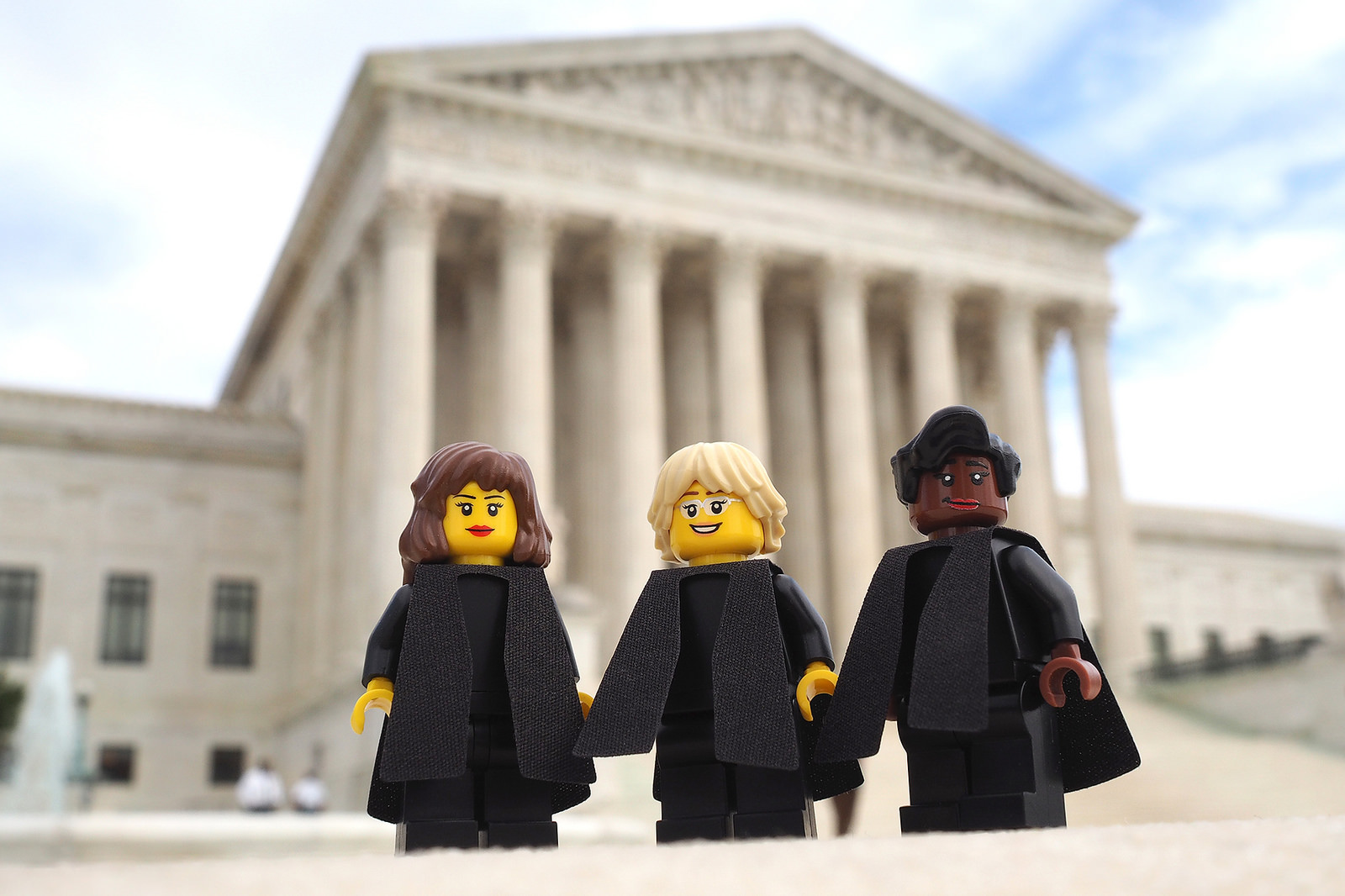
Women have come a long way in the profession of law. For example, four women have been appointed to the Supreme Court to date, and makers are even trying to convince Lego to create figurines representing these women to encourage young girls to think about legal professions. With this in mind, antiquated views of women’s role in law firms seem not only uneducated but also comical. Consider this memo from a 1956 law firm on interviewing new lawyers. It starts off very bluntly, stating that “the firm desires to be candid about its preference for male applicants”, and the memo only gets worse from there. According to the instructions for hiring new lawyers, the firm does “not rate a girl applicant on equal terms with the men applicants” and if a male candidate’s and a female candidate’s resumes appear identical, “the man is given preference, barring some personality defect, on the grounds that being a man, he has probably had extra-curricular experience in the business world.” Even the word choice in the memo is significant: while female candidates are referred to as “girls”, implying they are juvenile, male candidates are referred to as “men”. The memo ends with the writer expressing the opinion that the firm will “not suffer” from preferring male candidates and therefore will continue doing so.

While the memo and the ideas it contains are old-fashioned and outdated, sexism still exists within the legal profession. For example, BMC Group, which provides “legal, financial and corporate information management solutions”, released an advertisement last December featuring a woman in a revealing outfit meant to resemble a business suit. After some viewers express negative opinions of the ad, BMC Group, rather than changing their advertising approach, hosted a party at the American Bankruptcy Institute’s southwest conference featuring the “BMC Group Bikini Girls”. Understandably, some women at the conference were reported to be “appalled” at the idea. Expressing one’s distaste with sexism with law can have negative consequences, though. Charlotte Proudman, a human rights lawyer, received a message from Brown Rudnick partner Alexander Carter-Silk via LinkedIn expressing several compliments concerning her picture on the site. Proudman proceeded to call out Carter-Silk’s publicly for sending her what she interpreted as a sexist message, explaining that women should be regarded for attributes other than just their appearance. Since the incident, Proudman has publicly stated that she misinterpreted Carter-Silk’s message and has apologized to him. The damage has been done, though; many have told Proudman that this incident has essentially ruined her career. The incident shows what the repercussions of calling out sexism within law can be for women, and perhaps explains why some simply choose to ignore it.

So how can law firms go about trying to support gender equality? The Women in the Workplace 2015 report, published by LeanIn.org and McKinsey & Company, offers several suggestions. Firms should begin by tracking metrics for both men and women within the firm such as promotion and salary amounts, how high-profile assignments are distributed, and how long members of different gender and minority groups stay with the firm. This allows each individual firm to assess and diagnose their unique problems. Additionally, firms should make it very clear that gender diversity is important by setting clear goals and creating training to reduce gender bias. Finally, firms should strive to level the playing field for men and women by dividing important assignments equally and encouraging networking and support programs for women.

Though true gender equality may still be a long way off—more than 100 years, according to the creators of the Women in the Workplace 2015 report—hopefully the legal profession can start making better strides towards reducing sexism.

Articles: Legal Justice League, n.d.; Above the LawSeptember 9, 2015; Above the LawSeptember 11, 2015; Above the LawSeptember 11, 2015; Above the LawOctober 2, 2015;

Photo: LEGO Legal Justice Team @ SCOTUS 03 via Maia Weinstock [Creative Commons Attribution-NonCommercial-NoDerivs]

Two former data analysts at Capital One are being accused of using their positions as data analysts to calculate sales trends for major U.S. companies and then purchase stocks ahead of the companies’ reported earnings. Using this method, the two former employees allegedly made $2.8 million dollars from $150,000 in investments. Capital One issues company smartphones to each employee, but each employee chooses their own passcode which is unknown to Capital One. Therefore, even though Capital One turned the two data analysts’ phones over to the SEC, who is conducting the investigation, the SEC cannot unlock them and therefore requested that the court order the two defendants to relinquish their passcodes. The defendants are pleading the Fifth Amendment, though. They are of the opinion that being forced to give up the passcodes would be akin to forcing them to testify against themselves, leading to self-incrimination. Self-incrimination would violate the Fifth Amendment.

But does the Fifth Amendment truly apply to this situation? According to a new ruling by Judge Mark Kearney, the court agrees with the defendants’ view. Judge Kearney’s opinion centers around his interpretation of the forgone conclusion doctrine. Essentially, the foregone conclusion doctrine states that that Fifth Amendment cannot be used to refuse an order if the testimonial from complying with the order is known and the testimonial from complying is not what the court is trying to prove. For example, if the court ordered a defendant to relinquish all illegal substances in their possession, the defendant could plead the Fifth Amendment because the act of handing over illegal substances incriminates the defendant. The interpretation of the forgone conclusion doctrine in this case comes down to what testimonial results from giving up the passcodes. The SEC argues that that by giving up the passcodes, the defendants admit to having previously used the phones, which the SEC is aware of and not trying to prove. Judge Kearney, however, argues that foregone conclusion concerns the specific documents that the SEC is seeking, which may or may not be on the phones. Therefore, the forgone conclusion doctrine does not apply.

Who is correct? Some disagree with the Judge Kearney and are of the opinion that gaining access to the phone is independent whatever records may or may not be stored on the phone, and forgone conclusion should apply. Either way, there are other ways that the SEC can word the order for the phones to be unlocked that do fall under the foregone conclusion doctrine. For example, the defendants can be ordered to input the passcodes themselves and then have the opened phones delivered to the SEC, in which case the only testimonial is that the defendants have used the phones enough to be knowledgeable of the passcodes, a fact that is already well known.

Article: Washington Post, September 24, 2015

Photo: iPhone via Jared Earle [Creative Commons Attribution-NonCommercial-NoDerivs]

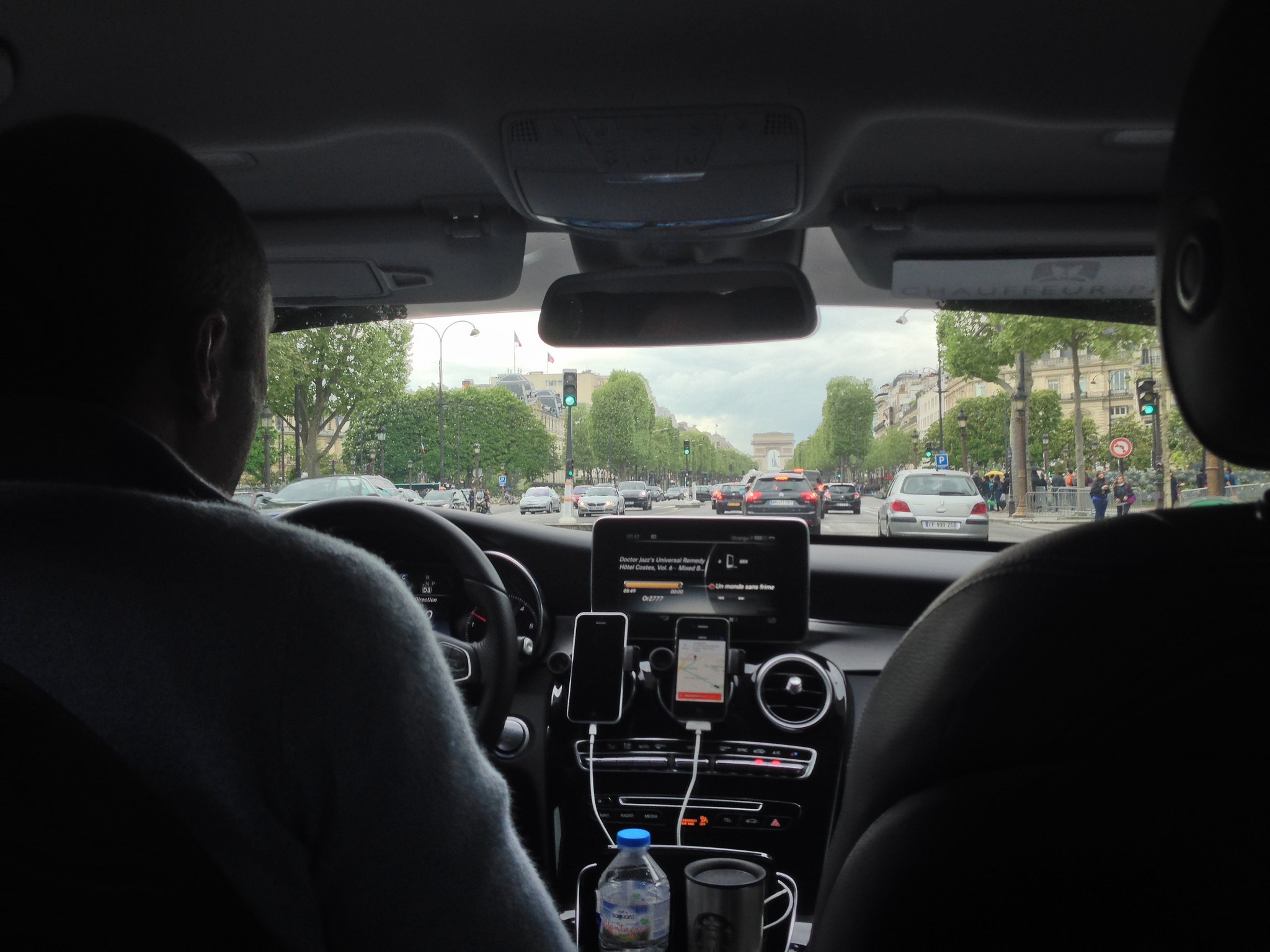
Many objections have been made to Uber in the past, and now Uber is facing a lawsuit after two anonymous women have stated that they were sexually assaulted by Uber drivers. Not only does the lawsuit call into question how effective Uber’s background checks are, it also attacks Uber’s marketing strategy. The lawsuit claims that because Uber advertises its service as a safe way to get home for young women who have been drinking, Uber should be more closely monitoring the actions of their drivers. The official complaint from the two women who were allegedly assaulted states that, “By marketing heavily toward young women who have been drinking, while claiming that rider safety is its #1 priority, Uber is instead putting these women at risk.”

Uber drivers have been classified as independent contractors rather than employees up until now, but this lawsuit could force Uber to exert more control over their drivers. The lawsuit calls for Uber to up their safety measures, including conducting more thorough background checks with drivers and requiring drivers to place a GPS tracking system in their car that will set off an alarm if the driver goes off-course. Other requests include a 24-hour customer support hotline and forcing drivers to disable child-lock features on doors in Uber drivers’ vehicles.

While Uber maintains that they have ” strict safety standards”, this lawsuit is not the first time its drivers have been accused of sexual assault. Uber uses the company Hirease to screen potential drivers, and several databases are checked to make sure the driver in question has not committed any violent crimes or sexual violence, among other violations. Determining if Uber is at fault for these assaults is difficult, Sarju Naran, an attorney for Hoge Fenton’s law group, explains: “Even with thorough background checks, it is often difficult to predict if or when someone might engage in violent or other criminal acts.” If Uber is found to be liable for these drivers’ crimes, though, it will have serious ramifications for the company moving forward.

Article via CNET, October 8, 2015

Photo: Paris, as seen in the back of an Uber via Kirsten [Creative Commons Attribution-NonCommercial-NoDerivs]