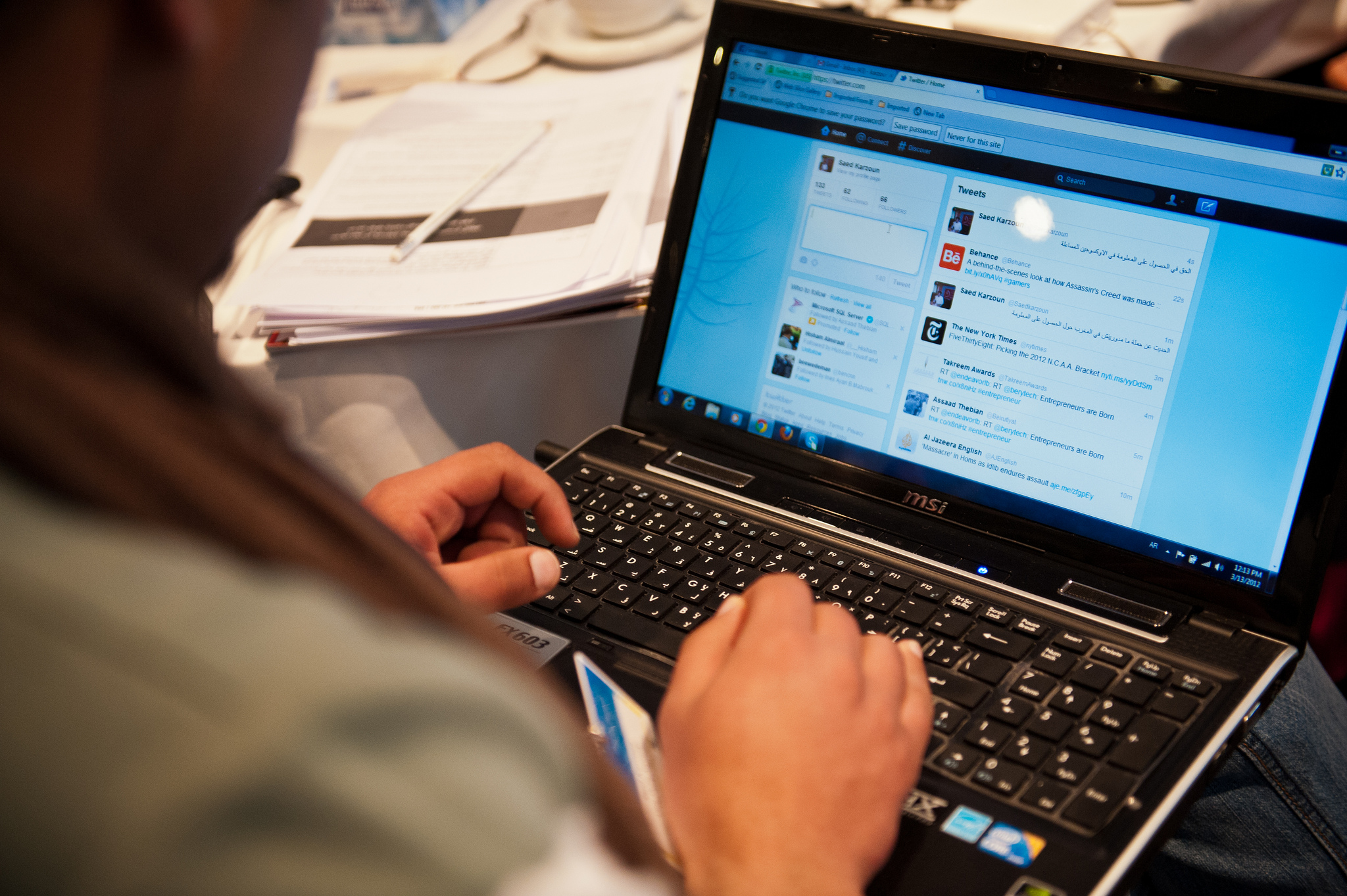
According to the International Telecommunication Union, there are about 3.2 billion people online. Mobile networks are leading the way to connecting people for the next generation of communications. There are about 7.1 billion subscriptions globally and 95% of people in the world are within reach of a mobile network signal.

The Republic of Korea leads the world as the most-connected place. European countries along with Southeast Asia countries Japan and China follow afterwards. The United States comes at #15. This is with respect to Internet connectivity and how well data services are adopted in that country. The list below does not correlate with how fast the country’s economy is growing. Rather, it correlates with how many people have online access in that country.

Photo via TechCrunch

Photo Credit: TechCrunch

The downside of this news is that there are still about 350 million without Internet access. These include people in some of the poorest countries in the world, such as Malawi, Madagascar, Ethiopia, Eritrea and Chad, which are the five least-connected countries globally in descending order. These countries are referred to as least developed countries, or LDCs.  Projects such as Project Loon by Google and “Free Basics” by Facebook are attempting to resolve this extreme gap.

There has been an improvement of the “middle class” countries pertaining to the Information and Communication Technology (ICT) Developmental Index (IDI) growth. Universal online access contributes to globalization.

Article via TechCrunch, Nov 30, 2015

Photo: Vardøger [Déjà Vu] by Chris JL [Creative Commons Attribution-NonCommercial-NoDerivs]

 

On Feb. 4, 2010 Maria Nucci sued Target for the injury she sustained while working at the store. However, when Target requested access to her social media account, Nucci objected. As a result, 36 photos were deleted two days later. However, the Fourth District Court of Appeals for the State of Florida granted Target’s motion with respect to all photographs on the Facebook page that included Nucci. She argued she had a right to privacy, but the judges used that very argument against her.

“Because ‘information that an individual shares through social networking websites like Facebook may be copied and disseminated by another,’ the expectation that such information is private, in the traditional sense of the word, is not a reasonable one,” the panel ruled, partially quoting another Florida case. It also added, “Before the right to privacy attaches, there must exist a legitimate expectation of privacy.”

Using social media in court cases continues to skyrocket. It has been used about 80% of the time. According to John Facciola, the information has to be collected. Second, they have to sorted out into what the attorney needs and does not need. Courts are still trying to figure out what to do with social media in discovery and the privacy rights of those whose profiles are in question. This past year, the arguing has centered on two main issues: authentication, and where the expectation of privacy stops.

Social media is notorious for one particular thing: you don’t have to be who you say you are online. This is demonstrated in parody Twitter accounts and multiple Linkedin profiles. State courts have different standards on the authentication of social media. For example, the Maryland standard is that “the judge had to be ‘convinced’ that a social media post wasn’t falsified or created by another user. On the other hand, the Texas approach stipulated that any evidence could be used “as long as the proponent of the evidence can demonstrate to the judge that a jury can reasonably find that evidence to be authentic.” In United States vs. Vayner, Aliaksandr Zhyltsou accused Vladyslav Timku of providing a forged birth certificate for an imaginary infant daughter to avoid compulsory military service in Ukraine. The key piece of evidence was in the defendant’s social media account. However, the federal agent could not provide authenticity. As a result, Maryland revisited their standard and deemed that the judge has to identify which evidence would be sufficient. In other words, the judge has to determine that “there is proof from which a reasonable juror could find that the evidence is what the proponent is claiming.”

Article via Legaltech News , November 2, 2015

Photo: Affiliated Network for Social Accountability- Arab World via World Bank Photo Collection [Creative Commons Attribution-NonCommercial-NoDerivs]

Hera Hussain is the founder of Chayn: an advocacy group that leverages technology to empower women against violence and oppression so they can live much better lives. One of the main themes of this group is to use the power of technology to help people most overlooked by society. Hussain says it is usually women, especially women of color that are affected. One of their projects included a hackathon to create solutions to end sexual violence in high conflict zones. Another was an online toolkit for domestic abuse survivors to build their own legal case.

A particular hackathon held more than a month ago called #PeaceHackBEY helped to resolve the issue of integrating women into the picture of solving societal challenges. In partnership with the global NGO International Alert, Chayn brought together a variety of technologists, activists, thinkers, and engaged citizens aiming to create solutions to some of the major social problems facing Lebanon today.  Before, there were two extremes in civil society: events that focus solely on women and the latter dominated by men. In events leading up to the Hackathon, anti-government protests swept the city over issues like public services and the lack of resources and support for the Syrian refugees that entered Lebanon to escape turmoil.

“Civic tech is a term that emerged because there was demand for citizens to create solutions when the response from government was slow and people wanted to make change on their own,” Hussain says. “This hackathon felt like it was the right thing because it was tackling issues that Lebanese society faces as a whole—access to services, resources, and information—but which tend to affect women most because they’re disenfranchised.”

Chayn is headquartered in London, but Hussain is originally from Pakistan and heads a team of volunteers from all over the world. Hussain hopes the organization acts as facilitators, active in working with stakeholders and finding sustainable solutions to build peace. “We believe in a ‘build with, not for’ approach—that’s all about working with people you’re building solutions for, rather than building it for them without including them as part of the design process,” she says.

Article via Good Magazine, September 22, 2015

Photo: Globe in Purple via Norm Hoekstra [Creative Commons Attribution-NonCommercial-NoDerivs]
The Harvard library is where one may find shelves of books unearthed with valuable resources that include nearly every territorial and tribal judicial decision since colonial times. It provides priceless information for everyone from legal scholars to defense lawyers trying to challenge a criminal conviction. Now, Harvard librarians are taking off the spines of all but rarities and running them through a high-speed scanner. This would allow a complete searchable database of American case law available on the Web. Retrieval of these vital records were once usually paid for. Now they will be completely free.

“Improving access to justice is a priority. We feel an obligation and an opportunity here to open up our resources to the public.” said Martha Minow, dean of Harvard Law school.

Though the primary documents can be found in the public domain, it’s not in a convenient format, if at all. Legal groups spend approximately thousands to millions of dollars a year depending on the size of the office to find cases and trace doctrinal strands. Harvard’s “Free the Law” project can offer a floor of crucial information and offer sophisticated techniques for visualizing relations among cases and searching for themes.

“Complete results will become publicly available this fall for CA and NY, and the entire library will be online in 2017,” said Daniel Lewis, chief executive and co-founder of Ravel Law, a commercial start-up in California that has teamed up with Harvard Law for this project. The cases will be available at www.ravellaw.com. Ravel is paying millions of dollars to support the scanning project. The cases will be accessible in a searchable format and will be presented with visual maps developed by the company. It hopes to make money by offering more advanced analytical tools still being developed, like how judges responded to different motions in the past all for a fee.

Legal aid lawyers and public criminal defenders called the Harvard project a welcome development that may save them money and make the law more accessible to struggling lawyers, students and even inmates who try to mount appeals from barren prison libraries.

Alex Gulotta, executive director of Bay Area Legal Aid in Oakland, CA, called the project “brilliant” and put it in a broader context of making government information more readily available. “Knowledge is power. People will always need lawyers, but having resources available for self-help is important.”

Article via NY Times, October 28, 2015

Photo: Law books 2 via Eric E. Johnson [Creative Commons Attribution-NonCommercial-NoDerivs]

On Tuesday, October 27, the US Senate voted to pass the Cybersecurity Information Sharing Act.

This bill allows companies to share evidence of cyber-attacks to the US government even if it violates a person’s privacy. Supporters say this act will make it easier for the government to monitor threats and responses across companies. Others like Apple and other top tech companies argued that this bill could give government more liberty to spy on US citizens.

US Chamber of Commerce President and CEO Thomas Donohue said this legislation is a “positive step toward enhancing our nation’s cybersecurity.”

21 Senators voted against the act. Among them was Minnesota Democrat Al Franken who believes there is a need for “effective legislation that balances security and privacy” and “the CISA does not do that.”

Just last year, the CISA was first introduced and passed by the House but it did not go through the Senate. High profile cyberattacks on companies like Sony Pictures, United Airlines, and Ashley Madison may have prompted the Senate to approve it this time around.

The issue at hand is that personal identifiers such as text messages and e-mails may slip through when sending information to law enforcement and intelligence agencies, even though companies are supposed to delete that information.

US Department of Homeland Security acknowledged that the bill does raise “privacy and civil liberty concerns.”

CISA is now going to a Congressional Conference whose members must match the passed Senate and House bills before sending it to President Obama.

Article via CNET Security News , October 27, 2015

Photo: Washington DC – Capitol Hill: United States Capitol via Wally Gobetz [Creative Commons Attribution-NonCommercial-NoDerivs]

The elections for Mayor and City Controller are underway. Candidates have been working hard campaigning and talking to voters. At a technology forum held on October 8 located at the Houston Technology Center, candidates for City Controller voiced their opinions on the growing use of technology in the city and how they would utilize it. All 6 of the candidates came from reputable backgrounds. Using that to each of their advantage, candidates spoke about how technology can transform the City of Houston.

Jew Don Boney, Jr is a former city council member and worked as a Texas Staff Legislature for many years. He was appointed as Associate Director for the Mickey Leland Center of Peace at Texas Southern University. When asked about integrating the city’s IT infrastructure with the current staff and IT infrastructure, Boney disagreed with combining the two. “When I served on city council, I was so unimpressed with the city’s infrastructure and IT but I brought in own people so we built and maintained our own for the entire 6 years that I served as a member of city council.” As a result, he claimed to have had the most advanced IT infrastructure in the city.

Chris Brown is currently Deputy City Controller and has managed money in the private sector as well as city hall. When asked what plans he has to put the checkbook online, he answered “I feel like that was our first trick question because I feel like all of our candidates know and agree that our checkbook is online and I know for certain because I put it online. In 2011, I led the project team to put all of our payments and checks online.” Continuing on with making the checkbook viewing by date, vendor, and amount he said “I think in my 12 years of experience I can say this whole-heartedly. We don’t have money to do these projects right now. We’re facing huge financial challenges in the city… technology is going to be the vehicle that we create efficiencies to go forward but we have to take the cost of that into effect.”

Bill Frazer has been a CPA since 1975 and worked as an auditor for Ernst and Young for 5 years. He served as controller for several companies. When questioned about how he would educate the public on the collection and analysis of data, he answered “I’m a CPA and I was the past president of the Houston CPA Society and during my tenure I also chaired the technology committee which was responsible for continuing education to over 15,000 CPAs in the area, 1,000s of hours of continuing education including technology at the user level. Not Excel, not Word, just simple applications that can be used by all to serve the clients.”  

Dwight Jefferson became a judge in 1995. From 2010 until 2015 he was appointed to the METRO board by Mayor Parker. When asked about transparency, he brought up a solution he came up with at METRO. “One thing that we did at Metro that was very helpful, both from the standpoint of transparency and getting input from the public in our processes was placing all of our board meetings online [in a] live stream.” He plans to implement this because the public would be able to go back to it later and see if they find things that are not properly addressed.

MJ Khan has an MBA from Rice University and served on the city council in the past. When asked about making the finances more transparent, he spoke from experience about how one aspect was not being reported. “When I was in the council, one of the things I noticed was that we have this huge unfunded liability that retirees have in 3.5 million dollars. And we were not even reporting that. So I asked why is that not part of the report? Luckily, I was able to convince my colleagues and it became part of it. So I think information sharing on a real time basis is crucial for citizens can see what is going on in our financial area.”

Carroll Robinson is an Associate Professor at the Barbara Jordan-Mickey Leland School of Public Affairs at Texas Southern University. He has served as the Houston Community College trustee and served on city council. He also voiced his opinion on increasing transparency. “Well one of the things I did with the available data is I ran a 10 year revenue forecast out on my Facebook, but I think the controller should do it not on an annual basis but on a monthly basis so we would avoid these situations …when you approve spending in one year and the compounding effect generates deficit problems. The careful controller ought to be for a different purpose than just releasing it at the end of the year.”

All the candidates used each of their previous experiences to their advantage. Early voting started on October 19, 2015 and will continue until the Mayoral election on November 3, 2015.

Photo: Houston Sunrise via telwink [Creative Commons Attribution-NonCommercial-NoDerivs]